
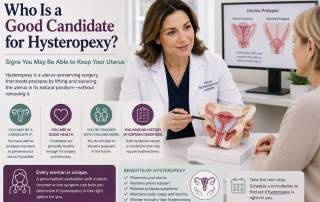
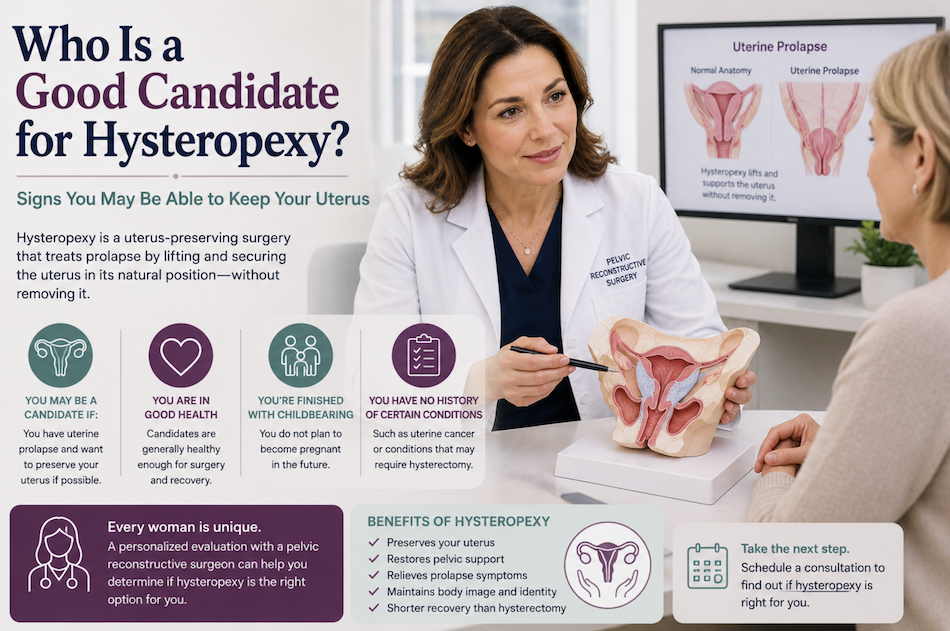
Who Is a Good Candidate for Hysteropexy – Keep Your Uterus
Who Is a Good Candidate for Hysteropexy? Signs You May Be Able to Keep Your Uterus Am I a Candidate for Hysteropexy? After learning you have uterine prolapse, one of the first questions you may ask is: "Can I keep my uterus?" For many women, the answer is yes. Hysteropexy is a uterus-preserving surgical procedure that treats uterine prolapse without removing the uterus. While not every woman is a candidate, many [...]
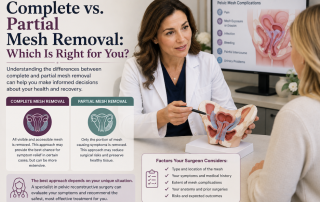
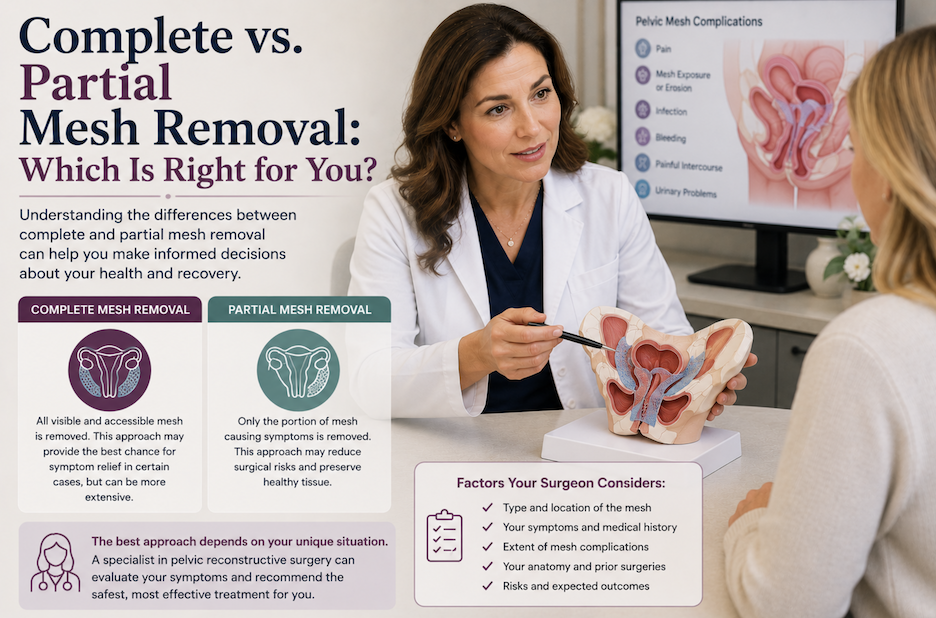
Complete vs. Partial Mesh Removal: Which Is Right for You?
Complete vs. Partial Mesh Removal: Which Is Right for You? Concerned About Pelvic Mesh? Understanding Your Surgical Options If you've been told you may need pelvic mesh removal, one of the first questions you may ask is: Can all of the mesh be removed? Should only part of the mesh be removed? What's the difference between complete and partial mesh removal? Which approach offers the best chance of relieving my symptoms? [...]
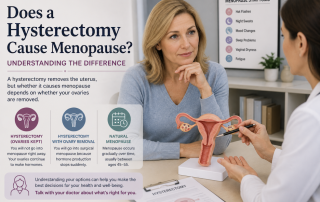
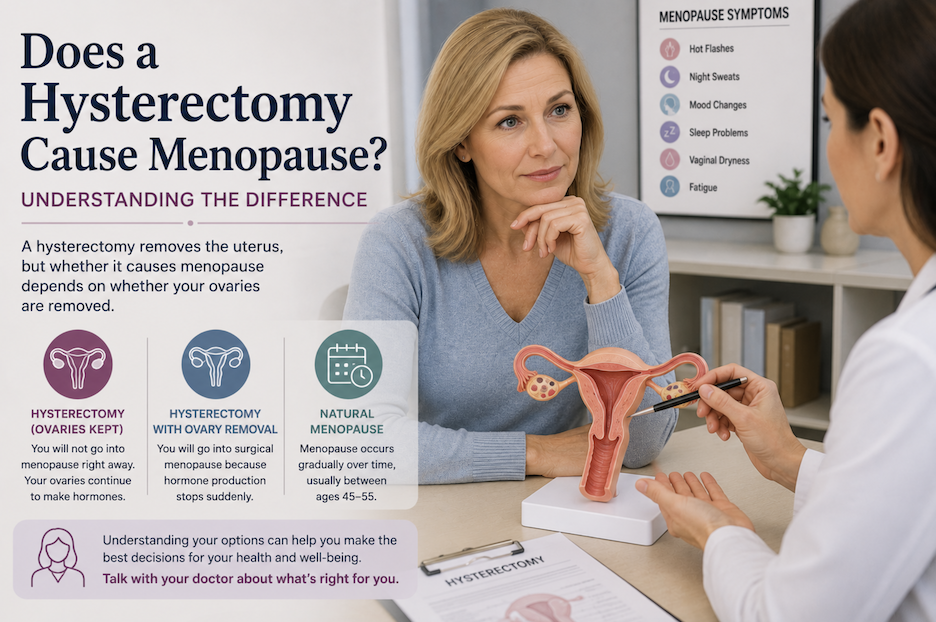
Does a Hysterectomy Cause Menopause? Understanding the Difference
Does a Hysterectomy Cause Menopause? Understanding the Difference This article lets you rank for: does hysterectomy cause menopause menopause after hysterectomy surgical menopause ovaries after hysterectomy symptoms after hysterectomy early menopause after hysterectomy Does a Hysterectomy Cause Menopause? One of the most common questions women ask before or after a hysterectomy is: Will I go into menopause after my hysterectomy? Can removing my uterus cause menopause? What happens if my [...]
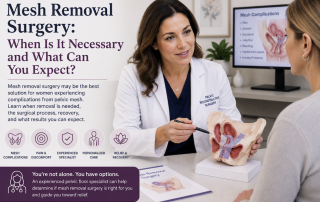
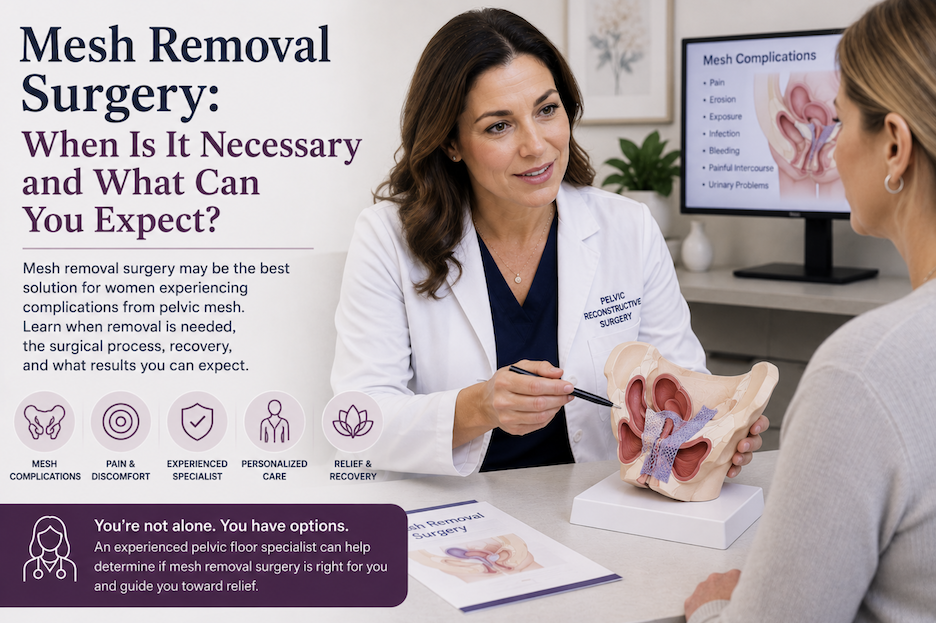
Mesh Removal Surgery: When Is It Necessary and What Can You Expect?
Mesh Removal Surgery: When Is It Necessary and What Can You Expect? Do You Need Mesh Removal Surgery? If you've previously had surgery for stress urinary incontinence or pelvic organ prolapse and are now experiencing pain, urinary symptoms, vaginal bleeding, or concerns about your mesh, you may be wondering whether mesh removal surgery is the next step. Common questions include: Do I need mesh removal surgery? Can pelvic mesh be removed? Should all mesh [...]

I Used to Have Great Orgasms – What Happened?
I Used to Have Great Orgasms. What Happened? If Your Orgasms Don't Feel the Way They Used To, You're Not Imagining It Many women can remember when sex felt different. Orgasms came more easily. They felt stronger. More intense. More satisfying. Then, slowly—or sometimes almost overnight—something changed. Now you find yourself wondering: "Why are my orgasms so weak?" "Why does it take so much longer?" "Why can't I climax like [...]
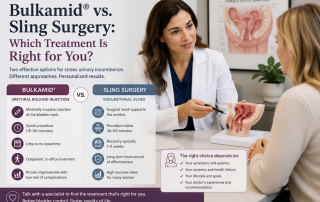
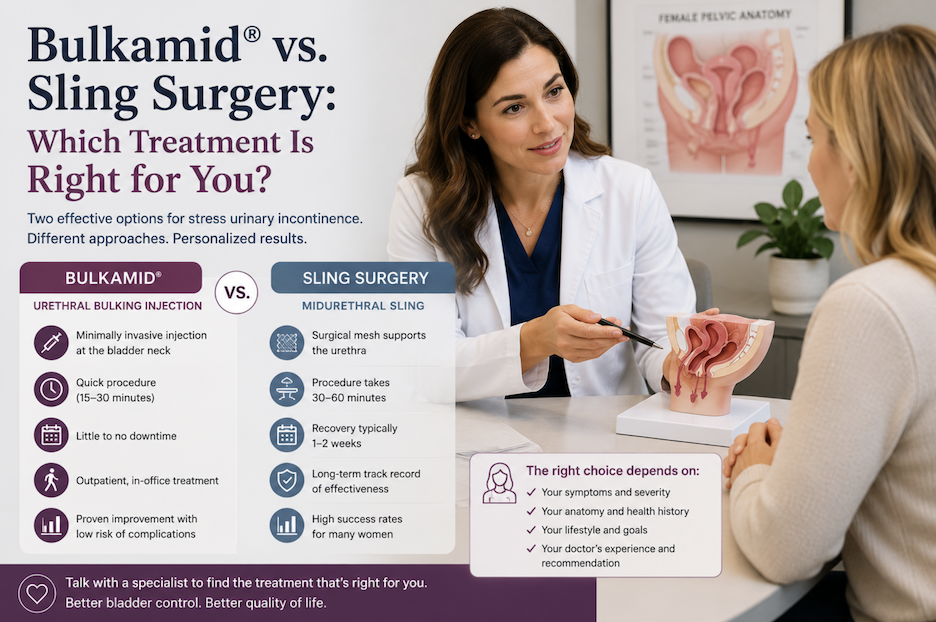
Bulkamid® vs. Sling Surgery: Which Treatment Is Right for You?
Bulkamid® vs. Sling Surgery: Which Treatment Is Right for You? Understanding Two Effective Treatments for Stress Urinary Incontinence If you leak urine when you cough, laugh, sneeze, exercise, or lift something heavy, you've probably started researching treatment options. Two names appear repeatedly: Bulkamid® Midurethral Sling Surgery Both are effective treatments for stress urinary incontinence (SUI), yet they work in very different ways. Naturally, many women ask: Which treatment is better? Is [...]

How to Choose the Best Doctor for Labia Majora Augmentation
How to Choose the Best Doctor for Labia Majora Augmentation What Every Woman Should Know Before Choosing a Specialist Choosing to have labia majora augmentation is about more than improving appearance—it's about restoring balance, confidence, and, for many women, correcting changes that have developed over time. Because augmentation involves adding volume rather than removing tissue, selecting the right doctor is essential to achieving results that look and feel natural. Women lose volume [...]
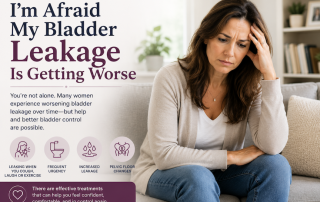
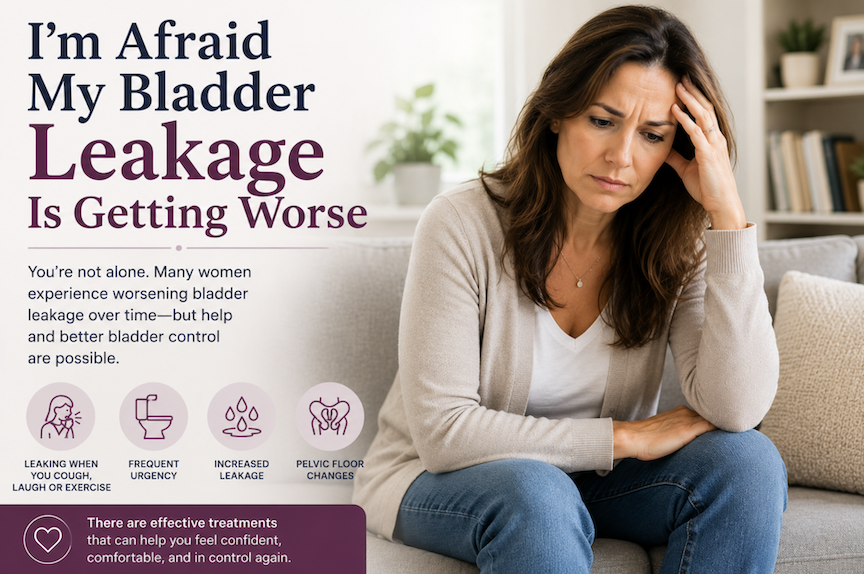
I’m Afraid My Bladder Leakage Is Getting Worse
"I'm Afraid My Bladder Leakage Is Getting Worse" When Occasional Leaks Become Something You Think About Every Day It didn't start all at once. At first, it was just a few drops when you laughed really hard. Maybe you leaked while sneezing. Or during a workout. You told yourself it wasn't a big deal. You wore a thin liner "just in case." You stopped jumping. You crossed your legs before [...]
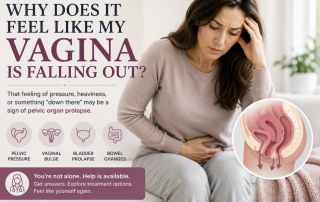
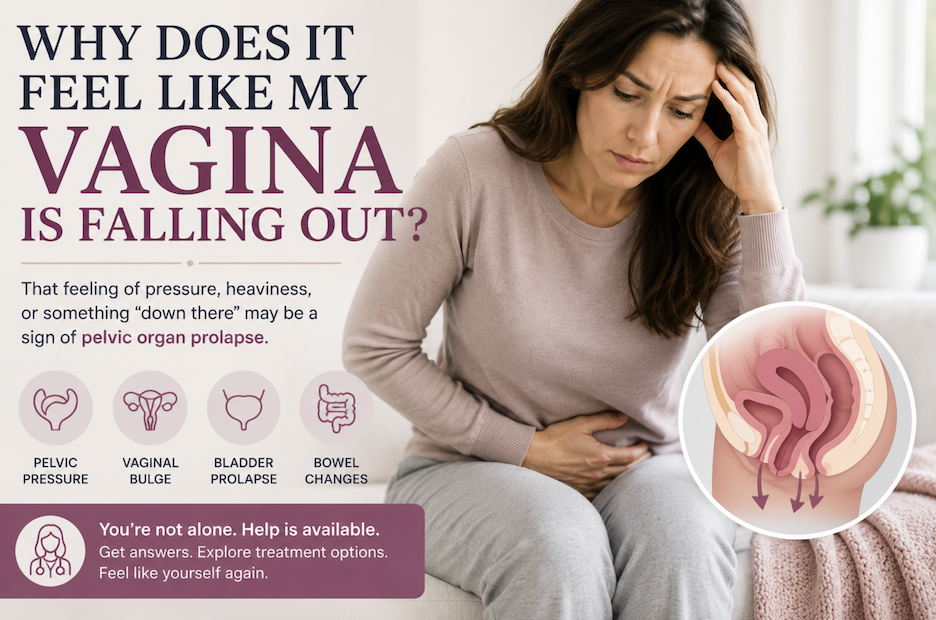
Why Does It Feel Like My Vagina Is Falling Out?
Why Does It Feel Like My Vagina Is Falling Out? Understanding the Sensation of Vaginal Pressure, Bulging, or Something Dropping Few symptoms are as alarming as feeling like your vagina is "falling out." For many women, the sensation appears gradually. You may first notice it after a long day on your feet, after lifting something heavy, or while exercising. Others feel it after childbirth or during menopause, while some women [...]
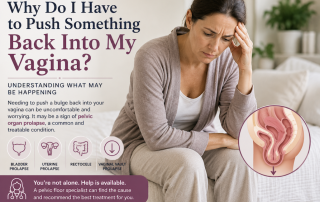
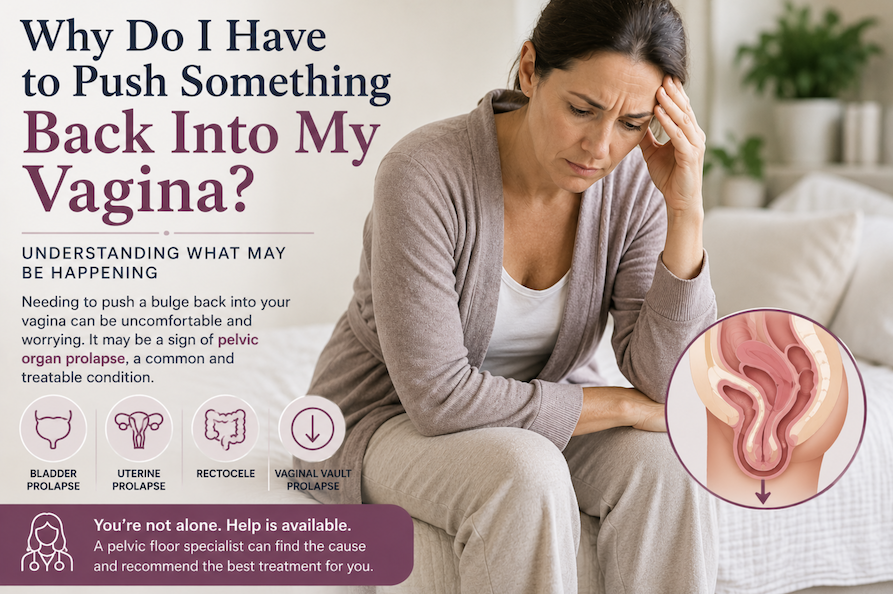
Why Do I Have to Push Something Back Into My Vagina?
Why Do I Have to Push Something Back Into My Vagina? Understanding What May Be Happening "I never thought I'd have to do this." Many women describe the same experience. You go to the bathroom. You wipe. You feel something. At first, you think it must be swelling. Maybe tissue from childbirth. Maybe a hemorrhoid. But over time, you realize something is actually bulging into your vagina. Sometimes it disappears [...]
Why Can’t I Orgasm – Common Reasons Women Have Difficulty Reaching Climax
Why Can't I Orgasm? Common Reasons Women Have Difficulty Reaching Climax If You're Wondering Why You Can't Have an Orgasm, You're Not Alone It's a question many women think about but rarely feel comfortable asking. Maybe you've never had an orgasm. Maybe you used to have them easily, but something has changed. Maybe you can orgasm alone but not with a partner. Or maybe intimacy simply doesn't feel the way [...]

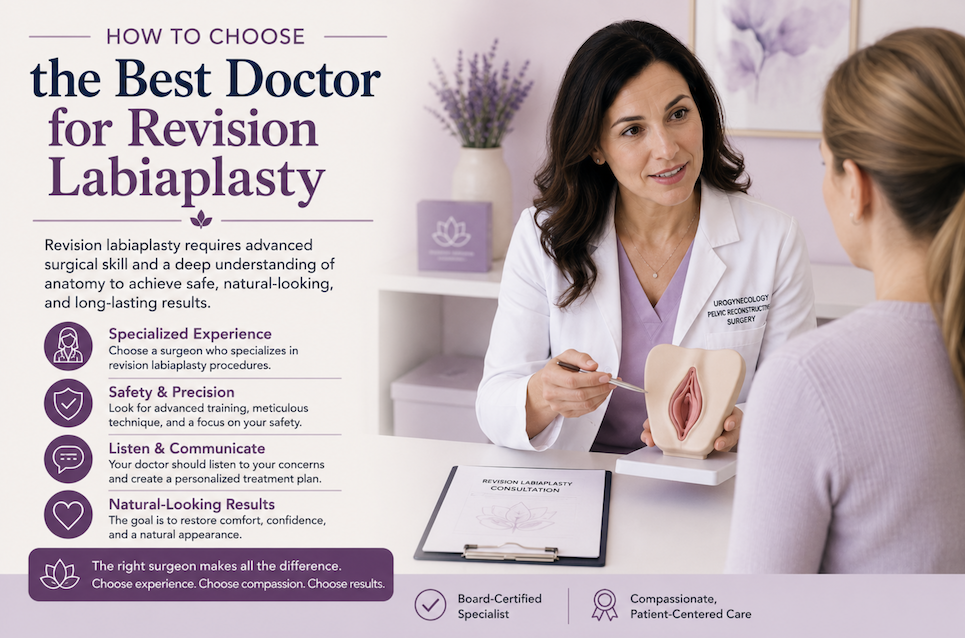
How to Choose the Best Doctor for Revision Labiaplasty
How to Choose the Best Doctor for Revision Labiaplasty What Every Woman Should Know Before Choosing a Specialist If you're considering revision labiaplasty, choosing the right doctor is one of the most important decisions you'll make. Unlike a primary labiaplasty, revision surgery is often more complex because the anatomy has already been altered by a previous procedure. Scar tissue, changes in blood supply, asymmetry, or tissue deficiency can make surgical planning [...]
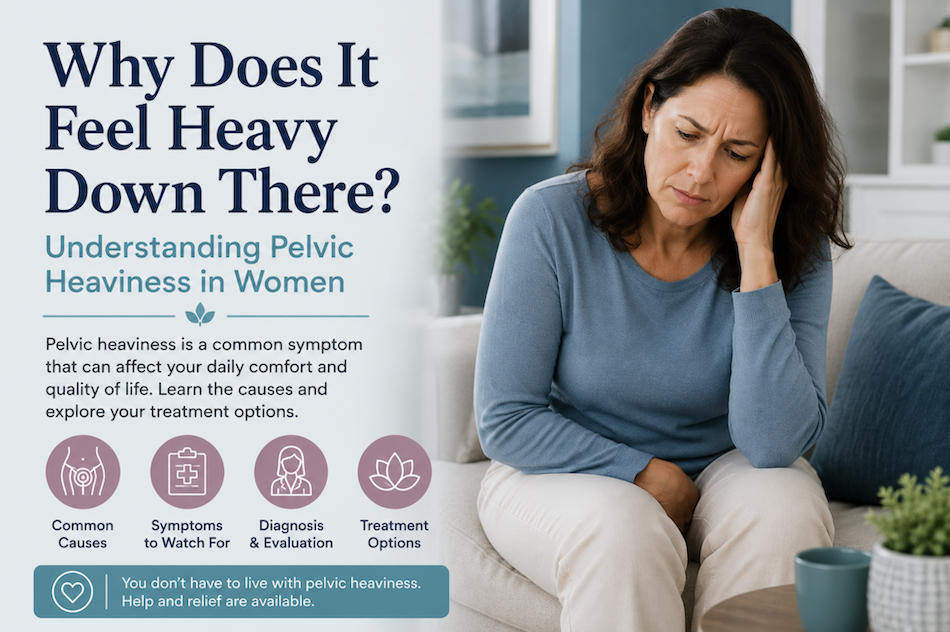
Why Does It Feel Heavy Down There
Why Does It Feel Heavy Down There? Understanding Pelvic Heaviness in Women "It feels like everything is pulling downward." Women describe pelvic heaviness in dozens of different ways. Some say: "It feels like I'm carrying a bowling ball." Others explain: "There's this constant weight between my legs." Many simply say: "Everything feels heavy down there." It's not usually a sharp pain. It isn't always visible. But it's enough to make [...]

Sex Doesn’t Feel the Same Anymore
Sex Doesn't Feel the Same Anymore: Why Intimacy Changes After Childbirth, Menopause, or Aging "I don't know how to explain it... sex just doesn't feel the same anymore." For many women, this is one of the hardest conversations they'll ever have. Some are afraid to mention it because they think it's simply part of getting older. Others worry their partner will think they're no longer interested in intimacy. Many blame [...]





Vaginal Rejuvenation After Childbirth
Vaginal Rejuvenation After Childbirth: When Is the Right Time and What Are Your Options? Having a baby changes a woman's body in remarkable ways. While many postpartum changes gradually improve during the first several months after delivery, some women continue to experience concerns that affect their comfort, confidence, and quality of life long after childbirth. It's common to hear women say: "I don't feel the same after having my baby." [...]