
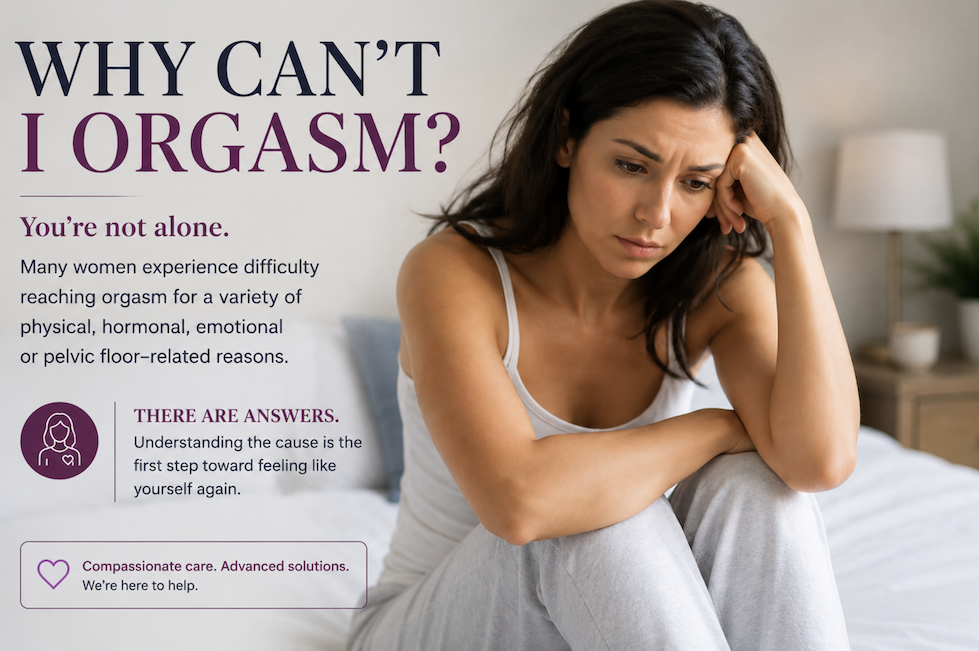
Why Can’t I Orgasm? Common Reasons Women Have Difficulty Reaching Climax
If You’re Wondering Why You Can’t Have an Orgasm, You’re Not Alone
It’s a question many women think about but rarely feel comfortable asking.
Maybe you’ve never had an orgasm.
Maybe you used to have them easily, but something has changed.
Maybe you can orgasm alone but not with a partner.
Or maybe intimacy simply doesn’t feel the way it once did.
Whatever your experience, one thing is important to know:
Difficulty reaching orgasm is more common than many women realize, and it does not mean something is “wrong” with you.
There are many possible physical, hormonal, emotional, relationship, and medical factors that can affect orgasm. Understanding those possibilities is the first step toward finding answers.
At the practice of Dr. John Miklos and Dr. Robert Moore in Alpharetta, Georgia, women seek evaluation for concerns involving sexual function, pelvic floor disorders, menopause-related changes, vaginal laxity, childbirth-related injuries, and other conditions that may contribute to changes in intimacy and orgasm.
Is It Normal to Have Trouble Reaching Orgasm?
Many women experience difficulty reaching orgasm at some point in their lives.
For some, it’s temporary.
For others, it’s something they’ve experienced for years.
Difficulty reaching orgasm may occur:
- During intercourse
- During oral sex
- During self-stimulation
- In all situations
- Only after a major life change, surgery, childbirth, or menopause
Each pattern can provide important clues about the underlying cause.
Why Can’t I Orgasm?
There is rarely just one explanation.
Possible contributing factors include:
Hormonal Changes
Declining estrogen levels during menopause can affect vaginal tissues, lubrication, sensitivity, and comfort during intimacy.
Childbirth
Pregnancy and vaginal delivery can stretch or injure muscles, nerves, and connective tissues that play a role in sexual function.
Some women also notice changes related to pelvic floor weakness or vaginal laxity after childbirth.
Pelvic Floor Disorders
Conditions such as pelvic organ prolapse, pelvic floor muscle dysfunction, or chronic pelvic pain may interfere with comfort during intimacy and affect sexual response.
Medications
Certain antidepressants, blood pressure medications, hormonal therapies, and other prescription medications may affect sexual desire, arousal, or orgasm.
Never stop a prescribed medication without first speaking with the physician who prescribed it.
Medical Conditions
Diabetes, neurologic disorders, thyroid disease, and vascular conditions may affect the nerves and blood flow involved in sexual function.
Pain During Sex
When intimacy is painful, many women naturally become focused on avoiding discomfort rather than enjoying the experience.
Treating the underlying cause of pain may improve sexual function for some women.
Emotional and Relationship Factors
Stress, anxiety, depression, fatigue, relationship concerns, past trauma, body image, and communication difficulties can all influence sexual satisfaction.
These factors are real and important, and they deserve the same attention as physical causes.
What If I Used to Orgasm but Can’t Anymore?
A change in sexual function deserves attention.
Women often notice changes after:
- Menopause
- Childbirth
- Pelvic surgery
- Hysterectomy
- Starting a new medication
- Developing pelvic floor symptoms
- Significant stress or health changes
The key is identifying what changed rather than assuming it’s simply part of getting older.
Does Vaginal Laxity Affect Orgasm?
Some women report changes in sensation after pregnancy, childbirth, or aging.
Research suggests that vaginal laxity may affect sexual satisfaction for some women, although sexual function is complex and influenced by many physical and psychological factors.
A comprehensive evaluation can help determine whether vaginal laxity, pelvic floor dysfunction, hormonal changes, or another condition may be contributing to your symptoms.
Why Women Choose Drs. John Miklos and Robert Moore
For decades, Dr. John Miklos and Dr. Robert Moore have specialized in cosmetic gynecology, female pelvic medicine, and reconstructive pelvic surgery.
They evaluate women experiencing:
- Difficulty reaching orgasm
- Pain during intercourse
- Vaginal laxity
- Childbirth-related pelvic floor changes
- Menopause-related symptoms
- Pelvic organ prolapse
- Urinary incontinence
- Sexual dysfunction related to pelvic floor disorders
- Complex reconstructive pelvic conditions
Their evaluation focuses on understanding the complete picture, including anatomy, pelvic floor function, hormonal influences, and each woman’s personal goals. Treatment recommendations are individualized and based on the identified causes of a patient’s symptoms.
Women Travel From Across the United States
Located in Alpharetta, Georgia, Drs. Miklos and Moore welcome women from Georgia, Florida, Alabama, Tennessee, North Carolina, South Carolina, as well as California, Texas, New York, Illinois, and many other states.
Many patients seek a comprehensive evaluation after years of unanswered questions about intimacy, pelvic floor symptoms, or changes following childbirth or menopause.
You Deserve Answers—Not Embarrassment
Sexual health is an important part of overall health.
If you’ve never had an orgasm, have difficulty reaching climax, or have noticed a significant change in your sexual response, you deserve to have those concerns taken seriously.
For many women, identifying the underlying cause—whether physical, hormonal, emotional, or a combination of factors—is the first step toward improving intimacy and quality of life.
Frequently Asked Questions
Why can’t I orgasm during sex?
Difficulty reaching orgasm can have many contributing factors, including hormonal changes, pelvic floor disorders, medications, pain during intercourse, medical conditions, stress, relationship factors, or individual differences in sexual response.
Is it normal to never have had an orgasm?
Some women have never experienced orgasm, while others develop difficulty later in life. Because there are many possible reasons, an evaluation can help determine whether treatable factors may be involved.
Can menopause make it harder to orgasm?
Yes. Hormonal changes during menopause may affect vaginal tissues, lubrication, sensitivity, and sexual response, although experiences vary from woman to woman.
Can childbirth affect orgasms?
Pregnancy and childbirth may change pelvic floor muscles, nerves, and vaginal tissues. Some women notice changes in sexual function afterward, while others do not.