
Diagnosis & Treatment
Diagnosis: Cystocele or Bladder Prolapse
Treatment: Bladder Suspension/Paravaginal Repair or Anterior Repair
A cystocele is a loss in support through a break in the ceiling of the vagina that allows the bladder to fall into the hollow of the vagina. Drs. Miklos and Moore have written the largest research study in the world on the procedure used to repair a cystocele and have performed more than 2,500 since 1993.
CYSTOCELE
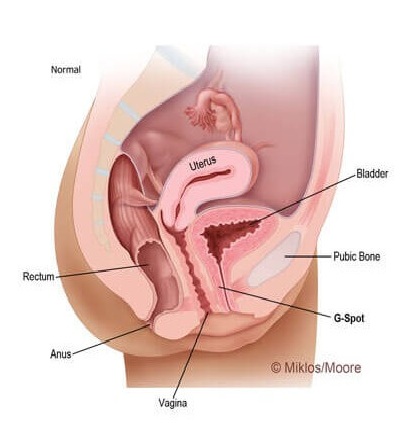
A cystocele is simply another way of describing bladder prolapse. The ceiling of the vagina that holds the bladder in its normal position is broken. When there is a break in the support of the ceiling of the vagina the bladder (cystocele) and urethra (urethrocele) fall or bulge into the hollow of the vagina or out of the vaginal opening. Patients may experience: vaginal pressure, vaginal bulge, lower back pain, urinary leakage, and difficulty emptying her bladder, straining with urination, urgency and frequency. A cystocele can be surgically treated with an anterior or paravaginal repair.
NORMAL VAULT SUPPORT
CYSTOCELE – BLADDER PROLAPSE
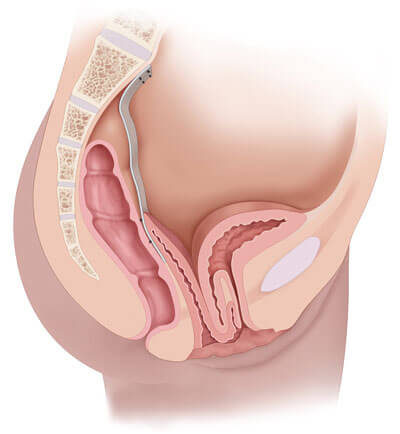
TREATMENTS
PARAVAGINAL REPAIR
The Laparoscopic Paravaginal repair is the most anatomic anatomically correct repair of a cystocele and has the highest cure rate. This simply means the ceiling of the vagina has torn away from its lateral attachment to the pelvic floor muscles. To understand the paravaginal defect, it is best to view the ceiling of the vagina from a bird’s eye view. The paravaginal repair is best accomplished by laparoscopy and using sutures to re-approximate the ceiling of the vagina (pubocervical fascia) back to its original point of attachment, the obturator internus muscle. The paravaginal repair will restore the bladder to its normal anatomical position. Paravaginal repair is the most anatomically correct repair of a cystocele and has the highest cure rate. It requires no incision on the vagina and therefore minimizes or eliminates risks of vaginal shortening. If a patient has urinary leakage, a Laparoscopic Burch procedure can be completed at the same time. Before deciding on bladder prolapse surgery, have your diagnosis and treatment options reviewed by Dr. Miklos and Dr. Moore, two of the most experienced urogynecologists in the United States.
Cystocele – due to paravaginal defects
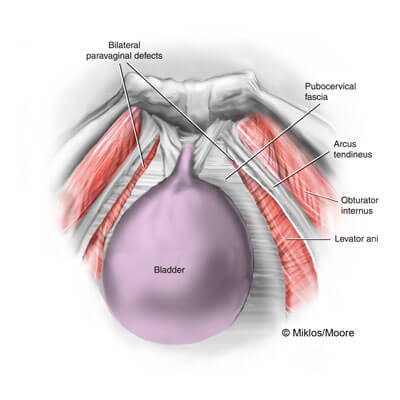
Paravaginal Defect (Cystocele) Repair
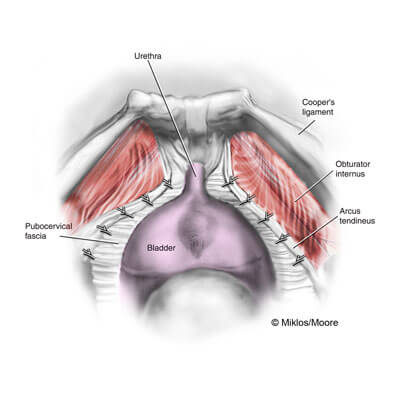
ANTERIOR REPAIR
The Anterior Repair is the most commonly utilized operation for correction of a cystocele because it is a simpler operation than the paravaginal repair. Anterior repairs should be used when the ceiling of the vagina is broken in the midline instead of paravaginally as described above. Doing an anterior repair when a patient has a paravaginal defect will not actually repair the defect, instead the surgeon is just reducing the bulge without fixing the defective anatomy. This is why Drs. Miklos & Moore recommend the laparoscopic paravaginal repair to correct a significant cystocele in most patients. Very few surgeons are skilled enough to perform a Laparoscopic Paravaginal Repair, therefore most will complete the simpler Anterior Repair for cystocele.
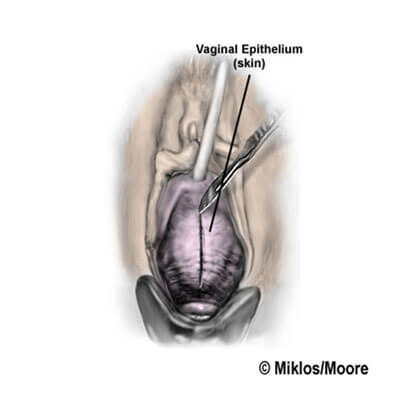
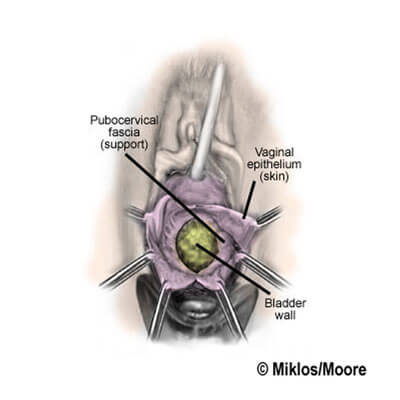
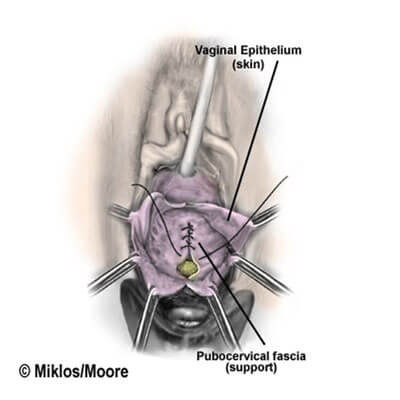
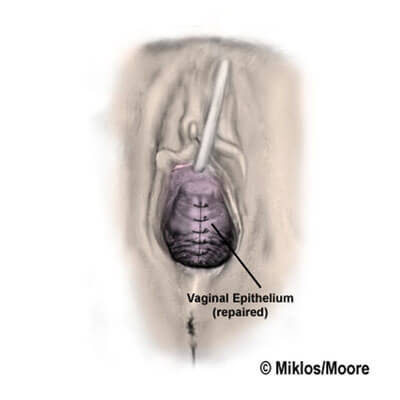
The Anterior Repair is performed through the vaginal opening. The technique is illustrated below:
An incision is made in the skin.
Broken pubocervical fascia is identified
Repairing the pubocervical fascia
Skin closure under bladder
Drs. Miklos & Moore have performed more than 2500 laparoscopic paravaginal repairs since 1993. Their average operative time is less than 30 minutes and average blood loss less than 1 tablespoon of blood. They will use an anterior repair surgery in the appropriate patients but primarily choose the paravaginal repair technique, as it is the anatomically correct way to fix a cystocele
Does Insurance Cover Cystocele (Bladder Prolapse) Surgery?
We work with many major insurance providers, including UMR, United Healthcare, Blue Cross, and Blue Shield, to determine eligibility and help maximize your available benefits when medically appropriate. If you have UMR insurance, your plan may provide coverage for cystocele repair surgery when the procedure is medically necessary. A cystocele — also called bladder prolapse — is a pelvic floor disorder that can cause vaginal bulging, pelvic pressure, urinary leakage, incomplete bladder emptying, and recurrent urinary symptoms. Because cystocele repair is performed to restore normal pelvic support and bladder function, it is considered a functional pelvic floor surgery, not a cosmetic procedure.
Many UMR insurance plans include benefits for bladder prolapse repair, pelvic floor reconstruction, and prolapse surgery, including both vaginal and minimally invasive laparoscopic approaches. Our office routinely verifies UMR insurance coverage for cystocele surgery, obtains required pre-authorizations, and clearly outlines any deductible or out-of-pocket costs before treatment. We are committed to helping women access advanced pelvic floor repair with both surgical excellence and transparent insurance guidance.