
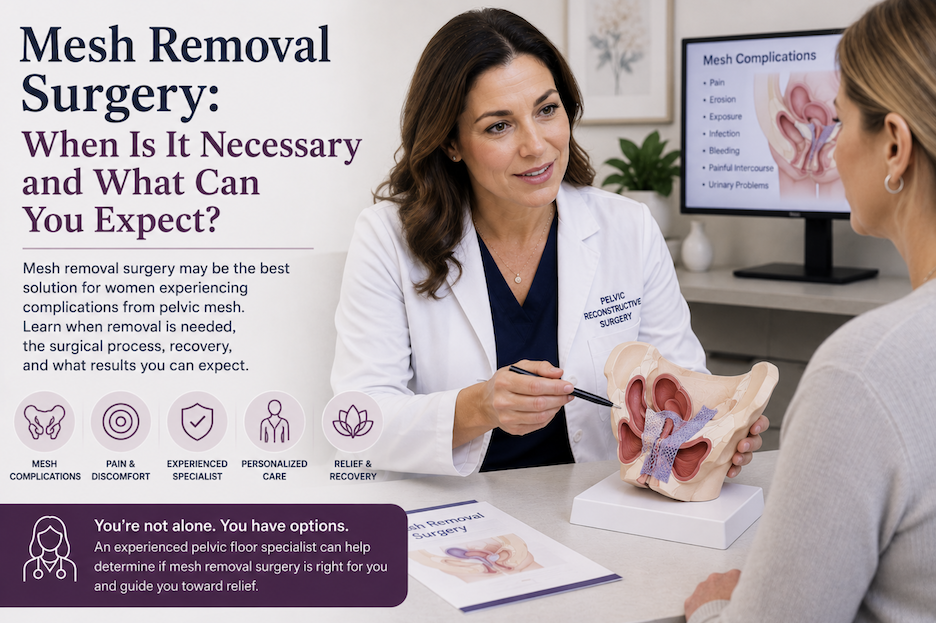
Mesh Removal Surgery: When Is It Necessary and What Can You Expect?
Do You Need Mesh Removal Surgery?
If you’ve previously had surgery for stress urinary incontinence or pelvic organ prolapse and are now experiencing pain, urinary symptoms, vaginal bleeding, or concerns about your mesh, you may be wondering whether mesh removal surgery is the next step.
Common questions include:
- Do I need mesh removal surgery?
- Can pelvic mesh be removed?
- Should all mesh be removed?
- What happens during mesh removal surgery?
The answer depends on why you’re having symptoms.
While some women benefit from mesh revision or removal, many others do not require surgery at all. Before deciding on treatment, it’s important to determine whether your symptoms are actually related to the mesh or another pelvic floor condition.
Can Pelvic Mesh Be Removed?
Yes.
Depending on the situation, surgeons may perform:
- Partial mesh removal
- Complete mesh removal when appropriate
- Mesh revision
- Removal of exposed mesh
- Reconstruction of surrounding tissues
However, mesh removal is not the right treatment for every patient.
The surgical plan depends on:
- Your symptoms
- The type of mesh used
- Where the mesh was placed
- Your previous surgeries
- Whether other pelvic floor disorders are present
Why Might Mesh Removal Be Recommended?
Your physician may recommend further evaluation if you develop symptoms such as:
- Chronic pelvic pain
- Vaginal bleeding
- Vaginal mesh exposure
- Pain during intercourse
- Recurrent urinary tract infections
- Difficulty emptying the bladder
- Persistent urinary leakage
- Partner discomfort during intercourse
These symptoms deserve careful evaluation, although they are not always caused by mesh.
When Mesh Removal May Not Be Necessary
Not every woman with implanted mesh needs another operation.
For example:
- You have no symptoms.
- Your symptoms are unrelated to the mesh.
- Conservative treatment may improve your condition.
- The risks of removal outweigh the potential benefits.
The goal is to improve your quality of life—not simply remove mesh because it is present.
What Happens Before Surgery?
Before recommending mesh removal, your physician should first understand exactly what procedure you had and why you’re experiencing symptoms.
Your evaluation may include:
- Review of prior operative reports
- Detailed medical history
- Pelvic examination
- Assessment for pelvic organ prolapse
- Bladder function testing when indicated
- Cystoscopy in selected patients
- Imaging when appropriate
This evaluation helps determine whether surgery is likely to improve your symptoms.
What Happens During Mesh Removal Surgery?
Every operation is different.
Depending on your condition, surgery may involve:
- Removing exposed vaginal mesh
- Releasing scar tissue
- Partial mesh excision
- Complete removal when feasible and appropriate
- Repairing damaged vaginal tissue
- Reconstructing pelvic floor support
- Addressing associated urinary or prolapse conditions
The extent of surgery varies considerably from one patient to another.
Is Mesh Removal More Difficult Than the Original Surgery?
In many cases, yes.
Over time, mesh becomes incorporated into surrounding tissues as part of the healing process. Scar tissue forms around the implant, and nearby structures—including the bladder, urethra, bowel, and pelvic nerves—must be carefully protected during revision surgery.
Because of this complexity, every mesh removal procedure requires individualized planning.
Will Mesh Removal Eliminate My Symptoms?
Not always.
The outcome depends on the cause of your symptoms.
For example:
- Mesh exposure may improve after removal of the exposed portion.
- Pain caused by another pelvic floor disorder may persist if the mesh is not actually responsible.
- Persistent urinary leakage may require additional treatment beyond mesh removal.
Understanding what surgery can—and cannot—reasonably accomplish is an important part of treatment planning.
Why Careful Surgical Planning Matters
Mesh revision surgery is rarely a straightforward procedure. Women seeking treatment often have multiple overlapping concerns, such as pelvic pain, urinary leakage, recurrent prolapse, bladder dysfunction, or previous pelvic surgeries.
Developing the right surgical plan requires identifying which symptoms are related to the mesh, which are caused by other pelvic floor conditions, and which treatments are most likely to improve quality of life. Sometimes that plan includes mesh removal. In other cases, a different treatment may offer a better solution with less risk.
Thoughtful planning before surgery is one of the most important factors in achieving a successful outcome.
Why Women Choose Miklos & Moore for Mesh Revision
Many women seeking help after previous pelvic surgery are looking for answers as much as treatment.
Drs. John Miklos and Robert Moore have extensive experience evaluating women with complex pelvic floor disorders, including prior prolapse repairs, urinary incontinence procedures, and revision pelvic surgery. Their consultations focus on understanding each patient’s surgical history, reviewing prior records whenever possible, and determining whether symptoms are truly related to mesh or another underlying condition.
Rather than recommending surgery as the default solution, they develop individualized treatment plans that may include observation, conservative therapies, partial revision, or mesh removal when appropriate. This patient-centered approach helps women understand both the potential benefits and the limitations of each treatment option before moving forward.
Take the Next Step With Confidence
If you’ve previously undergone pelvic floor surgery and are concerned about mesh, you don’t have to make decisions based on uncertainty or fear.
A comprehensive evaluation can help determine the cause of your symptoms, explain whether mesh removal is appropriate, and provide a clear understanding of your treatment options so you can make an informed decision.
Frequently Asked Questions
Can pelvic mesh be removed?
Yes. Depending on the patient’s condition, surgeons may perform partial or complete mesh removal, although not every woman requires surgery.
Does all mesh have to be removed?
No. Many women with mesh never develop complications, and some symptoms are unrelated to the implant itself.
Is mesh removal surgery difficult?
Revision surgery is often more complex than the original operation because of scar tissue and the close relationship between the mesh and surrounding pelvic structures.
Will mesh removal stop pelvic pain?
It depends on the underlying cause of the pain. Some women improve after mesh removal, while others require treatment for different pelvic floor conditions.
How do I know if I need mesh removal?
The best way to determine whether mesh removal is appropriate is through a comprehensive evaluation by a pelvic floor specialist experienced in revision surgery.
Why choose Drs. Miklos and Moore?
Women considering mesh revision often need individualized answers rather than a one-size-fits-all recommendation. Drs. Miklos and Moore carefully review each patient’s symptoms, prior procedures, pelvic anatomy, and treatment goals before recommending surgery. Their emphasis on detailed evaluation and personalized surgical planning helps ensure that mesh removal is considered only when it is likely to provide meaningful benefit.