
VAGINOPLASTY RECOVERY: WHY SURGICAL EXPERIENCE MATTERS
Recovering from vaginoplasty involves more than allowing the tissues to heal. Because the procedure restores the vaginal canal and supporting muscles, meticulous surgical technique plays a critical role in postoperative comfort, long-term function, and achieving durable, natural-feeling results. Drs. Miklos and Moore have performed thousands of cosmetic and reconstructive vaginal procedures and have developed advanced techniques that emphasize precise tissue repair, anatomical restoration, and individualized patient care. Their comprehensive postoperative protocols, attentive follow-up, and decades of experience help patients recover with confidence while optimizing both functional and cosmetic outcomes. Most women experience steady improvement during the first several weeks, with continued refinement as swelling resolves and the tissues fully heal.
Vaginoplasty Recovery: Healing, Tightness, Discharge & What to Expect After Surgery
Recovery after vaginoplasty is different from almost every other cosmetic gynecologic procedure because much of the healing occurs inside the vagina, where it cannot be seen. While patients naturally focus on the external appearance after surgery, the most important part of recovery is actually the healing of the deeper muscles and connective tissues that were repaired to restore vaginal support and tightness.
For many women, vaginoplasty is performed after childbirth has stretched the vaginal canal or weakened the tissues that support the vagina. Others choose surgery because they feel less friction during intimacy, experience a sensation of vaginal looseness, or simply wish to restore anatomy that has changed over time.
Whatever your reason for surgery, recovery requires patience.
The good news is that most women are pleasantly surprised by how manageable recovery is. While feelings of pelvic pressure, vaginal tightness, swelling, and mild discomfort are expected during the first several weeks, severe pain is uncommon. As healing progresses, the repaired tissues gradually become stronger, swelling resolves, and patients return to their normal daily activities with increasing confidence.
One of the most important things to understand before surgery is that vaginoplasty recovery cannot be judged by what you see in the mirror. Because the repair is largely internal, much of the healing happens beneath the surface. Even when the external incision appears well healed, the muscles and supportive tissues inside the vagina continue strengthening for several more weeks.
At Miklos & Moore, Dr. John Miklos and Dr. Robert Moore have devoted decades to female pelvic reconstructive surgery and advanced vaginal reconstructive procedures. Their extensive experience includes thousands of vaginal surgeries, numerous peer-reviewed scientific publications, and international teaching on pelvic floor reconstruction. Every patient receives individualized postoperative instructions designed to protect the repair while promoting a smooth recovery.
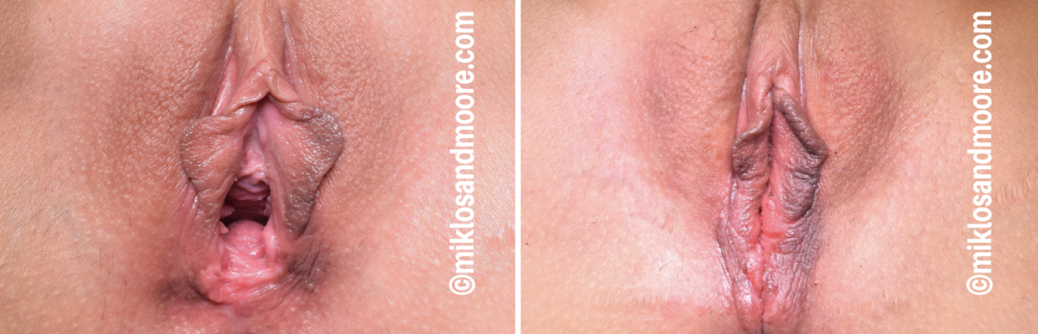
Before and after vaginoplasty recovery photos demonstrating the gradual healing process and improved vaginal support as swelling resolves after surgery.
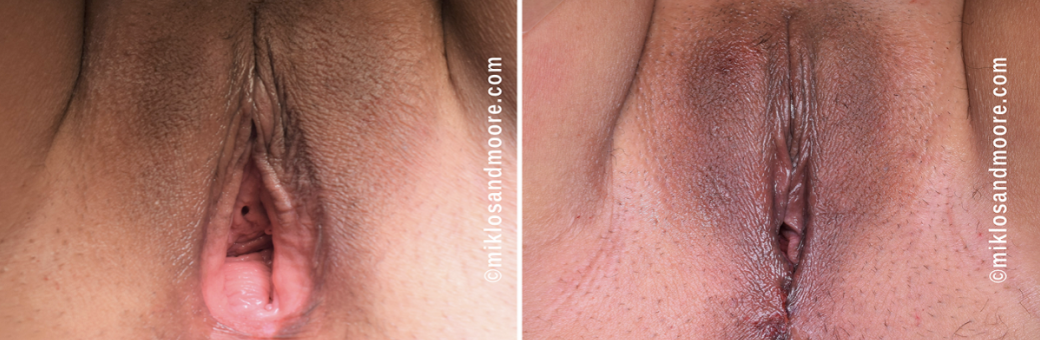
Healed before and after vaginoplasty photos demonstrating restored vaginal support, improved contour, and natural-looking results following full recovery.
Understanding What Happens During Vaginoplasty
Many patients believe vaginoplasty simply “tightens the vagina.”
In reality, the procedure is considerably more sophisticated.
During surgery, the vaginal muscles and supportive connective tissues are carefully repaired and brought back together. Excess vaginal tissue may also be removed to restore a more youthful vaginal diameter while maintaining normal anatomy.
Unlike labiaplasty, which primarily reshapes external tissues, vaginoplasty reconstructs structures that provide support from within.
Because these deeper tissues are responsible for much of the strength of the repair, they require time to heal before they can safely tolerate strenuous activity or sexual intercourse.
Understanding this helps explain why recovery instructions are so important.
The goal is not simply to heal the skin.
The goal is to allow the deeper repair to become strong enough to provide long-lasting results.
How Internal Healing Differs From External Healing
One reason patients become anxious after vaginoplasty is that they cannot easily see what is happening inside the vagina.
Unlike an incision on the skin, internal tissues heal quietly beneath the surface.
Immediately after surgery, your body begins repairing tiny blood vessels and producing new collagen.
During the first several weeks, the repaired muscles remain firm while collagen creates a temporary internal framework that strengthens the repair.
Patients often describe this stage as feeling:
- Tight
- Full
- Swollen
- Different than expected
These sensations are normal.
As collagen remodels over the following months, the tissues gradually soften while maintaining the improved support created during surgery.
This is one reason surgeons encourage patients not to judge the final result too early.
Healing continues long after the external incision appears completely healed.
The First 48 Hours
During the first two days after surgery, most women experience mild soreness rather than significant pain.
Common symptoms include:
- Pelvic pressure
- Vaginal tightness
- Mild spotting
- Swelling around the vaginal opening
- Fatigue
Many patients compare the sensation to muscle soreness after an intense workout rather than sharp surgical pain.
Walking around the house several times each day is encouraged because it promotes healthy circulation and reduces stiffness.
However, prolonged standing, lifting, and strenuous activity should be avoided during this early stage.
Many women also notice a small amount of vaginal drainage or spotting.
This is usually expected and gradually decreases over the following days.
Patients should wear sanitary pads rather than tampons during recovery unless specifically instructed otherwise by their surgeon.
The First Week: Healing the Repair
During the first week, your body is focused on stabilizing the reconstructed vaginal muscles.
Although discomfort usually begins improving each day, swelling often reaches its peak before gradually decreasing.
Patients commonly notice:
- Vaginal pressure
- Tightness while sitting
- Mild bruising
- Spotting
- Temporary difficulty distinguishing swelling from the actual surgical result
Because the repair is largely internal, many women become concerned that they cannot tell whether everything is healing correctly.
Fortunately, this is exactly why scheduled follow-up appointments are important.
Your surgeon evaluates healing based on the condition of the tissues—not simply how the area feels.
The first week is also when patients should be especially careful to avoid lifting heavy objects, vigorous exercise, or activities that increase pressure within the pelvis.
Protecting the repair during these early days gives the muscles and connective tissues the best opportunity to heal properly.
The First Two Weeks: What Happens During Recovery
For most women, the first two weeks after vaginoplasty are marked by steady improvement rather than dramatic changes from one day to the next. Unlike labiaplasty, where swelling of the external tissues is easy to see, much of the healing after vaginoplasty occurs inside the vaginal canal. This often makes recovery feel uncertain because patients cannot easily visualize what is happening.
The most important thing to remember is that internal healing always takes longer than external healing.
Although the vaginal opening may look relatively normal within a few weeks, the muscles and connective tissues repaired during surgery are still rebuilding their strength beneath the surface.
This is why surgeons emphasize patience throughout recovery.
Days 1–3: Tightness Is a Good Sign
During the first several days, the most common sensation patients describe is tightness.
Many women worry that the vagina feels “too tight.”
In reality, this feeling is expected.
The muscles have been restored to a more natural position, swelling is present, and the tissues are temporarily firm because the body has already begun producing collagen.
Patients commonly notice:
- Pelvic pressure
- Vaginal tightness
- Mild soreness
- Swelling near the vaginal opening
- Light spotting
- Fatigue
These symptoms generally improve with each passing day.
Walking around the house several times daily is encouraged because it promotes circulation and helps reduce stiffness without placing significant stress on the repair.
Understanding Vaginal Discharge During Recovery
One of the questions patients ask most frequently is whether vaginal discharge is normal after surgery.
The answer is yes.
As the incision heals, it is common to experience:
- Light pink spotting
- Small amounts of blood-tinged drainage
- Clear discharge
- Yellowish drainage associated with normal wound healing
This discharge gradually decreases as healing progresses.
Because the repair is inside the vagina, some drainage is expected and should not immediately be interpreted as a complication.
However, discharge that develops a foul odor, becomes thick and green, or is associated with increasing pain or fever should always be reported to your surgeon.
Understanding the difference between normal healing discharge and signs of infection helps patients recover with much greater confidence.
Your First Bowel Movement
Many women worry that having a bowel movement will place too much pressure on the repair.
Fortunately, normal bowel movements rarely cause problems.
The greater concern is constipation.
Prescription pain medication, decreased activity, and changes in diet can all contribute to constipation during the first week.
For this reason, many surgeons recommend:
- Drinking plenty of water.
- Eating a high-fiber diet.
- Taking stool softeners if recommended.
- Avoiding unnecessary straining.
The repaired vaginal muscles are designed to withstand normal daily function.
The goal is simply to minimize excessive pressure while healing occurs.
Patients who experience persistent constipation should contact their surgeon rather than repeatedly straining.
Week Two: Swelling Begins to Improve
The second week is often when patients begin feeling significantly more comfortable.
Although the repair is still healing internally, everyday activities generally become easier.
Many women notice:
- Less pelvic pressure.
- Less spotting.
- Improved comfort while walking.
- Increased energy.
- Reduced swelling around the vaginal opening.
Some patients also notice occasional pulling sensations inside the vagina.
This is usually related to normal tissue healing and collagen remodeling rather than a problem with the repair itself.
Returning to Sitting Normally
Unlike perineoplasty, where sitting directly affects the reconstructed perineum, vaginoplasty patients often describe discomfort as a feeling of internal pressure rather than pain from sitting itself.
During the first week, prolonged sitting may increase pelvic fullness simply because gravity causes mild swelling to accumulate throughout the day.
Many women find it helpful to:
- Change positions frequently.
- Stand every hour.
- Avoid sitting continuously for long periods.
By the second and third weeks, sitting usually becomes much more comfortable.
Five Recovery Concerns Patients Commonly Have
Understanding what other women experience during recovery often helps reduce anxiety.
The following concerns are among the most common questions discussed during postoperative visits.
“The Vagina Feels Too Tight.”
Immediately after surgery, nearly every patient feels tighter than expected.
This sensation results from three normal healing factors:
- Muscle repair
- Swelling
- Temporary tissue firmness
As healing progresses, the tissues gradually become more flexible while maintaining the improved support created during surgery.
Patients should avoid judging the final result during the first several weeks.
“I’m Afraid I’ll Damage the Repair.”
Many women become extremely cautious after surgery.
Simple activities such as coughing, sneezing, climbing stairs, or getting out of bed often create concern that something has torn.
Fortunately, normal daily movement rarely damages the repair.
The muscles have been carefully reconstructed using strong sutures designed to support healing.
The greater concern involves:
- Heavy lifting
- High-impact exercise
- Chronic straining
- Returning to intercourse too early
Following postoperative instructions greatly reduces these risks.
“I Still Have Vaginal Discharge.”
Patients are often surprised that discharge continues after the first week.
Because healing occurs inside the vagina, this is completely expected.
Small amounts of drainage frequently continue while the incision remodels.
The amount should gradually decrease rather than increase.
“Everything Feels Different.”
Perhaps more than any other procedure, vaginoplasty changes how the vaginal canal feels during recovery.
Patients often describe:
- Fullness
- Tightness
- Pressure
- Increased awareness of the vagina
These sensations generally become much less noticeable over time as the tissues soften.
“Recovery Has Been Easier Than I Expected.”
Interestingly, this is one of the comments surgeons hear most often.
Many women anticipate weeks of severe pain.
Instead, they frequently discover that recovery involves temporary discomfort, activity restrictions, and patience rather than overwhelming pain.
Understanding this before surgery often reduces unnecessary fear and allows patients to approach recovery with greater confidence.
Returning to Everyday Activities
One of the most common questions after vaginoplasty is “When can I get back to my normal life?” While many women feel significantly better within the first two weeks, complete healing takes considerably longer than most patients realize. The vaginal muscles repaired during surgery need time to regain strength, and allowing those tissues to heal properly is one of the most important factors in achieving a durable, long-lasting result.
The good news is that recovery is progressive. Each week usually brings less discomfort, more confidence, and a gradual return to normal activities.
Returning to Work
The amount of time away from work depends largely on your occupation.
Women with desk jobs are often able to return within one to two weeks, especially if they can avoid prolonged sitting and take short walking breaks throughout the day.
Returning to work is often easier when you:
- Wear loose, comfortable clothing.
- Stand and stretch every hour.
- Stay hydrated.
- Avoid lifting heavy objects.
- Listen to your body if fatigue develops.
Women whose jobs require lifting, prolonged standing, climbing, or physically demanding activity often benefit from additional recovery time before returning to full duty.
Remember that feeling well enough to work does not necessarily mean the internal repair has completely healed.
Returning to Exercise
Exercise is an important part of maintaining overall health, but patience is essential after vaginoplasty.
The muscles reconstructed during surgery need adequate time to heal before they are subjected to repeated increases in abdominal pressure.
Walking remains the ideal exercise during early recovery because it improves circulation without stressing the repair.
Higher-impact activities should be resumed gradually and only after clearance from your surgeon.
Activities that generally require the longest recovery include:
- Running
- Jumping
- HIIT training
- Cycling
- Spin classes
- Rowing
- Heavy weightlifting
- Squats
- Deadlifts
- Contact sports
These activities significantly increase pressure throughout the pelvic floor and may place unnecessary stress on healing muscles.
Many patients feel physically capable of exercising before their tissues are fully healed. Following your surgeon’s recommendations rather than the calendar helps reduce the risk of setbacks.
When Can You Resume Sexual Activity?
For many women, improving intimacy is one of the primary reasons they choose vaginoplasty. Naturally, one of the biggest questions after surgery is when sexual intercourse can safely resume.
Although the external tissues often appear well healed after several weeks, the muscles inside the vagina continue strengthening beneath the surface.
Returning to intercourse too soon may:
- Increase discomfort
- Cause bleeding
- Delay healing
- Increase swelling
- Place unnecessary stress on the muscle repair
For these reasons, most surgeons recommend waiting until healing is complete and you have been examined during a postoperative visit.
Even after receiving clearance, it is perfectly normal to feel anxious the first time.
Many women wonder:
- Will I feel too tight?
- Will intercourse be uncomfortable?
- Will my partner notice a difference?
- Will everything feel natural?
These concerns are extremely common.
Fortunately, most patients report that confidence improves quickly once healing is complete. As swelling resolves and the tissues become more flexible, intimacy often becomes more comfortable than it was before surgery.
Long-Term Healing
One of the most misunderstood aspects of vaginoplasty recovery is how long the body continues changing after surgery.
Many women believe healing is complete after six weeks.
In reality, healing continues for several months.
During this period:
- The repaired muscles continue strengthening.
- Scar tissue becomes softer.
- Swelling gradually resolves.
- Vaginal tissues become more flexible.
- The final vaginal diameter becomes more consistent.
- Overall comfort continues improving.
This gradual remodeling process is one reason surgeons encourage patients not to judge their final result too early.
The body continues refining the repair long after patients have returned to their normal activities.
When Should You Contact Your Surgeon?
Most women recover without significant complications, but certain symptoms deserve prompt medical attention.
Contact your surgeon if you experience:
- Heavy vaginal bleeding
- Fever greater than 101°F
- Increasing pelvic pain instead of gradual improvement
- Thick yellow or green discharge
- A foul vaginal odor
- Rapidly increasing swelling
- Difficulty urinating
- Severe constipation despite following postoperative instructions
- Separation of the incision
Most postoperative concerns ultimately turn out to be part of normal healing, but early communication with your surgeon allows any problems to be addressed promptly.
Why Experience Matters
Vaginoplasty is much more than a cosmetic procedure. It is a reconstructive operation that restores support to the vaginal canal while preserving normal anatomy and function. Success depends on understanding the complex relationship between the vaginal muscles, connective tissue, pelvic floor, and surrounding structures.
Dr. John Miklos and Dr. Robert Moore have devoted decades to female pelvic reconstructive surgery and cosmetic gynecology. They have performed thousands of vaginal reconstructive procedures, published extensively in peer-reviewed medical journals, and lectured throughout the United States and internationally on advanced pelvic floor surgery.
Their extensive experience allows them to develop individualized surgical plans based on each woman’s anatomy, symptoms, and goals. Careful reconstruction, meticulous tissue handling, and comprehensive postoperative care all contribute to smoother healing and durable long-term results.
Frequently Asked Questions
How long does vaginoplasty recovery take?
Most women return to many normal daily activities within one to two weeks. However, complete healing of the vaginal muscles and connective tissues continues for several months.
Is vaginal tightness normal after surgery?
Yes. Tightness is expected during the early stages of recovery and reflects both swelling and the reconstructed support of the vaginal muscles. The tissues gradually soften while maintaining the benefits of the repair.
How long will I have vaginal discharge?
Light spotting and mild vaginal discharge are common during the early healing period. The amount should gradually decrease over time. Any foul-smelling or increasing discharge should be evaluated by your surgeon.
When can I exercise again?
Walking is encouraged shortly after surgery, but running, heavy lifting, cycling, rowing, and other strenuous activities should wait until your surgeon confirms that healing is progressing appropriately.
When can I have sex after vaginoplasty?
Most patients should wait until they have healed completely and received clearance from their surgeon before resuming sexual intercourse.
Will my vagina remain too tight?
No. During the first several weeks, swelling and healing tissues create a feeling of increased tightness. As recovery progresses, the tissues become more flexible while maintaining the improved support created during surgery.
When will I know my final results?
Most women notice significant improvement within the first several months, although internal tissue remodeling and scar maturation continue well beyond the initial healing period.
Schedule a Consultation with Miklos & Moore
If you are considering vaginoplasty or have questions about recovery, Dr. John Miklos and Dr. Robert Moore provide comprehensive consultations and individualized treatment plans designed to restore vaginal support, improve function, and enhance quality of life. Their internationally recognized expertise in female pelvic reconstruction and cosmetic gynecology allows patients to benefit from decades of surgical experience, advanced techniques, and attentive postoperative care focused on achieving safe healing and long-lasting results.