
Vaginal Tightening Before and After Photos
Vaginal tightening surgery is designed to restore support, improve vaginal laxity, and reconstruct tissues that have stretched due to childbirth, aging, menopause, or other factors. Many women notice changes in vaginal tightness after one or more vaginal deliveries, including decreased support, an enlarged vaginal opening, or reduced sensation during intimacy. Depending on your individual anatomy and symptoms, vaginal tightening may involve vaginoplasty, perineoplasty, or a combination of procedures to restore both the vaginal canal and the vaginal opening.
The before and after photos below feature real patients who underwent vaginal tightening surgery performed by Dr. John Miklos and Dr. Robert Moore. These images demonstrate how individualized surgical treatment can restore vaginal support, repair stretched muscles and connective tissues, improve the appearance of the vaginal opening, and enhance both function and confidence. Every procedure is carefully customized to each patient’s unique anatomy, symptoms, and treatment goals to achieve natural-looking, functional results.
Women often consider vaginal tightening surgery to address:
- Vaginal laxity after childbirth
- Loss of vaginal tightness
- An enlarged vaginal opening
- Weakened vaginal muscles
- Decreased sensation during intimacy
- Childbirth-related stretching of the vaginal canal
- Changes associated with aging or menopause
- A desire to restore vaginal support, comfort, and confidence
While these before and after photos demonstrate real surgical outcomes, every woman’s anatomy, healing process, and results are unique. During your consultation, Dr. John Miklos and Dr. Robert Moore perform a comprehensive pelvic floor evaluation to determine whether vaginoplasty, perineoplasty, or a combination of procedures is the most appropriate treatment for your individual concerns and goals.
Warning: This page contains clinical before and after photographs of intimate surgical procedures. These images are intended for education purposes and to help prospective patients understand potential surgical outcomes. By continuing, you acknowledge you are at least 18 years of age and are viewing this information for legitimate medical or educational purposes.
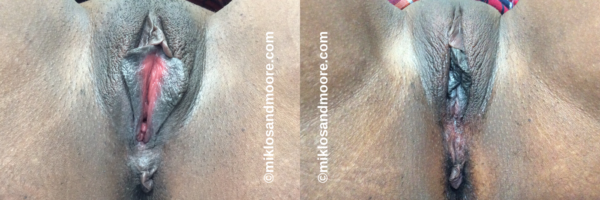
This patient underwent vaginal tightening surgery to restore support, improve vaginal laxity, and repair tissues stretched during childbirth. Individual results vary.
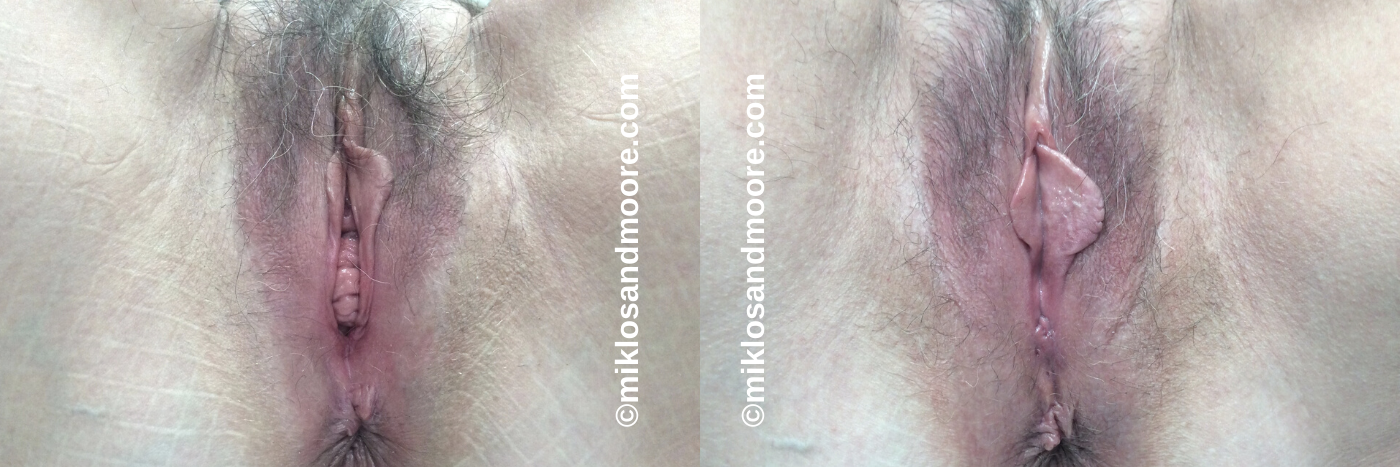
These before and after photos demonstrate how vaginal tightening surgery can restore the vaginal canal and improve pelvic floor support through a personalized treatment plan. Individual results vary.
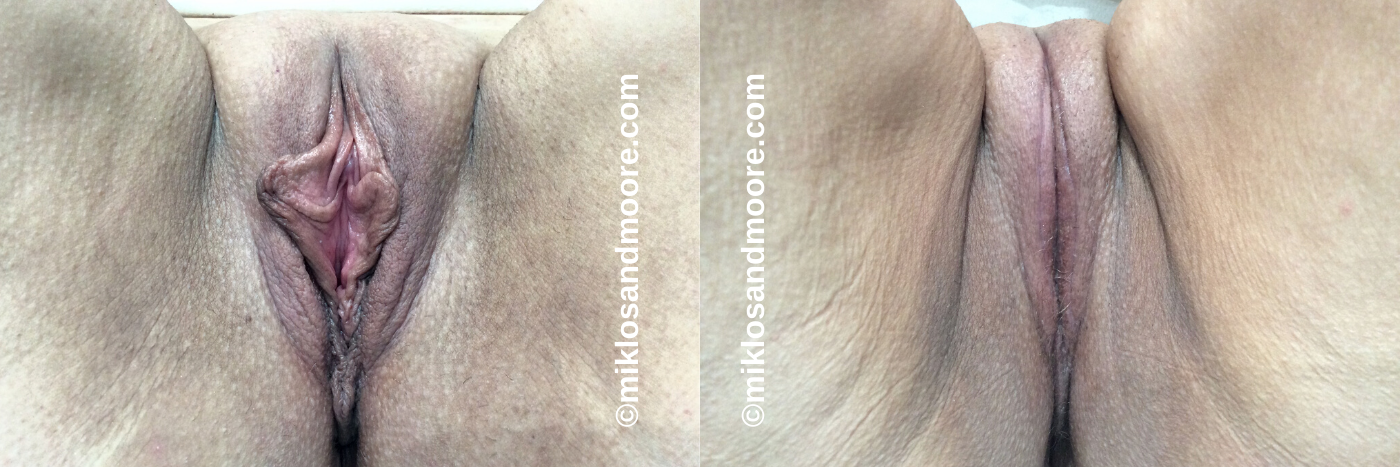
This patient chose vaginal tightening surgery to address decreased vaginal tightness and an enlarged vaginal opening following childbirth. Treatment was customized to restore support, improve function, and achieve natural-looking results. Individual results vary.
What These Vaginal Tightening Before and After Photos Show
These vaginal tightening before and after photos demonstrate real patient outcomes following procedures designed to restore vaginal support, improve vaginal laxity, and reconstruct tissues that have stretched due to childbirth, aging, or menopause. While many women use the term “vaginal tightening,” the actual surgical treatment is individualized and may include vaginoplasty, perineoplasty, or a combination of both procedures depending on each patient’s anatomy and symptoms.
Women commonly seek vaginal tightening surgery because they experience decreased vaginal tightness, an enlarged vaginal opening, weakened pelvic floor support, reduced sensation during intimacy, or changes that affect comfort and confidence. The goal of treatment is to restore the normal anatomy and support of the vaginal canal and vaginal opening while preserving comfort, function, and natural appearance.
During your consultation, Dr. John Miklos and Dr. Robert Moore perform a comprehensive pelvic floor evaluation to determine the underlying cause of your symptoms and recommend the most appropriate treatment plan. These photographs are provided for educational purposes to help patients better understand the procedure and the types of results that may be achieved. Because every woman’s anatomy, tissue quality, healing process, and treatment goals are unique, individual results vary, and no two patients will have identical outcomes.
Frequently Asked Questions About Vaginal Tightening
1. What is vaginal tightening surgery?
Vaginal tightening surgery is a general term used to describe procedures that restore support to the vaginal canal and vaginal opening. Depending on your anatomy and symptoms, treatment may include vaginoplasty, perineoplasty, or a combination of both procedures to improve vaginal laxity and restore normal pelvic floor support.
2. Who is a good candidate for vaginal tightening?
You may be a candidate if you experience:
- Vaginal laxity after childbirth
- Loss of vaginal tightness
- An enlarged vaginal opening
- Reduced sensation during intimacy
- Weakened pelvic floor support
- Childbirth-related stretching of the vaginal canal
- Changes associated with aging or menopause
A comprehensive consultation with Dr. John Miklos and Dr. Robert Moore will determine the most appropriate treatment for your individual needs.
3. Is vaginal tightening the same as vaginoplasty?
Not always. “Vaginal tightening” is a broad term that many patients use to describe procedures that improve vaginal support and tightness. Vaginoplasty repairs the deeper muscles and connective tissues of the vaginal canal, while perineoplasty reconstructs the vaginal opening and perineal body. Many women benefit from having both procedures performed together.
4. How long do vaginal tightening results last?
Surgical vaginal tightening is designed to provide long-lasting results by repairing stretched muscles and supportive tissues. While future pregnancy, childbirth, aging, and menopause may affect the pelvic floor over time, many women enjoy the benefits of surgery for many years.
5. How long is recovery after vaginal tightening surgery?
Recovery varies depending on the procedures performed and your individual healing. Most women return to many normal daily activities within a few weeks, while complete healing continues over several months. Your surgeon will provide personalized postoperative instructions and guidance on when it is safe to resume exercise and sexual activity.
6. Can vaginal tightening improve intimacy?
Many women seek vaginal tightening surgery because childbirth or aging has resulted in vaginal laxity or decreased support that affects comfort or confidence during intimacy. By restoring support to the vaginal canal and vaginal opening, surgery may improve comfort and sexual function. Individual results vary.
7. Can vaginal tightening be combined with other procedures?
Yes. Vaginal tightening is frequently combined with:
- Labiaplasty
- Clitoral hood reduction
- Monsplasty
- Pelvic organ prolapse repair
- Other vaginal rejuvenation procedures
Your treatment plan is customized to your anatomy and goals.
8. Will my results look natural?
Yes. The goal of vaginal tightening surgery is to restore normal anatomy and pelvic support—not to create an unnatural appearance. Dr. Miklos and Dr. Moore customize every procedure to achieve balanced, functional, and natural-looking results.
9. Why do women travel to see Dr. John Miklos and Dr. Robert Moore?
Women from throughout Georgia, across the United States, and internationally seek care from Dr. John Miklos and Dr. Robert Moore because they are fellowship-trained urogynecologists specializing in Female Pelvic Medicine and Reconstructive Surgery (FPMRS). Their practice focuses exclusively on pelvic floor disorders, vaginal rejuvenation, urinary incontinence, and advanced reconstructive surgery.
Rather than recommending the same procedure for every patient, they perform a comprehensive pelvic floor evaluation and develop a personalized treatment plan based on each woman’s anatomy, symptoms, and goals.
10. Why choose Dr. Miklos and Dr. Moore for vaginal tightening surgery?
Choosing the right surgeon is one of the most important decisions you’ll make.
Dr. John Miklos and Dr. Robert Moore combine advanced fellowship training in Female Pelvic Medicine and Reconstructive Surgery (FPMRS) with extensive experience in vaginal rejuvenation and pelvic reconstructive surgery. Their expertise allows them to address both the functional and aesthetic aspects of vaginal tightening while preserving normal anatomy and comfort.
Patients choose Miklos & Moore because they offer:
- Fellowship-trained expertise in Female Pelvic Medicine and Reconstructive Surgery (FPMRS)
- Specialized experience in vaginoplasty, perineoplasty, and vaginal rejuvenation
- Comprehensive pelvic floor evaluations
- Personalized treatment plans tailored to each patient’s anatomy and goals
- Advanced reconstructive surgical techniques
- Natural-looking, functional results
- Care for women traveling from across the United States and internationally
Their philosophy is simple: every woman deserves an accurate diagnosis, individualized treatment recommendations, and compassionate care focused on restoring comfort, confidence, and quality of life.