
Vaginal Rejuvenation Second Opinion
If you are experiencing persistent symptoms, disappointing results, pain, vaginal laxity, scarring, or other concerns following a vaginal rejuvenation procedure, a second opinion can help determine what may be causing the problem. Dr. John Miklos and Dr. Robert Moore provide comprehensive evaluations for women who have undergone previous vaginal rejuvenation, cosmetic gynecologic, or pelvic reconstructive procedures.
A second opinion does not necessarily mean another surgery is needed. The goal is to evaluate your anatomy, previous treatment, symptoms, and expectations to determine whether additional treatment may help and which approach is most appropriate.
Schedule a consultation with Miklos & Moore to discuss your concerns and learn whether a second opinion can help you determine the best next step.
Vaginal Rejuvenation Second Opinion: When Another Expert Evaluation May Help
Vaginal rejuvenation can refer to several surgical and non-surgical treatments designed to address concerns such as vaginal laxity, changes following childbirth, pelvic floor dysfunction, discomfort, urinary symptoms, or changes in sexual function. For many women, treatment provides the improvement they were hoping for. For others, however, symptoms may persist, results may not meet expectations, or new concerns may develop after a previous procedure.
When that happens, seeking a vaginal rejuvenation second opinion can provide valuable information about what may be causing the problem and whether additional treatment should be considered.
At Miklos & Moore Urogynecology, Dr. John Miklos and Dr. Robert Moore evaluate women seeking second opinions for complex vaginal and pelvic floor concerns, including patients who have already undergone surgery or non-surgical vaginal rejuvenation treatments.
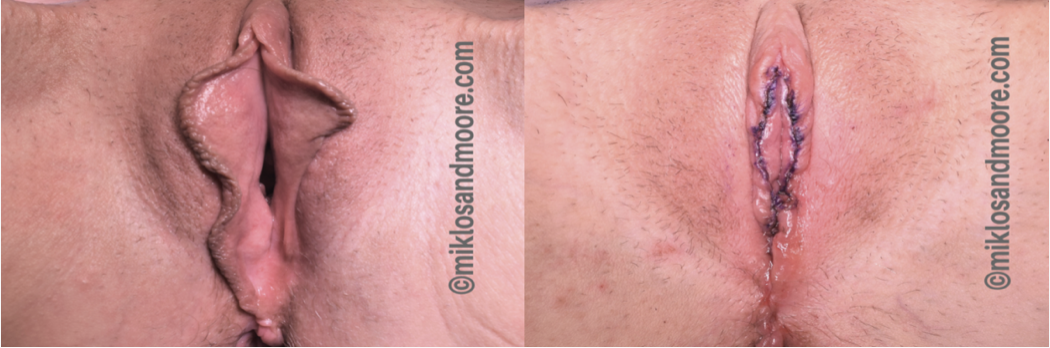
Before and after vaginal rejuvenation surgery demonstrating restoration of the vaginal opening and surrounding tissues.
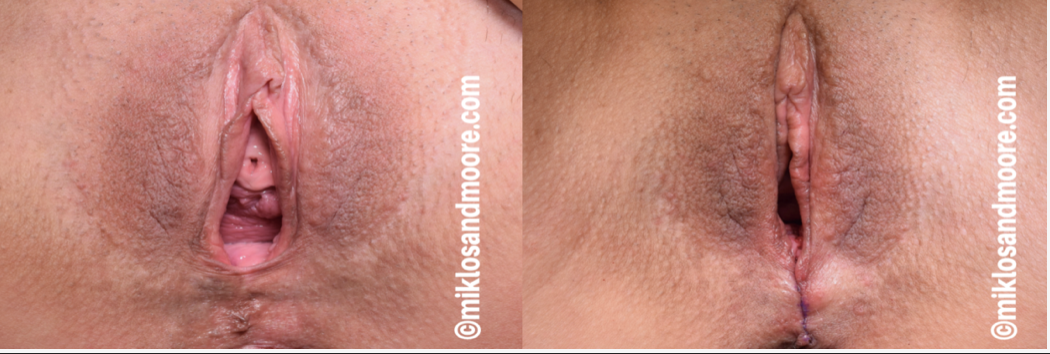
Vaginal rejuvenation before and immediately after surgery showing repair and reconstruction of the vaginal opening and surrounding tissue.
Why Women Seek a Second Opinion After Vaginal Rejuvenation
There are many reasons a woman may want another specialist to evaluate her results. Sometimes the original procedure improved one concern but failed to address another. In other situations, the anatomy may have changed during healing or the original diagnosis may not fully explain the symptoms that remain.
Women may seek another opinion because of:
- Persistent vaginal looseness or laxity
- Continued discomfort during intercourse
- Pain following a previous procedure
- Urinary leakage or incontinence
- A feeling of pressure, heaviness, or bulging
- Persistent pelvic pain
- Scar tissue or uncomfortable tightening
- Changes in vaginal appearance
- Difficulty with sexual function
- Concerns about prolapse
- Unsatisfactory cosmetic results
- Symptoms that returned after an initial improvement
- Uncertainty about whether another procedure is necessary
A second opinion does not automatically mean another surgery is required. The purpose is to determine why symptoms remain and what options, if any, are appropriate.
Vaginal Rejuvenation Is Not One Procedure
One reason second opinions can be especially valuable is that “vaginal rejuvenation” is a broad term.
Depending on a woman’s symptoms and anatomy, treatment might involve:
- Vaginoplasty
- Perineoplasty
- Labiaplasty
- Labia minora reduction
- Labia majora procedures
- Clitoral hood reduction
- Clitoropexy
- Pelvic organ prolapse repair
- Treatment for urinary incontinence
- Scar revision
- Non-surgical radiofrequency or laser treatments
- Hormonal treatment for vaginal tissue changes
The correct treatment depends upon the underlying problem.
For example, a woman who describes her vagina as feeling “loose” may have vaginal muscular relaxation, perineal separation, pelvic organ prolapse, or a combination of conditions. Treating only one component may not completely resolve her symptoms.
That is why the diagnosis can be just as important as the procedure itself.
When Vaginal Rejuvenation Results Are Not What You Expected
Not every disappointing result represents a surgical complication.
Healing varies significantly between patients. Swelling, tenderness, tightness, altered sensation, and changes in appearance can occur during recovery and may continue improving over time.
However, persistent symptoms deserve evaluation.
A second-opinion examination can help distinguish between normal healing and a problem that may require additional treatment.
The evaluation may consider questions such as:
- Has the tissue healed appropriately?
- Is significant scar tissue present?
- Was the original anatomical problem fully corrected?
- Is pelvic organ prolapse contributing to the symptoms?
- Is the vaginal opening excessively loose or tight?
- Is the pelvic floor functioning normally?
- Could hormonal changes be contributing to discomfort?
- Is urinary incontinence a separate problem?
- Would additional surgery actually improve the patient’s symptoms?
These distinctions are important because performing another procedure without understanding the cause of the symptoms can potentially create additional problems.
Second Opinion After Vaginoplasty
Women sometimes seek a second opinion after vaginoplasty because they continue to experience vaginal laxity or do not feel the degree of tightening they expected.
There can be several explanations.
The vaginal muscles may not have been adequately repaired, the perineal body may still be separated, pelvic organ prolapse may be present, or childbirth-related pelvic floor injuries may contribute to the symptoms.
Conversely, excessive tightening can sometimes result in pain or difficulty with intercourse.
A detailed examination can help determine whether the concern involves the vaginal canal, vaginal opening, pelvic floor muscles, perineum, prolapse, scar tissue, or multiple structures.
Second Opinion After Perineoplasty
Perineoplasty focuses primarily on the tissues surrounding the vaginal opening and the perineal body.
Women may seek another opinion because of persistent widening of the vaginal opening, scar discomfort, cosmetic concerns, pain during intercourse, or a feeling that the repair did not adequately restore support.
Because vaginoplasty and perineoplasty address different anatomical areas, determining exactly where the problem originates is essential before considering revision treatment.
Second Opinion After Labiaplasty or Cosmetic Vaginal Surgery
Second opinions are also common after labiaplasty and other cosmetic gynecologic procedures.
Concerns can include:
- Asymmetry
- Persistent excess tissue
- Over-resection
- Irregular edges
- Scarring
- Discomfort
- Changes in sensation
- Dissatisfaction with appearance
- Functional problems
Revision cosmetic gynecologic surgery can be considerably more complex than an initial procedure because the surgeon may be working with scar tissue and altered anatomy.
For that reason, experience with revision procedures becomes particularly important.
What If Several Procedures Were Performed Together?
Some women undergo multiple procedures during a single surgery, such as vaginoplasty combined with perineoplasty, labiaplasty, clitoral hood reduction, or prolapse repair.
When symptoms remain afterward, determining which anatomical structure is responsible can be difficult.
A comprehensive second-opinion evaluation looks at the entire pelvic floor rather than assuming the previous procedure itself is the only issue.
This is particularly important when symptoms involve a combination of vaginal laxity, pelvic pressure, urinary leakage, painful intercourse, bowel difficulties, or prolapse.
Could Pelvic Organ Prolapse Be the Real Problem?
Sometimes women seeking vaginal rejuvenation are actually experiencing symptoms associated with pelvic organ prolapse.
Prolapse occurs when support structures weaken and the bladder, rectum, uterus, vaginal walls, or vaginal apex descend from their normal positions.
Symptoms can include vaginal pressure, bulging, difficulty emptying the bladder or bowels, sexual dysfunction, and a sensation of vaginal looseness.
Simply tightening the vaginal opening may not correct an underlying support defect.
As urogynecologists, Dr. Miklos and Dr. Moore evaluate both the cosmetic and functional aspects of vaginal and pelvic floor anatomy. This can be particularly important when symptoms extend beyond appearance alone.
What Happens During a Vaginal Rejuvenation Second Opinion?
The evaluation begins with understanding exactly what concerns the patient.
The physician may review:
- Symptoms before the original procedure
- The procedure that was performed
- Operative reports when available
- Previous diagnoses
- Recovery and healing
- Current symptoms
- Changes in sexual function
- Urinary or bowel symptoms
- Previous treatments
- The patient’s goals
A pelvic examination may then be performed to evaluate vaginal support, muscle tone, scar tissue, perineal anatomy, prolapse, and other possible causes of the symptoms.
The goal is not simply to determine whether another operation can be performed. The goal is to determine what is actually wrong and whether additional treatment is likely to help.
Do You Need Revision Vaginal Rejuvenation Surgery?
Not necessarily.
Some women may benefit from additional healing time. Others may have symptoms that can be treated without another operation. Pelvic floor therapy, hormonal treatment, management of scar tissue, or other conservative approaches may sometimes be appropriate.
For patients with a structural problem, however, revision surgery may be considered.
The recommended treatment depends on the patient’s anatomy, symptoms, previous procedures, degree of scar tissue, and individual goals.
Why Experience Matters With Revision Surgery
Revision vaginal and pelvic surgery can be more challenging than primary surgery.
Previous surgery changes normal tissue planes. Scar tissue can affect elasticity and blood supply, and there may be less tissue available for reconstruction. In addition, the surgeon must understand what was previously performed and determine how to correct the remaining problem without creating unnecessary additional changes.
Dr. John Miklos and Dr. Robert Moore are double board-certified urogynecologists with extensive experience in vaginal, pelvic reconstructive, cosmetic gynecologic, and revision surgery. Their practice evaluates women with both straightforward and complex conditions, including patients seeking another opinion after previous treatment or surgery.
Patients travel to Miklos & Moore from throughout Georgia, the Southeast, across the United States, and internationally for evaluation of complex vaginal and pelvic floor concerns.
Questions to Ask During a Second Opinion
A second-opinion consultation is an opportunity to obtain a clearer understanding of your condition. Useful questions may include:
- What is causing my current symptoms?
- Did my previous procedure address the underlying problem?
- Is my anatomy still healing?
- Do I have pelvic organ prolapse?
- Is scar tissue contributing to my symptoms?
- Is another operation necessary?
- Are non-surgical options available?
- What would revision surgery involve?
- What improvement can realistically be expected?
- What are the risks of doing nothing?
- How much experience do you have treating this particular problem?
A qualified specialist should be able to explain not only what treatment is recommended, but why.
When Should You Consider Getting Another Opinion?
Consider a vaginal rejuvenation second opinion if you remain concerned about your symptoms or results after your expected recovery period, have received conflicting recommendations, are considering revision surgery, or simply do not understand why your symptoms continue.
It can also be reasonable to obtain a second opinion before undergoing your first vaginal rejuvenation procedure, particularly when multiple procedures have been recommended.
There is nothing unusual about wanting another expert assessment before making an important decision about surgery.
Vaginal Rejuvenation Second Opinion at Miklos & Moore
Women experiencing persistent symptoms or concerns after vaginal rejuvenation deserve an explanation of what may be happening.
At Miklos & Moore Urogynecology, the objective of a second-opinion consultation is to carefully evaluate the patient’s anatomy, previous treatment, current symptoms, and goals before recommending additional treatment.
Whether the concern involves vaginal laxity, painful intercourse, scar tissue, prolapse, urinary symptoms, cosmetic changes, or an unsatisfactory result from previous surgery, a comprehensive evaluation can help determine the appropriate next step.
For women considering revision treatment, an informed second opinion can provide something especially important: a clearer understanding of the problem before making another surgical decision.
Frequently Asked Questions
Can I get a second opinion after vaginal rejuvenation surgery?
Yes. A second opinion can help determine whether your symptoms are part of normal healing, related to the original condition, or caused by an issue that may require additional treatment.
How long should I wait before seeking a second opinion?
You do not necessarily need to wait if you are experiencing concerning symptoms. However, final surgical results can take time to develop. The appropriate timing depends on the procedure performed, your symptoms, and your stage of recovery.
Does getting a second opinion mean I need revision surgery?
No. A second opinion is an evaluation, not a commitment to another procedure. Some patients may not require additional surgery.
Can vaginal rejuvenation be revised?
In appropriate patients, certain vaginal rejuvenation procedures can be revised. The available options depend on the previous procedure, current anatomy, scar tissue, symptoms, and treatment goals.
Can Miklos & Moore evaluate surgery performed by another doctor?
Yes. Patients can seek evaluation for persistent or new symptoms following previous vaginal or pelvic procedures performed elsewhere.
Should I bring my previous surgical records?
If available, operative reports and relevant medical records can provide useful information about what was previously performed. However, the physical examination and current symptoms are also important parts of the evaluation.
Can I seek a second opinion before having vaginal rejuvenation?
Yes. A second opinion before surgery may be especially useful if you have been offered several different procedures or are uncertain which treatment best addresses your symptoms.