
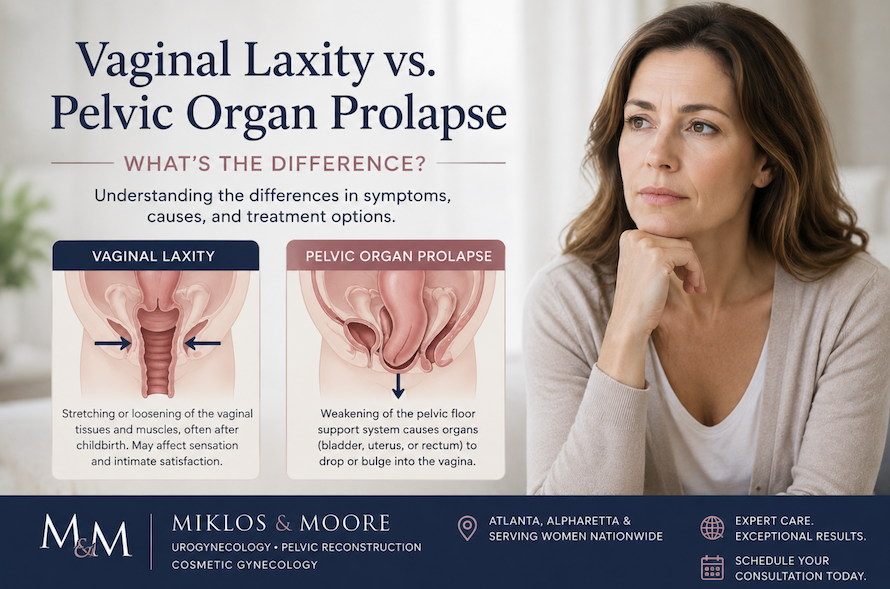
Vaginal Laxity vs. Pelvic Organ Prolapse: What’s the Difference?
Why Many Women Mistake One Condition for the Other
Many women notice a change in their body after childbirth or as they get older but struggle to describe exactly what they’re feeling.
Some say,
“My vagina feels loose.”
Others describe:
“It feels like something is falling out.”
Some notice a bulge.
Others feel pressure.
Some experience decreased sensation during intimacy.
Others leak urine when they cough or laugh.
Although these symptoms may seem similar, they are not always caused by the same condition.
Two of the most commonly confused diagnoses are vaginal laxity and pelvic organ prolapse.
While both conditions can develop after pregnancy, childbirth, menopause, or aging, they affect different structures within the pelvis and often require different treatments.
Understanding the difference is essential because receiving the wrong diagnosis may delay appropriate treatment and prevent women from achieving the best possible outcome.
At Miklos & Moore, one of the most common things women say during their first consultation is,
“I thought I just had a loose vagina.”
After a comprehensive pelvic floor examination, many discover they actually have bladder prolapse, rectocele, uterine prolapse, childbirth-related muscle injuries, or a combination of conditions contributing to their symptoms.
Because Dr. John Miklos and Dr. Robert Moore are fellowship-trained urogynecologists specializing in Female Pelvic Medicine and Reconstructive Surgery (FPMRS), they evaluate both the cosmetic appearance and the functional support of the pelvic floor. This comprehensive approach helps ensure that treatment addresses the true cause of a woman’s symptoms rather than simply treating what appears to be the problem.
What Is Vaginal Laxity?
Vaginal laxity refers to stretching or widening of the vaginal tissues and supportive muscles, most commonly following vaginal childbirth.
Women frequently describe vaginal laxity as:
- A loose feeling during intimacy
- Less friction during intercourse
- A wider vaginal opening
- Reduced sensation
- Decreased confidence
- Vaginal air (sometimes called vaginal wind or queefing)
- A feeling that their body has changed after childbirth
Unlike pelvic organ prolapse, vaginal laxity does not mean the bladder, uterus, or rectum has descended.
Instead, the muscles and connective tissues surrounding the vagina have stretched or weakened, changing the shape and support of the vaginal canal.
For many women, these changes affect intimacy and confidence more than physical comfort.
What Is Pelvic Organ Prolapse?
Pelvic organ prolapse is a completely different condition.
Instead of simply stretched vaginal tissues, prolapse occurs when the muscles and ligaments supporting the pelvic organs become weakened or damaged.
As these support structures weaken, one or more pelvic organs begin to descend into the vagina.
The most common types include:
- Bladder prolapse (cystocele)
- Rectocele
- Uterine prolapse
- Vaginal vault prolapse
Women with prolapse commonly report:
- A bulge at the vaginal opening
- Pelvic pressure or heaviness
- A feeling that something is falling out
- Difficulty emptying the bladder
- Constipation
- Lower back discomfort
- Pressure that worsens after standing
These symptoms often become more noticeable later in the day or after prolonged activity.
Why They’re Frequently Confused
This is where many women become frustrated.
Vaginal laxity and pelvic organ prolapse often occur together.
A woman who has delivered several children may develop:
- stretched vaginal muscles,
- widening of the vaginal opening,
- weakened pelvic floor muscles,
- and bladder prolapse—
all at the same time.
Because the symptoms overlap, many women assume they simply have a “loose vagina” when the real issue is significantly more complex.
Others believe they have prolapse when the primary concern is vaginal laxity affecting intimacy.
Only a detailed pelvic examination can distinguish between these conditions.
Common Symptoms of Vaginal Laxity
Women with vaginal laxity often notice:
- Decreased tightness during intercourse
- Less sensation
- Reduced friction
- A wider vaginal opening
- Vaginal air during exercise or intimacy
- Difficulty retaining tampons
- Reduced confidence
- Feeling that the vagina has changed after childbirth
Although these symptoms may affect quality of life, they usually do not create the visible bulge associated with pelvic organ prolapse.
Common Symptoms of Pelvic Organ Prolapse
Women with prolapse are more likely to notice:
- A visible or palpable bulge
- Pelvic heaviness
- A sensation that something is falling out
- Pressure that worsens throughout the day
- Difficulty emptying the bladder
- Constipation
- Needing to push tissue back inside the vagina
- Urinary leakage
- Difficulty exercising comfortably
Many women describe prolapse as feeling like they are “sitting on a ball” or “carrying pressure between their legs.”
These symptoms are caused by the descent of pelvic organs—not simply by looseness of the vaginal tissues.
Why Proper Diagnosis Is Critical
One of the biggest mistakes women make is assuming that every vaginal concern can be corrected with vaginal tightening surgery.
That is simply not true.
For example, performing a vaginoplasty on a woman whose primary problem is bladder prolapse may not address the underlying cause of her symptoms.
Likewise, repairing prolapse without addressing significant childbirth-related widening of the vaginal opening may leave a patient disappointed with her functional or cosmetic outcome.
This is why choosing an experienced fellowship-trained urogynecologist is so important.
At Miklos & Moore, every patient undergoes a comprehensive pelvic floor evaluation designed to determine exactlywhich structures have been affected. Rather than recommending the same procedure for every patient, Dr. Miklos and Dr. Robert Moore develop individualized treatment plans that address both pelvic floor function and vaginal anatomy.
Their expertise in pelvic reconstructive surgery, cosmetic gynecology, childbirth injuries, and complex revision surgery allows them to treat conditions that many practices simply do not see on a routine basis.
Women travel from Atlanta, throughout Georgia, across the United States, and internationally because they want answers—not assumptions—and treatment plans tailored to their unique anatomy and goals.