
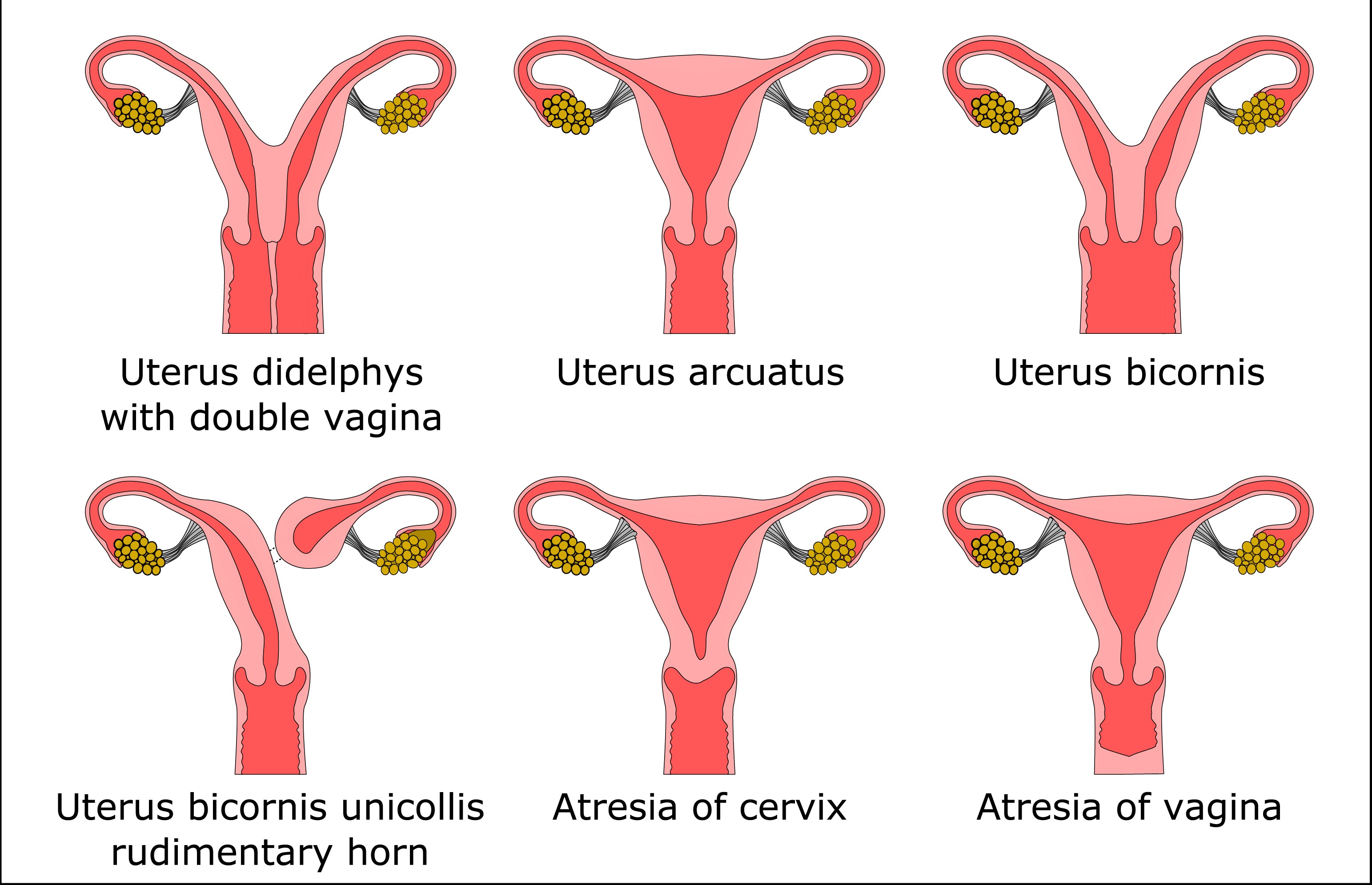
Uterine Prolapse Surgery in a woman with Uterine Didelphy
A 60-year-old woman presented to Dr. Miklos & Moore a complaint of uterus prolapse and uterus didelphy (i.e. two uteruses). She was diagnosed with a didelphic uterus approximately 30 years ago. She was seen by 3 gynecologists, in Atlanta, all of which either refused to do her prolapse surgery or recommended a hysterectomy. She informed the surgeons she would not settle for a hysterectomy, as she wanted to preserve her uterus. She was finally referred to the Mayo Clinic and Emory University.
She then decided to see Dr. Miklos for symptoms of prolapse, pressure, as well as stress urinary incontinence. Dr. Miklos explained uterine preservation was indeed an option and this was not the first time that he had performed a hysteropexy in a woman with uterus didelphy.
On examination, she was noted to have two vaginal canals (Figure 1), two cervixes (Figure 2), and two uteruses. She was also diagnosed with pelvic floor relaxation in the form of a cystocele, rectocele, and uterine prolapse x 2. Testing revealed stress urinary incontinence. A thorough discussion as to the risks and benefits of surgery were discussed. Most importantly, Dr. Miklos informed the patient that he could and would meet her independent decision to save her uterus and would not perform a hysterectomy.
Can a Woman Have Two Vaginas, Two Cervixes and Two Uteruses?
Although rare, a woman can be born with two vaginal canals, two cervixes and two uteruses. This type of congenital reproductive anatomy is associated with uterus didelphys, which occurs when the developing Müllerian structures do not completely join during fetal development. In some women, a longitudinal vaginal septum divides the vagina into two separate vaginal canals.
In this patient’s case, examination revealed two distinct vaginal canals and two cervixes, while evaluation confirmed the presence of two separate uteruses. This unusual anatomy made treatment of her uterine prolapse considerably more complex because both uteruses required appropriate support while respecting her desire to avoid hysterectomy.
Uterus-Preserving Prolapse Surgery With Uterus Didelphys
Having two uteruses does not automatically mean that a woman with uterine prolapse must undergo a hysterectomy. Hysteropexy is a uterus-preserving prolapse surgery in which the uterus is repositioned and supported rather than removed.
For this patient, the surgical challenge involved not only correcting her pelvic organ prolapse, but doing so in the presence of two uteruses, two cervixes and two vaginal canals. Dr. Miklos’ experience with complex pelvic reconstruction allowed him to develop a surgical approach designed to correct the prolapse while honoring the patient’s decision to preserve her reproductive organs.
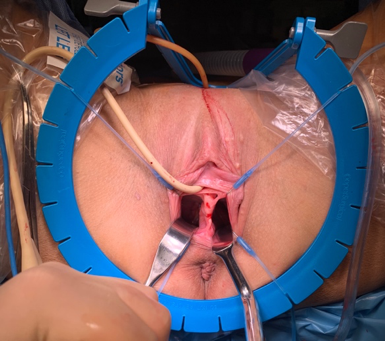
Clinical surgical image demonstrating two vaginal canals separated by a longitudinal vaginal septum.
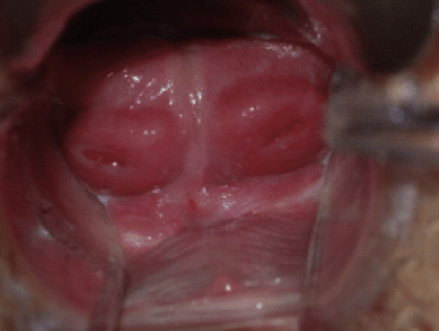
Clinical image demonstrating two separate cervixes, an uncommon congenital reproductive anatomy that may occur with uterus didelphys and two vaginal canals.
The patient had her surgery including: 1) laparoscopic hysteropexy (aka sacrocolpohysteropexy) 2) paravaginal repair, 3) Burch urethropexy (for cough urine leakage), & 4) a rectocele repair. He also performed (per her request) a vaginal rejuvenation or “tightening surgery.” The surgery was performed without complications with an estimated blood loss of less than 25 mL. There were no intraoperative complications or immediate postoperative complications and she was discharged less than 48 hours after the surgery. A photo of the patient’s two uteruses can be seen in Figure 3. Dr. Miklos performs the hysteropexy procedure in Figure 4.
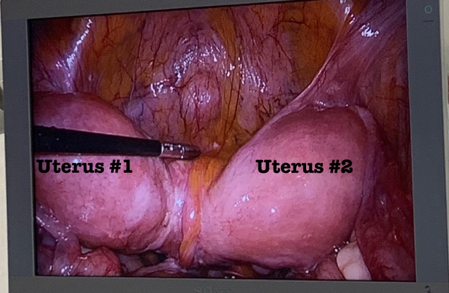
Laparoscopic view showing two separate uteruses in a patient with uterus didelphys, a congenital Müllerian anomaly.
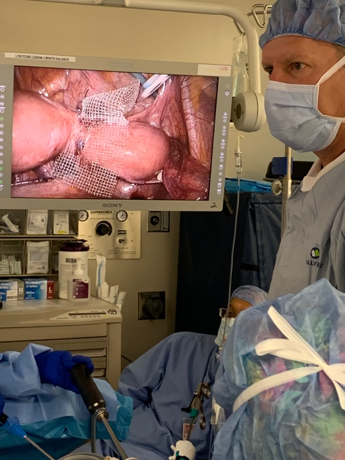
Dr. John Miklos performing laparoscopic hysteropexy as part of the surgical treatment of a patient with complex Müllerian anatomy.