

Transvaginal Mesh Removal
4 mesh slings removed in one surgery
A 65-year-old woman came to Drs. Miklos and Moore for evaluation and treatment of transvaginal mesh complicationsafter experiencing persistent vaginal, suprapubic and groin pain, as well as painful intercourse. She had previously consulted with five different gynecologists and urologists before seeking another opinion regarding transvaginal mesh removal.
The patient had undergone multiple previous sling procedures and had four separate slings: two retropubic TVT-type slings (Figure 1), one TOT-type sling (Figure 2), and one fascia lata sling with Prolene suture (Figure 3).
According to the patient, the physicians she had previously consulted told her either that the mesh slings were not responsible for her pain or that the slings could not be removed in their entirety. After evaluation by Dr. Miklos, she ultimately underwent surgery in which all four slings were removed during one operation.
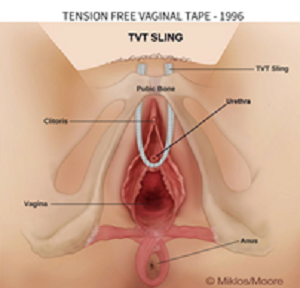
Figure 1: Medical illustration showing the position of a TVT retropubic sling.
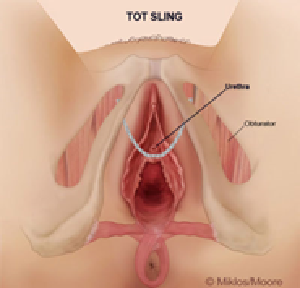
Figure 2: Medical illustration showing the anatomical position of a TOT transobturator sling.
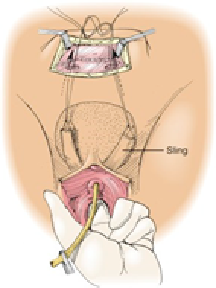
Figure 3: Medical illustration showing the anatomical position of a fascia lata sling used to support the urethra.
The patient complained of minor pain at complete rest but worsening pain with activity, exercise and sex. Her vaginal pain was 0/10 at rest and 10/10 with sex. Her right groin pain was 2/10 at rest and 9/10 with sitting too long and her pubic pain was a 1/10 at rest and 4/10 with daily activity.
One of her surgeons thought it would help to remove the vaginal portion of the mesh but did not attempt to remove the arms of the TVT, TOT or fascia lata sling. The surgery did very little to remove her pain. Dr Miklos explained though he could not guarantee that removing the mesh would definitively take away the pain but based upon his experience of removing more than 300 slings he felt she was have a great outcome.
It has been his experience that the TVT sling can primarily cause vaginal, pubic and lower abdominal pain and TOT slings primarily causes vaginal groin and inner thigh pain. Dr Miklos removed her slings through both a vaginal and laparoscopic approach. Here you can see 2 slings labeled on the patients left side (Figure 4) and one TVT retropubic sing and Prolene suture of the fascia lata sling on her right side. the removed slings from both the right and left side (Figure 6)
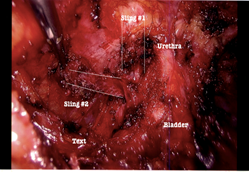
Figure 4: Surgical view showing two retropubic TVT slings on the left side during complex mesh removal surgery.
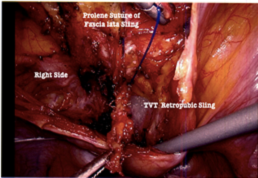
Figure 5: Surgical view showing the TVT retropubic sling and Prolene suture from the fascia lata sling on the right side.
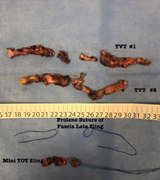
Figure 6: Four slings removed during one surgery, including two TVT slings, a TOT sling and material from a fascia lata sling.
The next morning the patient admitted to having surgical incision pain but claimed the groin, vaginal and pubic pain were essentially gone. She could tell the pulling and tension was gone. We also replaced the slings with a laparoscopic Burch (Figure 7a & 7b) procedure so she would not have cough urine leakage. Note the long white sutures from the Pubocervical fascia ie ceiling of the vagina to the Coopers ligament. These sutures replace the function of the sling to stop urine leakage.
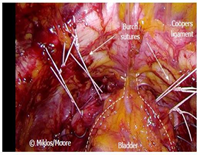
Figure 7a: Surgical view demonstrating Burch sutures used for urethral support following mesh sling removal.
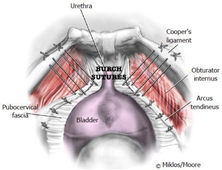
Figure 7b: Medical illustration showing the placement of Burch sutures for urethral support following mesh sling removal.
This procedure was also successful as she does not have urine leakage with coughing, sneezing or with exertion of pressure on her abdominal wall or pelvic floor. If you are having pain in the vagina, pubic, lower abdomen, groin and inner thigh consider an evaluation for sling mesh removal and see Dr Miklos. Patients with mesh that has become exposed or eroded into surrounding tissues or organs can also learn about vaginal mesh removal and mesh erosion surgery.