
Pelvic Organ Prolapse Second Opinion


Women diagnosed with pelvic organ prolapse may benefit from a second opinion before undergoing major reconstructive surgery, particularly when hysterectomy, complex reconstruction, or another operation after a failed repair has been recommended. Dr. John Miklos and Dr. Robert Moore are fellowship-trained urogynecologists and high-volume prolapse surgeons near Atlanta, Georgia, with decades of experience and thousands of pelvic reconstructive procedures performed. They provide second opinions for cystocele, rectocele, uterine prolapse, vaginal vault prolapse, multi-compartment prolapse, and recurrent or failed prolapse surgery. Women travel to Miklos & Moore from across the United States and around the world seeking their experience to better understand their diagnosis, compare surgical options, and determine the most appropriate treatment before proceeding with surgery.

Pelvic Organ Prolapse Second Opinion: When to See an Experienced Urogynecologist

Being told that you have pelvic organ prolapse can raise many questions—especially when surgery is recommended. Some women are told they need a hysterectomy. Others are offered a specific prolapse repair without understanding whether alternative surgical approaches are available. Women who have already undergone prolapse surgery may be facing another operation because their prolapse has returned.

Before making a major surgical decision, obtaining a pelvic organ prolapse second opinion can provide valuable information and greater confidence about your treatment options.

Dr. John Miklos and Dr. Robert Moore are fellowship-trained urogynecologists and high-volume pelvic reconstructive surgeons near Atlanta, Georgia. With decades of experience and thousands of prolapse and incontinence procedures performed, they provide second opinions for women with straightforward, advanced, recurrent, and previously failed pelvic organ prolapse.

Women travel to Miklos & Moore from throughout Georgia, across the United States, and internationally seeking another opinion before undergoing pelvic reconstructive surgery.
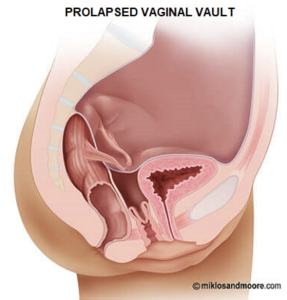
Vaginal vault prolapse medical illustration showing prolapse after hysterectomy

Medical illustration demonstrating vaginal vault prolapse, which can occur when the upper vagina loses support following hysterectomy.
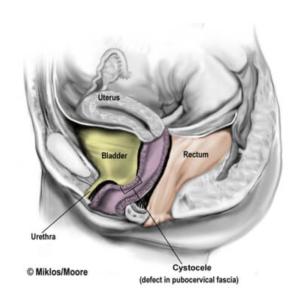
Cystocele bladder prolapse medical illustration showing pelvic organ prolapse

Medical illustration showing a cystocele, or bladder prolapse, caused by weakening of the support between the bladder and vagina.

Why Get a Second Opinion for Pelvic Organ Prolapse?

Pelvic organ prolapse is not one single condition.

It occurs when the tissues and structures supporting the pelvic organs weaken, allowing one or more organs to descend toward or into the vagina.

A woman may have:

  • Cystocele or bladder prolapse
  • Rectocele
  • Uterine prolapse
  • Vaginal vault prolapse
  • Enterocele
  • Apical prolapse
  • Multi-compartment prolapse
  • Recurrent prolapse following previous surgery

Many women have more than one type of prolapse at the same time.

This is one reason a second opinion can be valuable.

Two women may both be told they have “pelvic organ prolapse,” yet their anatomy and appropriate treatment could be very different.

Do I Really Need Prolapse Surgery?

Not every woman diagnosed with pelvic organ prolapse requires surgery.

The decision depends on the severity of the prolapse, symptoms, quality-of-life impact, anatomy, medical history, previous treatment, and the woman’s preferences.

Depending on the circumstances, treatment options may include observation, pelvic floor therapy, a pessary, or surgery.

A second opinion may help answer one of the most basic questions:

Do I actually need surgery now?

For women whose symptoms significantly affect daily life and who have advanced prolapse, surgery may ultimately be appropriate.

But a second opinion allows another experienced urogynecologist to independently evaluate the diagnosis and recommendation before the patient commits to an operation.

What If Two Urogynecologists Recommend Different Prolapse Surgeries?

This happens.

There are multiple ways to repair pelvic organ prolapse, and different surgeons may recommend different approaches based on training, experience, the patient’s anatomy, and the procedures they routinely perform.

One surgeon may recommend a vaginal approach.

Another may recommend laparoscopic or robotic reconstruction.

One may recommend hysterectomy for uterine prolapse.

Another may determine that uterus-preserving surgery such as hysteropexy could be considered.

A difference in recommendations does not automatically mean one physician is wrong.

It does mean the patient should understand why each procedure is being recommended.

A good second opinion should explain the advantages, limitations, risks, and alternatives associated with the available approaches.

Second Opinion Before Hysterectomy for Prolapse

Women with uterine prolapse are sometimes surprised when hysterectomy is included in the recommended operation.

For some patients, hysterectomy may be an appropriate part of treatment.

But uterine prolapse does not automatically mean every woman must have her uterus removed.

Uterus-preserving prolapse procedures, including hysteropexy, may be options for appropriately selected women.

If keeping the uterus is important to you, obtaining a second opinion from a urogynecologist experienced with both hysterectomy and uterus-preserving prolapse reconstruction can help determine whether preservation is reasonable in your particular case.

The objective should not be to avoid hysterectomy at all costs.

It should be to understand whether hysterectomy is necessary and what alternatives exist before making an irreversible decision.

Second Opinion for Advanced Pelvic Organ Prolapse

Advanced prolapse can involve considerably more than a single vaginal compartment.

A woman may simultaneously have significant bladder prolapse, uterine or apical prolapse, and rectocele.

This is sometimes called multi-compartment prolapse.

In these cases, identifying the complete pattern of pelvic support failure is critical.

Correcting only the most visible or symptomatic component may not address the entire pelvic floor problem.

A high-volume prolapse surgeon who routinely treats advanced pelvic organ prolapse may provide a particularly useful second opinion when extensive reconstruction has been recommended.

Second Opinion After Failed Prolapse Surgery

When prolapse returns after surgery, the next operation can be more complicated than the first.

Previous surgery may have altered normal anatomy and produced scar tissue. The surgeon must also determine why the original repair failed.

Was the original support inadequate?

Did another pelvic compartment subsequently prolapse?

Is the recurrent bulge actually the same type of prolapse?

Does the patient now have multiple support defects?

Should the same operation be repeated, or should another reconstructive approach be considered?

These questions become increasingly important before a second or third prolapse operation.

Drs. Miklos and Moore routinely evaluate women with recurrent prolapse and previous failed pelvic reconstructive surgery.

Why High Surgical Volume Matters for a Prolapse Second Opinion

A second opinion is only as valuable as the experience behind it.

Pelvic reconstructive surgery is highly dependent on understanding anatomy and recognizing different patterns of pelvic support failure.

A surgeon who performs a large volume of prolapse surgery repeatedly encounters variations that may be seen less frequently in a lower-volume practice.

This includes patients with:

  • Severe prolapse
  • Multiple prolapsed compartments
  • Previous hysterectomy
  • Recurrent prolapse
  • Previous failed repairs
  • Scar tissue from earlier surgery
  • Mesh complications
  • Urinary incontinence accompanying prolapse
  • Complex pelvic anatomy

High surgical volume does not guarantee a particular result.

However, extensive experience provides a broader frame of reference when evaluating difficult cases and comparing surgical options.

Dr. Miklos and Dr. Moore: High-Volume Prolapse Surgeons in Georgia

Dr. John Miklos and Dr. Robert Moore have dedicated decades of their careers to urogynecology and pelvic reconstructive surgery.

Their surgical experience includes thousands of prolapse and incontinence procedures, along with advanced, recurrent, and revision pelvic reconstruction.

Their careers have also included medical research, publications, physician education, and teaching advanced surgical techniques.

For women seeking a prolapse second opinion, this experience can be particularly important because the purpose of the consultation is not simply to recommend another operation.

It is to independently evaluate:

What type of prolapse is present?

Which support structures have failed?

Does surgery need to be performed?

Which surgical approaches are reasonable?

Are there alternatives to the operation already recommended?

What would Drs. Miklos and Moore recommend if this were their first opportunity to treat the problem?

Second Opinion for Bladder Prolapse

A cystocele occurs when support between the bladder and vagina weakens, allowing the bladder to bulge toward the vaginal canal.

Not every cystocele requires surgery.

When surgery is recommended, the appropriate repair depends on the location and nature of the support defect and whether other areas of prolapse are present.

Women with bladder prolapse may also have uterine or apical prolapse that needs to be considered when developing a complete reconstructive plan.

A second opinion can help determine whether the proposed surgery addresses the entire pelvic support problem rather than only the bladder bulge.

Second Opinion for Rectocele

A rectocele develops when the tissue separating the rectum and vagina weakens.

Symptoms can include vaginal pressure or bulging and difficulty with bowel movements.

As with other forms of prolapse, the diagnosis alone does not determine the operation.

A second-opinion examination can help determine the extent of the rectocele, whether other prolapse is present, and whether surgery is likely to address the woman’s symptoms.

Second Opinion for Uterine Prolapse

Women with uterine prolapse have an especially important decision because treatment may involve either removal or preservation of the uterus.

If hysterectomy has been recommended, women who want to retain their uterus may wish to ask whether hysteropexy is an appropriate alternative.

Drs. Miklos and Moore evaluate both the uterine prolapse and the supporting structures surrounding it to determine which reconstructive options may be appropriate.

Second Opinion for Vaginal Vault Prolapse

Women who have previously undergone hysterectomy can develop prolapse of the top of the vagina, known as vaginal vault prolapse.

These cases require restoration of apical support.

Because the uterus has already been removed, the surgical anatomy and reconstructive considerations differ from those of uterine prolapse.

Women facing vaginal vault prolapse surgery may benefit from an opinion from a surgeon with substantial experience in apical pelvic reconstruction.

When Your Doctor Says There Is Only One Option

Patients occasionally seek second opinions because they have been told there is only one way to correct their prolapse.

Sometimes there may indeed be a clear preferred approach based on the patient’s anatomy or medical circumstances.

But pelvic reconstructive surgery includes multiple techniques.

An experienced second-opinion surgeon should be able to explain:

Why the proposed operation is appropriate.

What alternatives exist.

Why those alternatives may or may not be appropriate.

And what the surgeon would personally recommend based on the patient’s anatomy.

The objective is not to find a doctor who tells you what you want to hear.

It is to understand your options.

What Should You Bring to a Prolapse Second Opinion?

Women who have never undergone prolapse surgery may simply need their medical history and information regarding the proposed procedure.

For women who have undergone previous surgery, additional records can be extremely valuable.

These may include:

  • Previous operative reports
  • Information about mesh or grafts previously implanted
  • Previous urogynecology examinations
  • Imaging or diagnostic studies
  • Cystoscopy or urodynamic testing when applicable
  • A list of previous pelvic procedures
  • A description of current symptoms
  • Information about the surgery currently being recommended

The more complicated the surgical history, the more useful these records can become.

Questions to Ask During a Pelvic Organ Prolapse Second Opinion

Before agreeing to surgery, consider asking:

Exactly what type of prolapse do I have?

How advanced is my prolapse?

Do I have more than one compartment involved?

Do I need surgery now?

What happens if I wait?

Are there nonsurgical alternatives?

Which operation would you recommend and why?

Are there other surgical approaches?

Do I need a hysterectomy?

Can my uterus be preserved?

How many prolapse operations do you perform?

How often do you treat recurrent or failed prolapse surgery?

The answers should help you understand not just the name of the procedure but the reasoning behind it.

Women Travel to Miklos & Moore for Prolapse Second Opinions

For a major surgical decision, patients are not necessarily limited to the urogynecologists closest to home.

Women travel to Miklos & Moore near Atlanta from throughout Georgia, across the United States, and internationally for evaluation of complex pelvic floor conditions and second opinions.

This is particularly common among women who have:

Been given conflicting surgical recommendations.

Been told they require hysterectomy.

Experienced recurrent prolapse.

Already undergone unsuccessful surgery.

Been told their case is unusually complicated.

Or simply want an opinion from surgeons who perform a high volume of pelvic reconstructive procedures.

For these women, traveling for another opinion may provide additional information before deciding where—or whether—to undergo surgery.

A Second Opinion Does Not Mean Your First Doctor Was Wrong

Seeking another opinion should not be viewed as a confrontation with the first physician.

Medicine frequently involves more than one reasonable treatment approach.

The second surgeon may agree completely with the original recommendation.

If that happens, the patient may proceed with greater confidence.

Alternatively, another approach may be identified that the patient wants to consider.

Either way, the woman has more information before making a major decision about her body.

Get a Pelvic Organ Prolapse Second Opinion in Atlanta, Georgia

Dr. John Miklos and Dr. Robert Moore are fellowship-trained urogynecologists and high-volume prolapse surgeons with decades of experience in advanced pelvic reconstruction.

They provide second opinions for women with cystocele, rectocele, uterine prolapse, vaginal vault prolapse, multi-compartment prolapse, recurrent prolapse, and previous failed prolapse repairs.

Women seeking the best urogynecologist for a prolapse second opinion should look beyond marketing terminology and evaluate surgical volume, years of experience, breadth of reconstructive techniques, revision experience, publications, and surgical teaching.

For patients facing a significant pelvic operation, the purpose of a second opinion is simple:

Make sure you understand exactly what is wrong, what your options are, and why a particular treatment is being recommended before undergoing surgery.

Frequently Asked Questions

Should I get a second opinion before prolapse surgery?

A second opinion can be particularly useful when major pelvic reconstructive surgery has been recommended, when you have been offered different procedures, when hysterectomy has been recommended, or when you have already undergone unsuccessful prolapse surgery.

What type of doctor should provide a prolapse second opinion?

A urogynecologist specializes in pelvic floor disorders such as pelvic organ prolapse and urinary incontinence. For complex or recurrent prolapse, experience performing high volumes of pelvic reconstructive surgery may be particularly relevant.

Can another urogynecologist recommend a different prolapse operation?

Yes. Several surgical approaches may be available depending on the patient’s anatomy, symptoms, medical history, previous surgery, and preferences.

Should I get a second opinion before having a hysterectomy for prolapse?

If preserving your uterus is important to you, another opinion can help determine whether uterus-preserving prolapse surgery such as hysteropexy may be appropriate.

Can I get a second opinion after failed prolapse surgery?

Yes. Recurrent prolapse is an important reason to seek another evaluation, particularly before undergoing a second or third operation.

Why see Miklos and Moore for a prolapse second opinion?

Drs. Miklos and Moore are fellowship-trained urogynecologists with decades of experience in high-volume pelvic reconstructive surgery, including advanced prolapse, recurrent prolapse, and revision cases. Their Atlanta-area practice evaluates women from Georgia, across the United States, and internationally seeking another opinion about pelvic organ prolapse treatment.

CONTACT US

For your confidential Consultation