
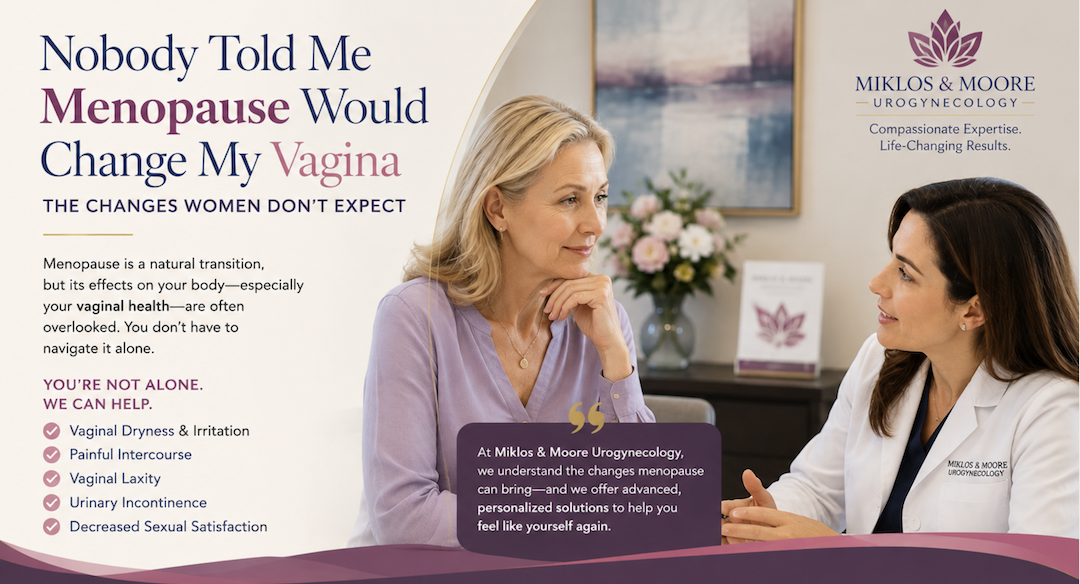
Nobody Told Me Menopause Would Change My Vagina: The Changes Women Don’t Expect
For many women, menopause brings symptoms they expect—hot flashes, night sweats, mood changes, and irregular periods. What often comes as a surprise, however, are the profound changes that can occur in the vagina and pelvic floor.
Many women quietly wonder:
“Why does my vagina feel different?”
“Why is sex suddenly uncomfortable?”
“Why do I feel drier than ever before?”
“Why am I leaking urine when I never did before?”
“Why does everything feel less supported?”
These concerns are incredibly common, yet they’re rarely discussed before menopause begins.
The good news is that these changes are a normal result of declining estrogen levels, and many effective treatments are available. You do not have to accept discomfort, pain, or urinary symptoms as an inevitable part of aging.
Understanding what’s happening to your body is the first step toward feeling like yourself again.
What Happens During Menopause?
Menopause officially occurs when a woman has gone twelve consecutive months without a menstrual period. Most women experience menopause between ages 45 and 55, although timing varies.
During menopause, estrogen production decreases significantly.
Estrogen plays an essential role in maintaining the health of the vaginal tissues, pelvic floor muscles, bladder, urethra, and surrounding connective tissue. As hormone levels decline, these tissues begin to change.
The result is a collection of symptoms now commonly referred to as Genitourinary Syndrome of Menopause (GSM).
Unlike hot flashes, which often improve over time, vaginal and urinary symptoms frequently continue to worsen without treatment.
The Vagina May Become Drier
One of the earliest and most common changes women notice is vaginal dryness.
Healthy estrogen levels help keep the vaginal lining thick, elastic, and naturally lubricated.
As estrogen declines:
- Natural lubrication decreases.
- Vaginal tissues become thinner.
- Elasticity declines.
- The vaginal lining becomes more fragile.
Women often notice dryness during daily activities—not just during intimacy.
Some describe burning, itching, or irritation that feels similar to a recurrent infection, even when no infection is present.
Sex May Become Painful
Many women are surprised when intercourse suddenly becomes uncomfortable after years of pain-free intimacy.
Several factors contribute:
- Reduced lubrication
- Thinning vaginal tissue
- Loss of elasticity
- Increased tissue sensitivity
- Pelvic floor muscle tightness
Pain may occur during penetration, with deeper intercourse, or even afterward.
Some women begin avoiding intimacy altogether because they anticipate discomfort.
Fortunately, painful intercourse is often highly treatable once the underlying cause is identified.
Your Vagina May Feel Different
One complaint that many women struggle to describe is simply:
“Everything feels different.”
The vagina may feel:
- Less elastic
- Narrower
- Less supported
- More sensitive
- Less comfortable during everyday activities
These changes occur gradually, making it difficult for many women to recognize exactly when they began.
Some women also notice changes in the appearance of the vulva and labia as tissues lose volume and collagen.
The Pelvic Floor Changes Too
Menopause affects more than the vaginal lining.
The muscles, ligaments, and connective tissues that support the bladder, uterus, rectum, and vagina are also influenced by estrogen.
Over time, women may experience:
- Pelvic heaviness
- Vaginal pressure
- A feeling of something “falling”
- Difficulty emptying the bladder
- Constipation
- A vaginal bulge
These symptoms may indicate pelvic organ prolapse, which becomes more common after menopause—especially in women who have had vaginal deliveries.
Bladder Problems Become More Common
Many women are surprised that menopause also affects bladder health.
As estrogen levels decline, the bladder and urethra lose some of their natural support.
This may contribute to:
- Frequent urination
- Urgency
- Leakage when coughing or laughing
- Waking at night to urinate
- Increased urinary tract infections
- Difficulty completely emptying the bladder
These symptoms are common but should never be dismissed as “just getting older.”
Recurrent Urinary Tract Infections
Estrogen also helps maintain the healthy bacteria that protect the urinary tract.
Without adequate estrogen:
- Vaginal pH changes.
- Protective bacteria decrease.
- Harmful bacteria grow more easily.
- UTIs become more frequent.
Many postmenopausal women experience multiple urinary tract infections each year until the underlying hormonal changes are addressed.
Why Some Women Feel Less Sensation
Another topic that receives far too little attention is changes in sexual sensation.
Declining estrogen affects:
- Blood flow
- Tissue thickness
- Elasticity
- Lubrication
- Nerve sensitivity
Some women describe:
- Less pleasurable intercourse
- Difficulty achieving orgasm
- Reduced arousal
- Less vaginal fullness
These symptoms are common and deserve medical attention just as much as any other menopausal symptom.
Weight Gain and Body Changes Can Add to the Problem
Although menopause itself doesn’t directly cause pelvic floor disorders, the combination of aging, previous childbirth, hormonal changes, and weight gain can increase stress on the pelvic floor.
This may contribute to:
- Urinary leakage
- Pelvic organ prolapse
- Vaginal laxity
- Increased pressure symptoms
Maintaining a healthy weight and staying physically active can help reduce these risks.
When Should You See a Urogynecologist?
Many women initially discuss menopause with their primary care physician or gynecologist.
However, if you’re experiencing:
- Urinary leakage
- Vaginal bulging
- Pelvic pressure
- Painful intercourse
- Recurrent urinary tract infections
- Vaginal laxity
- Difficulty emptying your bladder
- Persistent pelvic discomfort
a fellowship-trained urogynecologist can evaluate whether a pelvic floor disorder is contributing to your symptoms.
Because urogynecologists specialize in Female Pelvic Medicine and Reconstructive Surgery, they are uniquely trained to diagnose and treat conditions affecting both the pelvic floor and lower urinary tract.
Treatment Options
Treatment depends on your symptoms, overall health, and personal goals.
Options may include:
- Vaginal estrogen therapy
- Hormone replacement therapy (when appropriate)
- Vaginal moisturizers and lubricants
- Pelvic floor physical therapy
- Lifestyle modifications
- Non-surgical treatments
- Surgical treatment for prolapse or urinary incontinence when necessary
Many women experience significant improvement with conservative treatment alone.
You Don’t Have to Accept These Changes
Perhaps the most important thing to understand is this:
Menopause changes your body—but it does not mean you have to live with discomfort.
Pain during intercourse, bladder leakage, recurrent urinary tract infections, vaginal dryness, and pelvic pressure are common, but they are not simply something you must tolerate.
The first step is having an open conversation with a healthcare provider who understands both menopause and the pelvic floor.
For many women, the right diagnosis leads to treatments that restore comfort, confidence, and quality of life.
Whether your symptoms are mild or significantly affecting your daily activities, help is available—and you deserve to know your options.