
LABIA MAJORA REDUCTION RECOVERY: WHY SURGICAL EXPERIENCE MATTERS
Recovering from labia majora reduction involves more than allowing the incisions to heal. Because the procedure reshapes the outer vaginal tissues to improve contour and symmetry, meticulous surgical technique plays a critical role in minimizing scarring, preserving natural anatomy, and achieving smooth, balanced results. Drs. Miklos and Moore have performed thousands of cosmetic and reconstructive vaginal procedures and have developed techniques that emphasize precise tissue removal, careful wound closure, and long-term aesthetic outcomes. Their individualized postoperative protocols, attentive follow-up care, and decades of experience help patients recover comfortably while achieving natural-looking, refined results. Most women experience steady improvement during the first several weeks, with continued refinement as swelling resolves and the tissues fully heal.
Labia Majora Reduction Recovery: Swelling, Sitting Comfort & Healing After Surgery
Recovery after labia majora reduction is very different from recovery after procedures involving the labia minora. Rather than healing along a thin free edge of tissue, the surgery reshapes the fuller outer lips of the vulva. As a result, most patients notice tightness, pressure, and fullness long before they notice discomfort from the incision itself.
One of the biggest surprises is that the labia majora often look larger immediately after surgery, even though tissue has been removed. This temporary increase in size is caused by postoperative swelling and almost always improves as healing progresses.
Dr. John Miklos and Dr. Robert Moore provide individualized postoperative instructions based on the amount of tissue removed and each patient’s anatomy. Their goal is not only to improve appearance but also to preserve natural contours while minimizing recovery time.
Recovery Is More About Pressure Than Pain
Most women expect pain after surgery.
Instead, many describe recovery as feeling:
- Fullness
- Tightness
- Pressure between the legs
- Mild pulling while walking
- Tenderness when sitting on firm surfaces
Because the labia majora cushion the vulva during sitting and movement, these sensations are completely different from the healing experienced after procedures involving only the inner labia.
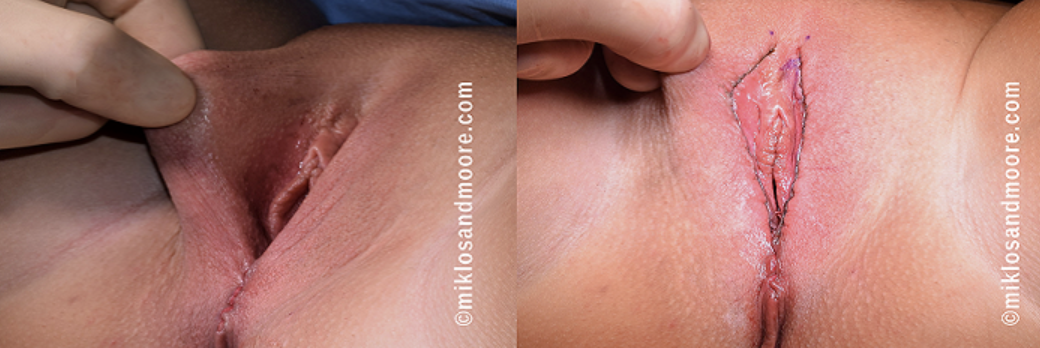
Before and after labia majora reduction recovery photos demonstrating gradual healing, reduced excess tissue, and improved symmetry as swelling resolves.
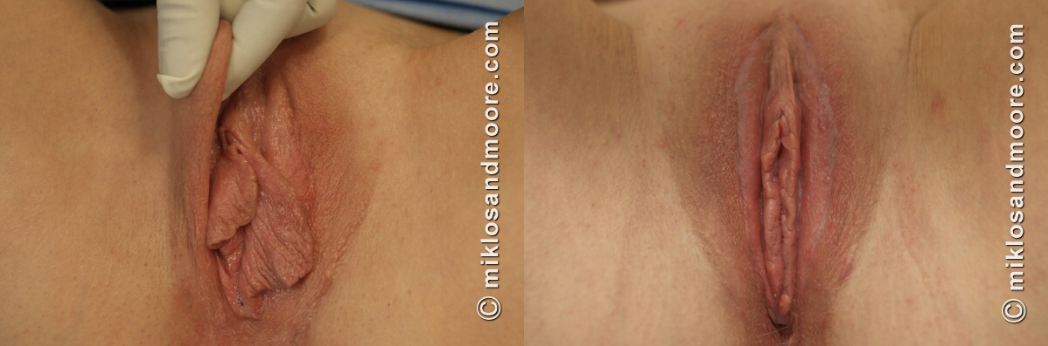
Healed before and after labia majora reduction photos demonstrating refined contours, improved comfort, and natural-looking results following full recovery.
Why Sitting Feels Different
The labia majora normally absorb pressure every time you sit.
After surgery, those tissues temporarily become swollen and firmer.
Many patients notice:
- Sitting feels awkward
- Crossing the legs feels uncomfortable
- Hard chairs increase pressure
- Long car rides become tiring
Changing positions frequently and using a soft cushion often improves comfort during the first several weeks.
Walking May Feel Tight
Unlike procedures that primarily affect delicate skin edges, labia majora reduction changes tissue that moves constantly during walking.
Patients commonly notice:
- A pulling sensation
- Tightness with longer strides
- Mild rubbing
- Increased awareness of the surgical area
These symptoms usually improve steadily as swelling decreases.
Walking is encouraged because it promotes circulation, but strenuous exercise should wait until healing progresses.
Why the Labia May Look Uneven
Swelling rarely develops equally on both sides.
One side often heals faster.
Temporary differences may include:
- One labium appearing larger
- Slight contour differences
- Uneven firmness
- Localized swelling
Because healing continues for months, early asymmetry rarely predicts the final result.
When Will the Fullness Go Away?
Patients often ask when the area will finally look smaller.
The answer depends largely on swelling.
In general:
- The first noticeable improvement occurs during the second and third weeks.
- Most swelling resolves during the first two months.
- Final contour refinement continues for several additional months.
Many women are surprised how much slimmer the labia appear once the remaining swelling disappears.
Caring for the Incision
The incision is usually hidden within the natural crease of the labia majora whenever possible.
During healing it is important to:
- Keep the area clean.
- Avoid unnecessary friction.
- Wear loose cotton underwear.
- Avoid prolonged moisture.
- Follow all postoperative instructions carefully.
Most patients find that the incision becomes progressively less noticeable over time.
Clothing During Recovery
Many women underestimate how much clothing affects comfort.
During the first several weeks it is often helpful to avoid:
- Tight jeans
- Compression leggings
- Shapewear
- Thongs
- Clothing with thick seams
Loose athletic shorts, soft underwear, and lightweight dresses often provide the greatest comfort while swelling improves.
Returning to Exercise
Healing should progress before placing repetitive stress on the surgical site.
Patients usually return to activity gradually.
Low-impact walking comes first.
Higher-impact activities—including running, cycling, horseback riding, hiking steep trails, and lower-body strength training—should wait until approved by your surgeon.
Returning too early can increase swelling and prolong recovery.
What About the Scar?
Because the incision is generally positioned within natural skin folds, the scar often becomes difficult to identify after healing.
Initially, the scar may feel:
- Firm
- Slightly raised
- Sensitive to touch
As collagen remodels, the tissue gradually softens and blends into the surrounding skin.
When Should You Contact Your Surgeon?
Although complications are uncommon, contact your surgeon if you notice:
- Heavy bleeding
- Fever
- Rapidly increasing swelling
- Foul-smelling drainage
- Worsening pain after initial improvement
- Separation of the incision
Early evaluation helps prevent more significant problems.
Why Experience Matters
Labia majora reduction is not simply about removing excess tissue. The surgeon must preserve natural contours while avoiding over-resection that can create an unnatural appearance or discomfort.
Dr. John Miklos and Dr. Robert Moore have spent decades performing advanced cosmetic and reconstructive vaginal procedures. Their experience includes numerous peer-reviewed publications, international surgical education, and the development of techniques that prioritize both aesthetics and function.
Their careful surgical planning and personalized postoperative care help patients recover comfortably while achieving natural-looking results.
Frequently Asked Questions
Why do my labia majora look larger after surgery?
Swelling temporarily increases the size of the tissues. Most patients begin noticing significant improvement over the following weeks.
Is it normal to feel pressure instead of pain?
Yes. Pressure and tightness are among the most common sensations after labia majora reduction.
When can I comfortably sit?
Most patients become increasingly comfortable over the first several weeks, although firm surfaces may remain uncomfortable initially.
When can I wear tight clothing again?
Most women gradually return to fitted clothing once swelling has improved and tenderness has resolved.
When will I see my final results?
Most swelling improves within two months, while subtle contour refinement continues for several additional months.