
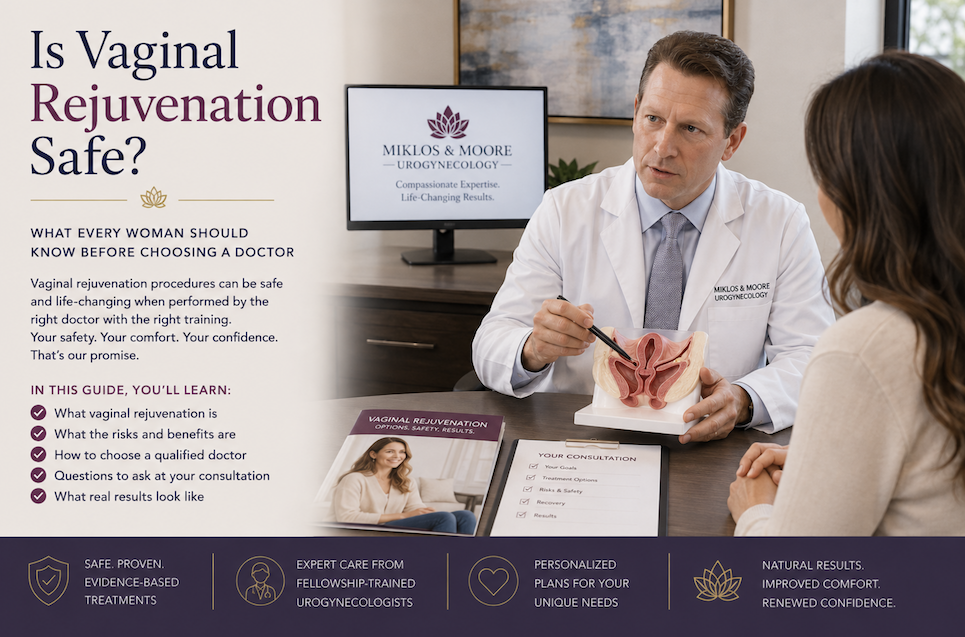
Is Vaginal Rejuvenation Safe? What Every Woman Should Know Before Choosing a Doctor
Many women considering vaginal rejuvenation ask the same question before scheduling a consultation:
“Is vaginal rejuvenation actually safe?”
It’s an important question—and one that deserves a thoughtful, evidence-based answer.
The term vaginal rejuvenation describes several procedures designed to improve vaginal function, comfort, and appearance. Some women seek treatment because of vaginal laxity after childbirth. Others experience discomfort during intercourse, urinary leakage, changes related to menopause, or cosmetic concerns that affect their confidence.
Like any medical procedure, vaginal rejuvenation carries potential risks and benefits. However, for properly selected patients, treatment performed by an experienced surgeon is generally considered safe and can significantly improve quality of life.
The most important factor isn’t simply the procedure itself—it’s choosing the right physician.
A surgeon’s training, experience, and understanding of female pelvic anatomy play a major role in achieving safe, natural-looking, functional results.
This guide explains what vaginal rejuvenation is, who may benefit from treatment, the potential risks, and what to look for when choosing a qualified specialist.
What Is Vaginal Rejuvenation?
Vaginal rejuvenation is a broad term that refers to treatments designed to improve the function, support, appearance, or tightness of the vagina and surrounding tissues.
Depending on a woman’s symptoms, treatment may involve:
- Vaginoplasty
- Perineoplasty
- Labiaplasty
- Clitoral hood reduction
- Non-surgical energy-based treatments
- Pelvic floor therapy
- Combination procedures
Not every woman requires surgery. Many patients achieve meaningful improvement through conservative treatments, while others benefit from surgical reconstruction.
The best treatment depends on your symptoms, anatomy, medical history, and personal goals.
Why Women Consider Vaginal Rejuvenation
Women seek vaginal rejuvenation for many different reasons.
Some experience physical symptoms, while others are primarily concerned about appearance or confidence.
Common reasons include:
- Vaginal laxity after childbirth
- Reduced sensation during intercourse
- Pain during intimacy
- Enlarged labia
- Perineal scarring
- Vaginal dryness
- Urinary leakage
- Pelvic floor weakness
- Changes related to menopause
- Loss of confidence
Many women experience more than one of these concerns simultaneously.
Is Vaginal Rejuvenation Safe?
For appropriately selected patients treated by an experienced physician, vaginal rejuvenation is generally considered safe.
Every surgical procedure carries potential risks.
These may include:
- Bleeding
- Infection
- Swelling
- Bruising
- Delayed healing
- Scar tissue
- Temporary discomfort
- Changes in sensation
- Dissatisfaction with cosmetic results
Fortunately, serious complications are uncommon when surgery is performed by an experienced surgeon using appropriate techniques.
Safety begins long before surgery.
A thorough consultation should include:
- Medical history
- Pelvic examination
- Discussion of symptoms
- Review of treatment goals
- Explanation of realistic expectations
- Discussion of risks and benefits
- Review of non-surgical alternatives
Women should never feel pressured into surgery.
A good surgeon will explain all available treatment options and recommend surgery only when it is likely to provide meaningful benefit.
Who Is a Good Candidate?
Women may be good candidates for vaginal rejuvenation if they experience:
- Vaginal laxity
- Discomfort during intercourse
- Reduced sexual satisfaction related to tissue laxity
- Enlarged labia causing irritation
- Perineal defects after childbirth
- Cosmetic concerns
- Stable overall health
- Realistic expectations
Women planning future pregnancies should discuss their plans with their surgeon, as childbirth may alter surgical results.
Who Should Perform Vaginal Rejuvenation?
Perhaps the most important decision is choosing the physician performing the procedure.
Vaginal rejuvenation may be offered by:
- Fellowship-trained urogynecologists
- Cosmetic gynecologists
- Plastic surgeons
- Some general OB/GYNs
Experience matters far more than advertising.
Look for a surgeon who routinely performs these procedures and has extensive knowledge of female pelvic anatomy.
A fellowship-trained urogynecologist has advanced training in Female Pelvic Medicine and Reconstructive Surgery, including the treatment of pelvic floor disorders, vaginal reconstruction, urinary incontinence, and prolapse.
For women with functional concerns in addition to cosmetic goals, this specialized training can be particularly valuable.
Questions You Should Ask Before Surgery
During your consultation, consider asking:
- How many vaginal rejuvenation procedures have you performed?
- Which procedure do you recommend for me?
- Why is this the best option?
- What non-surgical treatments are available?
- Can I see before-and-after photographs?
- What are the potential complications?
- What results should I realistically expect?
- How long is recovery?
- Will this affect sexual sensation?
- What happens if I need revision surgery?
An experienced surgeon should answer these questions openly and honestly.
Can Vaginal Rejuvenation Improve Sexual Function?
Many women seek treatment because intimacy feels different after childbirth or menopause.
Depending on the underlying cause, vaginal rejuvenation may improve:
- Vaginal support
- Comfort
- Confidence
- Tissue support
- Friction during intercourse
However, surgery should never be viewed as a guarantee of improved sexual satisfaction.
Healthy intimacy depends on many physical, emotional, hormonal, and relationship factors.
Your surgeon should discuss realistic expectations before recommending surgery.
Recovery
Recovery varies depending on the specific procedure performed.
Most women experience:
- Mild swelling
- Bruising
- Temporary discomfort
Patients are generally advised to avoid:
- Heavy lifting
- Strenuous exercise
- Cycling
- Swimming
- Sexual intercourse
for several weeks while healing occurs.
Following your surgeon’s postoperative instructions carefully helps reduce complications and optimize healing.
Red Flags When Choosing a Surgeon
Not every provider offering vaginal rejuvenation has the same level of training.
Be cautious if a provider:
- Guarantees perfect results.
- Recommends surgery without a thorough examination.
- Cannot explain risks and alternatives.
- Performs very few procedures each year.
- Cannot provide before-and-after photographs.
- Pressures you into making a quick decision.
- Minimizes potential complications.
Choosing an experienced surgeon who prioritizes education and patient safety is one of the best ways to reduce risk.
The Bottom Line
Vaginal rejuvenation can be a safe and effective option for women experiencing vaginal laxity, childbirth-related changes, pelvic floor concerns, or cosmetic dissatisfaction.
The key to a successful outcome is selecting the right procedure for your individual needs and choosing a physician with extensive experience in female pelvic anatomy and reconstructive surgery.
Rather than focusing solely on appearance, your consultation should address comfort, function, long-term pelvic health, and realistic expectations.
If you’re considering vaginal rejuvenation, take time to ask questions, understand your options, and choose a qualified specialist who places your safety and well-being first.
With the right evaluation and personalized treatment plan, many women experience significant improvements in comfort, confidence, and quality of life.