
Can Vaginal Rejuvenation be Covered by Insurance?
Vaginal rejuvenation may include both cosmetic procedures and medically necessary treatment, and insurance coverage depends on the condition being treated. Women experiencing pelvic organ prolapse, urinary incontinence, childbirth-related pelvic floor injuries, vaginal mesh complications or other diagnosed functional problems may have insurance benefits available for medically necessary treatment.
Drs. John Miklos and Robert Moore specialize in urogynecology and reconstructive pelvic surgery and can determine whether your symptoms are related to an underlying medical condition. Patients with UMR, UnitedHealthcare, Blue Cross Blue Shield, Anthem and other commercial insurance plans may have coverage depending on their individual benefits and recommended treatment.
Please call our office to schedule a consultation.
Does Health Insurance Cover Vaginal Rejuvenation?
One of the most common questions women ask when considering vaginal rejuvenation is:
“Will my health insurance pay for vaginal rejuvenation?”
The answer depends largely on why treatment is being performed and which procedure is medically appropriate.
The term vaginal rejuvenation can describe several different surgical and nonsurgical treatments. Some are performed primarily for cosmetic or elective reasons and are generally not covered by health insurance. Others may be recommended to treat a diagnosed medical condition, functional problem or complication and may qualify for insurance benefits when considered medically necessary.
At Miklos & Moore, Dr. John Miklos and Dr. Robert Moore evaluate each patient individually. Rather than assuming that a procedure is either cosmetic or covered, the first step is determining what is actually causing the patient’s symptoms and what treatment is medically appropriate.
If you have UMR, UnitedHealthcare, Blue Cross Blue Shield, Anthem or another commercial insurance plan, please call our office. One of our patient coordinators can review your individual insurance benefits and help determine whether coverage may be available for medically necessary treatment.

Vaginal rejuvenation before and after results demonstrating changes following reconstructive vaginal surgery.
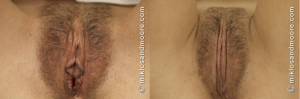
Vaginal rejuvenation before and after results demonstrating changes following reconstructive vaginal surgery.
When Can Vaginal Rejuvenation Be Covered by Insurance?
Health insurance generally does not cover a procedure simply because it is described as “vaginal rejuvenation.”
Insurance companies typically evaluate the diagnosis, symptoms, medical necessity and specific procedure being performed.
This distinction is important.
A woman seeking surgery solely because she would like to change the appearance of her vagina or vulva may be seeking an elective cosmetic procedure.
Another woman may have similar concerns but also have a diagnosed functional problem resulting from childbirth, pelvic floor injury, prolapse, previous surgery or another medical condition.
Depending on the diagnosis and treatment recommended, insurance benefits may be available for the medically necessary portion of her care.
Potential medical problems can include:
- Pelvic organ prolapse
- Rectocele
- Cystocele
- Perineal injury following childbirth
- Significant vaginal or perineal scarring
- Urinary incontinence
- Complications from previous pelvic surgery
- Vaginal mesh complications
- Certain reconstructive problems
- Other diagnosed pelvic floor disorders
Coverage is determined by the patient’s individual insurance plan and cannot be guaranteed.
Cosmetic Vaginal Rejuvenation vs. Medically Necessary Treatment
This is one of the most important distinctions for patients to understand.
Cosmetic treatment is generally performed primarily to change appearance or address an elective concern without an underlying medical indication.
Medically necessary treatment is performed to diagnose, correct or treat a recognized medical or functional problem.
Sometimes the distinction is straightforward. Other times a woman may have both cosmetic and functional concerns.
For example, a patient may describe her problem simply as:
“My vagina hasn’t been the same since childbirth.”
But an examination may reveal a specific condition such as pelvic organ prolapse, damage to the perineum, urinary incontinence or another pelvic floor problem.
That diagnosis can change the conversation from simply asking about “vaginal rejuvenation” to determining what treatment is medically appropriate.
Does Insurance Cover Vaginoplasty?
A vaginoplasty performed solely for elective vaginal tightening is generally considered cosmetic and is unlikely to be covered by health insurance.
However, women sometimes use the term vaginoplasty to describe several different procedures.
If a patient has an underlying medical or reconstructive problem, the appropriate operation may actually involve treatment of a diagnosed pelvic floor condition rather than a purely cosmetic vaginoplasty.
This is why an examination and accurate diagnosis are important before determining insurance eligibility.
Does Insurance Cover Perineoplasty?
Coverage for perineoplasty depends on why the procedure is being performed.
A perineoplasty performed exclusively for cosmetic reasons may not be covered.
However, some women have significant perineal damage, scarring or functional problems following childbirth, previous surgery or trauma.
When reconstruction is being recommended to correct a documented medical problem, insurance benefits may potentially apply depending on the patient’s plan and medical necessity requirements.
Does Insurance Cover Labiaplasty?
Labiaplasty performed primarily to change the appearance or size of the labia is generally considered cosmetic.
There are circumstances in which women experience significant functional symptoms associated with the labia, but insurance coverage varies considerably.
Having discomfort alone does not guarantee that an insurance company will consider labiaplasty medically necessary.
Miklos & Moore can evaluate the patient’s symptoms and anatomy and discuss whether treatment is cosmetic, medically indicated or involves a combination of concerns.
Does Insurance Cover Pelvic Organ Prolapse Surgery?
Pelvic organ prolapse is a medical condition rather than a cosmetic concern.
Women with prolapse may experience:
- Vaginal pressure or heaviness
- A vaginal bulge
- Tissue protruding from the vagina
- Difficulty emptying the bladder
- Difficulty having a bowel movement
- The need to push or splint vaginally to have a bowel movement
- Pelvic discomfort
- Sexual difficulties
When prolapse surgery is medically necessary, health insurance commonly provides benefits subject to the patient’s individual coverage, network, deductible, coinsurance and authorization requirements.
The fact that pelvic reconstructive surgery may also improve vaginal anatomy does not automatically make the procedure cosmetic.
Does Insurance Cover Urinary Incontinence Treatment?
Urinary incontinence is another medical condition that can sometimes exist alongside the concerns women describe as vaginal rejuvenation.
Stress urinary incontinence can cause urine leakage with coughing, sneezing, laughing, exercising or other physical activity.
Depending on the diagnosis, treatment may include conservative therapies or surgery.
Medically necessary evaluation and treatment of urinary incontinence may qualify for insurance benefits according to the patient’s plan.
What About Vaginal Mesh Complications?
Women experiencing mesh exposure, mesh erosion, mesh extrusion, pelvic pain, painful intercourse, bleeding, urinary problems or other complications following previous vaginal mesh or bladder sling surgery may require medically necessary evaluation and treatment.
This is different from elective vaginal rejuvenation.
Treatment of a documented mesh complication may potentially qualify for insurance benefits, including evaluation, diagnostic testing, mesh revision or removal when medically indicated.
What About Problems After Childbirth?
Childbirth can result in significant changes to the pelvic floor.
Some women experience vaginal laxity without a diagnosable medical condition. Others have structural injuries or pelvic floor disorders.
Potential problems following childbirth can include:
- Perineal injury
- Pelvic organ prolapse
- Rectocele
- Cystocele
- Urinary incontinence
- Significant scar tissue
- Pelvic floor dysfunction
This is another reason why women should not necessarily assume that everything described as “vaginal rejuvenation” is cosmetic.
A urogynecologic evaluation can determine whether there is an underlying medical condition contributing to the patient’s symptoms.
UMR Insurance and Vaginal Rejuvenation
UMR administers many employer-sponsored health plans.
Whether treatment is covered depends on the patient’s particular plan and, importantly, what procedure is actually being performed and why.
A cosmetic vaginal rejuvenation procedure may be excluded while treatment for a diagnosed pelvic floor condition may have benefits.
Patients with UMR should contact Miklos & Moore so our patient coordinators can review their insurance information and help determine what benefits may apply.
UnitedHealthcare Insurance and Vaginal Rejuvenation
UnitedHealthcare plans vary by employer, policy and benefit structure.
Patients should not assume that a treatment is covered simply because they have UnitedHealthcare, nor should they automatically assume that all vaginal procedures are excluded as cosmetic.
The underlying diagnosis and procedure matter.
Our patient coordinators can review your UnitedHealthcare insurance information and help determine whether benefits may be available for medically necessary treatment.
Blue Cross Blue Shield and Anthem Insurance
Blue Cross Blue Shield and Anthem plans can vary substantially between states, employers and individual policies.
Medically necessary treatment for conditions such as pelvic organ prolapse, urinary incontinence or other diagnosed pelvic floor disorders may have insurance benefits even though purely cosmetic vaginal rejuvenation procedures may not.
Patients with BCBS or Anthem can contact Miklos & Moore to have their individual insurance benefits reviewed.
How Do I Know Whether My Procedure Is Cosmetic or Medically Necessary?
You do not necessarily need to figure this out yourself before scheduling an appointment.
Many women know what they are experiencing but do not know the medical terminology for the underlying problem.
You might know that:
“Something feels loose.”
“I have a bulge.”
“I leak urine.”
“Sex feels different after childbirth.”
“I have pain or scar tissue.”
“Something doesn’t feel right.”
Those symptoms do not by themselves establish a diagnosis.
A urogynecologic examination can help determine whether the symptoms are associated with a medical condition and what treatment options are appropriate.
Can Part of My Treatment Be Covered While Another Part Is Cosmetic?
Potentially.
A patient may have both a medically necessary condition and an elective cosmetic concern.
In some situations, the medically necessary procedure may qualify for insurance benefits while an elective component remains the patient’s financial responsibility.
This depends on the procedures, insurance policy and individual circumstances.
The important point is that patients should not assume “insurance covers everything” or “insurance covers nothing.”
Each case needs to be evaluated individually.
How Miklos & Moore Can Help Determine Your Insurance Coverage
Insurance policies can be difficult for patients to interpret, particularly when procedures involve both reconstructive and cosmetic gynecology.
If you have UMR, UnitedHealthcare, Blue Cross Blue Shield, Anthem or another commercial insurance plan, please call Miklos & Moore.
One of our patient coordinators can review your insurance information and help determine:
- Whether your plan provides benefits for the diagnosed condition
- Whether the recommended procedure may qualify for coverage
- Whether prior authorization may be required
- Whether network requirements apply
- Whether you have a deductible
- Whether coinsurance or other patient responsibility may apply
Insurance verification does not guarantee that an insurance company will ultimately authorize a procedure or pay a claim, but it can give patients a much clearer understanding of their benefits before proceeding with treatment.
Why See a Urogynecologist for Vaginal Rejuvenation Concerns?
Women considering vaginal rejuvenation may have concerns involving both appearance and pelvic function.
Dr. John Miklos and Dr. Robert Moore specialize in urogynecology, female pelvic medicine and reconstructive pelvic surgery and have extensive experience evaluating women with pelvic floor and vaginal concerns.
An important part of the evaluation is determining why a woman is experiencing her symptoms.
Rather than automatically recommending a cosmetic procedure, the doctors can determine whether symptoms may be associated with prolapse, childbirth injury, urinary incontinence, previous surgery, vaginal mesh complications or another pelvic floor condition.
That distinction can affect both the recommended treatment and whether insurance benefits may be available.
Frequently Asked Questions About Vaginal Rejuvenation and Insurance
Is vaginal rejuvenation covered by insurance?
Purely cosmetic vaginal rejuvenation is generally not covered. However, treatment for a diagnosed medical or functional condition may qualify for insurance benefits depending on the patient’s plan and the procedure being performed.
Will insurance cover vaginal tightening?
Elective vaginal tightening is generally considered cosmetic. If symptoms are caused by an underlying pelvic floor disorder or reconstructive problem, medically necessary treatment may potentially have insurance benefits.
Does insurance cover vaginal rejuvenation after childbirth?
It depends on the diagnosis. Cosmetic changes following childbirth generally are not covered simply because they resulted from pregnancy or delivery. However, childbirth can cause medical conditions such as pelvic organ prolapse, perineal injury and urinary incontinence that may qualify for medically necessary treatment.
Can insurance cover prolapse surgery?
Pelvic organ prolapse is a medical condition, and medically necessary prolapse treatment may qualify for insurance benefits subject to the patient’s individual policy.
Can insurance cover treatment for vaginal mesh complications?
Treatment of documented vaginal mesh complications may qualify for insurance coverage when medically necessary, depending on the patient’s policy and recommended treatment.
Can Miklos & Moore check my insurance before my consultation or surgery?
Please call our office and speak with one of our patient coordinators. We can review your insurance information and help determine what benefits may be available for medically necessary treatment.
Schedule a Vaginal Rejuvenation Consultation
If you are considering vaginal rejuvenation but are unsure whether your symptoms are cosmetic, functional or related to an underlying medical condition, the first step is an appropriate evaluation.
Drs. Miklos and Moore can evaluate your symptoms, determine whether an underlying pelvic floor condition is present and discuss the treatment options appropriate for you.
If treatment is medically necessary, insurance benefits may be available depending on your individual health plan.
Patients with UMR, UnitedHealthcare, Blue Cross Blue Shield, Anthem and other commercial insurance plans can speak with one of our patient coordinators to have their individual insurance benefits reviewed.
Please call our office to schedule a consultation.