
World-Renowned Urogynecologists
Dr. John Miklos and Dr. Robert Moore are world-renowned urogynecologists specializing in complex pelvic and vaginal surgery. Their expertise includes complex and recurrent pelvic organ prolapse, MRKH and vaginal agenesis, vaginal rejuvenation and reconstruction, mesh complications, complete mesh excision, and difficult revision surgery.
Through extensive specialized training, high surgical volume, and decades of experience treating challenging cases, Dr. Miklos and Dr. Moore have developed advanced surgical techniques to provide patients with world-class care. Women travel from across the United States and internationally to seek their expertise, particularly after previous treatments or surgeries have failed.
Request a consultation with Dr. Miklos or Dr. Moore to discuss your condition, previous treatment, and available surgical options.
World-Renowned Urogynecologists for Complex Pelvic Surgery
When women face complex pelvic floor conditions, failed previous surgery, congenital vaginal abnormalities, complications from surgical mesh, or the need for advanced vaginal reconstruction, choosing a surgeon involves much more than finding a physician who performs the procedure. Experience, specialized training, surgical volume, and the ability to manage difficult and unusual cases can make an important difference.
Dr. John Miklos and Dr. Robert Moore are world-renowned urogynecologists whose careers have been dedicated to advanced pelvic reconstructive and vaginal surgery. Their practice has become a destination for women seeking treatment for some of the most challenging conditions in urogynecology, including complex pelvic organ prolapse, MRKH syndrome and vaginal agenesis, vaginal rejuvenation and reconstructive surgery, revision surgery, and complications involving transvaginal and pelvic mesh.
Patients travel to Miklos & Moore from across the United States and internationally, often after previous treatments or surgeries have failed to resolve their problems.

Dr. John Miklos performing advanced minimally invasive urogynecologic surgery treating complex pelvic floor conditions.
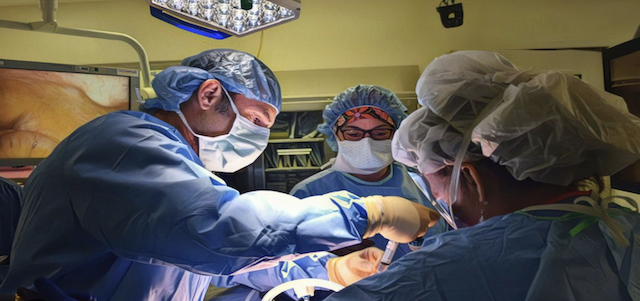
Dr. Robert Moore performing advanced pelvic and urogynecologic surgery with his surgical team.
Experience Beyond Routine Urogynecology
Many physicians treat common pelvic floor disorders. Far fewer devote a substantial portion of their surgical practice to complicated, recurrent, reconstructive, and revision cases.
Dr. Miklos and Dr. Moore have spent decades developing expertise in advanced vaginal and pelvic reconstructive surgery. Their experience includes patients with altered anatomy from previous surgery, recurrent pelvic organ prolapse, extensive scar tissue, mesh complications, congenital abnormalities, and complex combinations of functional and anatomical problems.
Their philosophy has always been that advanced surgery requires more than simply learning how to perform a procedure.
It requires extensive training, repetition, surgical volume, experience managing complications, and the judgment that develops from treating difficult cases over many years.
Specialized Training From Experts Around the World
Throughout their careers, Dr. Miklos and Dr. Moore have traveled to obtain additional specialized surgical training and to learn advanced techniques from leading physicians and surgeons.
This commitment to continuing surgical education has allowed them to incorporate techniques from urogynecology, pelvic reconstructive surgery, vaginal surgery, minimally invasive surgery, and cosmetic gynecology into a comprehensive approach to female pelvic health.
Rather than limiting their experience to techniques learned during traditional residency and fellowship training, they have actively pursued advanced education throughout their careers.
The objective has remained the same: to bring world-class surgical techniques and treatment options back to their patients.
Complex Pelvic Organ Prolapse Surgery
Pelvic organ prolapse can involve the bladder, rectum, uterus, vaginal walls, vaginal apex, or several structures simultaneously.
While straightforward prolapse may be treated by many gynecologists and urogynecologists, recurrent and complex prolapse can present a very different surgical challenge.
Dr. Miklos and Dr. Moore have extensive experience treating women with:
- Recurrent pelvic organ prolapse
- Previous failed prolapse surgery
- Cystocele
- Rectocele
- Uterine prolapse
- Vaginal vault prolapse
- Enterocele
- Multi-compartment prolapse
- Prolapse following hysterectomy
- Complicated pelvic anatomy
- Previous mesh procedures
- Previous pelvic reconstructive surgery
Their high surgical volume provides experience with a broad range of anatomical problems rather than only routine prolapse cases.
For women who have already undergone one or more unsuccessful repairs, this experience can become particularly important. Revision surgery frequently requires the surgeon to understand not only the current prolapse but also how previous procedures have changed the patient’s anatomy.
MRKH Syndrome and Vaginal Agenesis
Mayer-Rokitansky-Küster-Hauser syndrome, commonly known as MRKH, is a rare congenital condition in which a woman is born with an absent or underdeveloped uterus and vagina.
Because MRKH is uncommon, relatively few surgeons accumulate substantial experience treating women who require vaginal reconstruction.
Dr. Miklos and Dr. Moore have developed extensive experience evaluating and treating women with MRKH and vaginal agenesis, including patients seeking surgical creation or reconstruction of a functional vagina.
These procedures require specialized knowledge of pelvic anatomy and reconstructive techniques and are fundamentally different from routine gynecologic surgery.
For women with a rare condition such as MRKH, finding a surgeon who has treated a meaningful number of similar patients can be especially important.
Vaginal Rejuvenation and Advanced Vaginal Reconstruction
Dr. Miklos and Dr. Moore are also internationally recognized for their work in vaginal rejuvenation and cosmetic gynecology.
Their experience includes procedures such as:
- Vaginoplasty
- Perineoplasty
- Labiaplasty
- Labia minora reduction
- Labia majora procedures
- Clitoral hood reduction
- Clitoropexy
- Vaginal reconstruction
- Revision vaginal surgery
- Correction of childbirth-related vaginal changes
Their background in urogynecology provides an important perspective because vaginal concerns are not always purely cosmetic.
A woman describing vaginal looseness, pressure, changes after childbirth, painful intercourse, urinary leakage, or altered sexual function may have underlying pelvic floor damage or pelvic organ prolapse in addition to cosmetic concerns.
Evaluating the entire pelvic floor can therefore be essential before determining the appropriate treatment.
Mesh Complications and Complete Mesh Removal
One of the most technically challenging areas of pelvic reconstructive surgery involves complications from previously implanted surgical mesh.
Women may experience mesh exposure or erosion, pelvic pain, painful intercourse, infection, urinary problems, scarring, organ involvement, or other symptoms following a previous mesh procedure.
Removing mesh can be considerably more difficult than placing it.
Mesh may become incorporated into surrounding tissue and can lie near or involve important structures such as the bladder, urethra, vagina, bowel, blood vessels, and pelvic nerves.
Dr. Miklos and Dr. Moore have developed extensive experience treating complex mesh complications and performing comprehensive mesh excision when medically and surgically appropriate.
Their approach is particularly relevant for women seeking surgeons experienced in attempting complete removal of accessible implanted mesh rather than simply trimming an exposed portion when a more extensive removal is indicated and can be performed safely.
These cases demand an advanced understanding of pelvic anatomy and considerable reconstructive surgical experience.
Why Surgical Volume Matters
There is an important difference between a surgeon who is technically qualified to perform a procedure and a surgeon who performs complex versions of that procedure regularly.
High-volume surgeons repeatedly encounter anatomical variations, unusual findings, previous surgical alterations, scar tissue, complications, and difficult intraoperative decisions.
That accumulated experience can be particularly valuable when the surgery is not routine.
Dr. Miklos and Dr. Moore have built their practice around vaginal and pelvic reconstructive surgery. Their surgical experience is not limited to occasional complex cases. Difficult and revision cases represent an important part of the patients referred to their practice.
This is also why women frequently seek their opinion after being told that nothing more can be done or after receiving conflicting recommendations from different physicians.
Revision Surgery Requires a Different Level of Experience
Operating for the first time is not the same as operating after one, two, or several previous procedures.
Revision surgery may involve scar tissue, distorted anatomy, reduced tissue availability, previous mesh, altered blood supply, and repairs that must be carefully reconstructed.
The surgeon must understand what was probably done previously, identify why the patient continues to have symptoms, and determine whether another operation can realistically improve the condition.
Dr. Miklos and Dr. Moore routinely evaluate patients seeking second opinions and revision treatment following previous pelvic, vaginal, prolapse, mesh, and cosmetic gynecologic surgery.
Importantly, a second opinion does not automatically result in another operation.
The first objective is to determine what is actually causing the patient’s symptoms.
Patients Travel for Their Expertise
Complex surgery often changes the way patients choose their physicians.
For routine care, convenience and proximity may be important. For uncommon conditions or difficult revision surgery, patients may be willing to travel to find surgeons with greater experience treating their specific problem.
Women travel to Miklos & Moore from throughout Georgia and the Southeast, across the United States, and from other countries for consultation and surgery.
Many are seeking treatment for conditions that are uncommon, technically difficult, or have already been treated unsuccessfully elsewhere.
This referral pattern has helped the practice develop even greater experience with precisely the kinds of difficult cases that require advanced surgical judgment.
More Than Credentials
Board certification and formal training establish an important foundation, but complex surgery requires more.
The questions patients should consider include:
- How frequently does the surgeon perform this procedure?
- How many complex cases has the surgeon treated?
- Does the surgeon perform revision surgery?
- Does the surgeon treat patients whose previous surgeries have failed?
- Does the surgeon have experience with unusual anatomy?
- Does the surgeon regularly treat mesh complications?
- Does the surgeon have experience with complete mesh excision?
- Has the surgeon pursued specialized training beyond basic requirements?
- Does the surgeon evaluate both functional and anatomical problems?
- Do other physicians refer difficult cases to the surgeon?
These questions become increasingly important as the complexity of the condition increases.
A Career Focused on Advanced Female Pelvic Surgery
Dr. John Miklos and Dr. Robert Moore have devoted their careers to advancing the surgical treatment of female pelvic floor and vaginal conditions.
Their combination of extensive surgical volume, specialized training, advanced reconstructive techniques, revision experience, and exposure to complex cases has made Miklos & Moore a destination practice for women seeking another level of expertise.
Their areas of particular focus include complex pelvic organ prolapse surgery, MRKH and vaginal agenesis, vaginal rejuvenation, advanced vaginal reconstruction, revision surgery, and mesh complications requiring extensive mesh excision.
For patients facing a difficult diagnosis or considering another operation after previous treatment has failed, experience matters.
Sometimes the most important decision is not simply which procedure to have.
It is who has the experience to perform it.
Schedule a Consultation With Miklos & Moore
Women seeking an expert evaluation for complex prolapse, MRKH, vaginal reconstruction, vaginal rejuvenation, mesh complications, or revision pelvic surgery can schedule a consultation with Dr. John Miklos and Dr. Robert Moore.
For patients who have already undergone treatment elsewhere, a consultation can also provide an independent second opinion about the diagnosis, previous surgery, and available options before deciding what to do next.
Frequently Asked Questions
What types of complex conditions do Dr. Miklos and Dr. Moore treat?
Their practice focuses on advanced female pelvic and vaginal conditions, including complex and recurrent pelvic organ prolapse, MRKH and vaginal agenesis, mesh complications, vaginal reconstruction, vaginal rejuvenation, and revision surgery following previous procedures.
Do Miklos and Moore treat patients who have already had unsuccessful surgery?
Yes. A significant part of their practice involves evaluating patients with persistent or recurrent problems following previous pelvic, vaginal, prolapse, mesh, or cosmetic gynecologic surgery.
Do Dr. Miklos and Dr. Moore remove pelvic mesh?
They have extensive experience evaluating and surgically treating complications involving previously implanted pelvic and transvaginal mesh, including extensive mesh excision when clinically appropriate.
Why is mesh removal considered difficult surgery?
Mesh can become incorporated into pelvic tissues and may lie close to the bladder, urethra, bowel, blood vessels, nerves, and other important structures. Extensive removal can therefore require advanced pelvic surgical and reconstructive experience.
Do they treat MRKH syndrome?
Yes. Dr. Miklos and Dr. Moore have experience evaluating and treating women with MRKH syndrome and vaginal agenesis, including patients requiring vaginal reconstruction.
Why does surgical volume matter for complex urogynecologic surgery?
Higher surgical volume exposes surgeons to a greater variety of anatomy, complications, previous operations, scar tissue, and unusual circumstances. This experience can be particularly valuable in complex and revision cases.
Can I see Miklos & Moore for a second opinion?
Yes. Women can seek a second opinion before undergoing surgery or after previous treatment when symptoms persist, a condition has returned, or another surgeon has recommended additional surgery.