
Anal Skin Tag Removal Before and After Photos
Anal skin tags are small folds of excess skin that develop around the anus. They may appear after hemorrhoids, pregnancy, childbirth, chronic irritation, constipation, or previous inflammation in the area. Although anal skin tags are usually harmless, they can cause problems with hygiene, irritation, itching, discomfort, or concerns about appearance.
Anal skin tag removal, also known as perianal tag excision, is a surgical procedure used to remove unwanted excess skin around the anus. The goal is to improve comfort, hygiene, and the appearance of the perianal area while preserving the surrounding anatomy.
The before and after photos below feature real patients who underwent anal skin tag removal performed by Dr. John Miklos and Dr. Robert Moore. These images demonstrate how removal of excess perianal skin can create a smoother and more natural appearance. Every procedure is customized based on the number, size, location, and shape of the skin tags, as well as each patient’s individual anatomy and concerns.
Patients often choose anal skin tag removal to address:
- Excess or hanging skin around the anus
- Difficulty keeping the area clean
- Irritation or itching after bowel movements
- Skin tags remaining after hemorrhoids have resolved
- Discomfort caused by friction or tight clothing
- Cosmetic concerns involving the anal area
- Embarrassment during intimacy
- Multiple or enlarged anal skin tags
While these before and after photos demonstrate real surgical outcomes, every patient’s anatomy, healing process, and results are unique. A consultation with Dr. John Miklos and Dr. Robert Moore can help determine whether anal skin tag removal is appropriate and how much tissue can be safely removed based on your individual anatomy and goals.
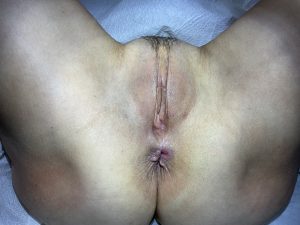
Before anal skin tag removal showing excess perianal skin prior to treatment.
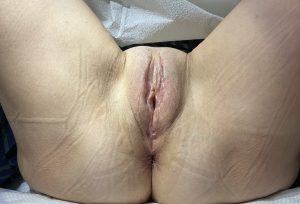
After anal skin tag removal showing the perianal area following treatment and healing.
Understanding Anal Skin Tag Removal Results
These before and after photos show the types of changes that may be achieved with anal skin tag removal, also called perianal tag excision. Anal skin tags are small folds of excess skin around the anus that may develop after hemorrhoids, pregnancy, childbirth, chronic irritation, constipation, or previous inflammation. While they are usually harmless, some patients choose to have them removed because of hygiene difficulties, irritation, discomfort, or concerns about appearance.
The goal of anal skin tag removal is to carefully remove unwanted excess skin while preserving the natural contour and function of the surrounding area. The amount of tissue that can be removed depends on the number, size, location, and shape of the skin tags, as well as the patient’s individual anatomy and healing characteristics.
During a consultation, Dr. John Miklos and Dr. Robert Moore evaluate the perianal area and determine whether skin tag excision is appropriate. In some patients, a single tag may be treated, while others may have several areas of excess skin that require a more individualized approach. These photographs are provided for educational purposes to help patients understand possible outcomes. Results vary from patient to patient.
Frequently Asked Questions About Anal Skin Tag Removal
1. What is an anal skin tag?
An anal skin tag is a small flap or fold of excess skin located around the anal opening. Skin tags can vary in size and may occur alone or in multiples. They may develop after external hemorrhoids, swelling, pregnancy, childbirth, constipation, repetitive irritation, or stretching of the surrounding skin.
2. Why do people have anal skin tags removed?
Patients may consider anal skin tag removal for several reasons, including:
- Difficulty keeping the area clean after bowel movements
- Chronic irritation or itching
- Discomfort caused by friction or tight clothing
- Excess skin remaining after a hemorrhoid has resolved
- Cosmetic concerns about the appearance of the anal area
- Embarrassment or self-consciousness during intimacy
- Multiple or enlarged skin tags
Dr. Miklos and Dr. Moore evaluate the area carefully before recommending removal, since not every bump or area of excess tissue around the anus is necessarily a skin tag.
3. Are anal skin tags the same as hemorrhoids?
No. Hemorrhoids are swollen blood vessels located inside or around the anus, while anal skin tags are folds of excess skin. However, a skin tag may remain after an external hemorrhoid has swollen and later resolved.
4. How is anal skin tag removal performed?
Anal skin tag removal involves carefully excising the unwanted excess skin around the anus. The surgical approach depends on the size, number, and location of the tags. The goal is to remove the bothersome tissue while maintaining the normal shape and function of the anal opening.
5. Can multiple anal skin tags be removed at the same time?
Yes, multiple skin tags may sometimes be removed during the same procedure. However, the amount of tissue that can be safely removed must be determined individually. Removing too much skin from the perianal area can interfere with normal healing or create unnecessary tension, which is why careful surgical planning is important.
6. How long does healing take after anal skin tag removal?
Healing time varies depending on the size and number of skin tags removed and the extent of the procedure. Because the area is exposed to movement, friction, and bowel movements, temporary tenderness, swelling, or discomfort can occur during recovery. Patients receive specific instructions regarding hygiene, bowel movements, activity, and wound care.
7. Will the area be completely smooth after anal skin tag removal?
The goal is to reduce unwanted excess skin and improve the contour of the area, but the anus naturally has folds and variations in skin texture. The objective is not to create an unnaturally smooth appearance, but rather to remove the skin tags that are causing symptoms or cosmetic concerns while preserving normal anatomy.
8. Can anal skin tags return after removal?
A skin tag that has been completely excised does not typically grow back in exactly the same form. However, new skin tags may develop in the future if the area experiences additional swelling, hemorrhoids, irritation, constipation, or stretching of the skin.
9. Can anal skin tag removal be combined with other procedures?
In some patients, anal skin tag removal may be performed at the same time as other cosmetic gynecologic or vaginal rejuvenation procedures. Whether combining procedures is appropriate depends on the patient’s anatomy, medical history, surgical goals, and the extent of treatment being considered.
10. Why do patients travel to see Dr. John Miklos and Dr. Robert Moore?
Patients from Georgia, throughout the United States, and internationally travel to Miklos & Moore for procedures involving intimate and complex pelvic anatomy. Dr. John Miklos and Dr. Robert Moore are fellowship-trained specialists in Female Pelvic Medicine and Reconstructive Surgery and have extensive experience with reconstructive and cosmetic procedures involving the vaginal, perineal, and surrounding tissues.
Their approach is individualized. Rather than treating every patient the same way, they evaluate the patient’s anatomy, concerns, and goals before recommending a specific surgical plan.
11. Why choose Dr. Miklos and Dr. Moore for anal skin tag removal?
Anal skin tag removal involves a sensitive anatomical area where both appearance and function are important. Dr. John Miklos and Dr. Robert Moore bring extensive experience in pelvic and perineal anatomy to each procedure.
Patients choose Miklos & Moore because they offer:
- Extensive experience with pelvic, vaginal, and perineal anatomy
- Individualized evaluation of each patient’s skin tags and surrounding tissue
- Surgical planning based on the number, size, and location of the skin tags
- Attention to both functional and cosmetic concerns
- Experience treating patients with previous childbirth, hemorrhoids, or prior surgery
- Care for patients traveling from throughout the United States and internationally
The goal is to provide a treatment plan that safely addresses the patient’s concerns while preserving normal anatomy, comfort, and function.