
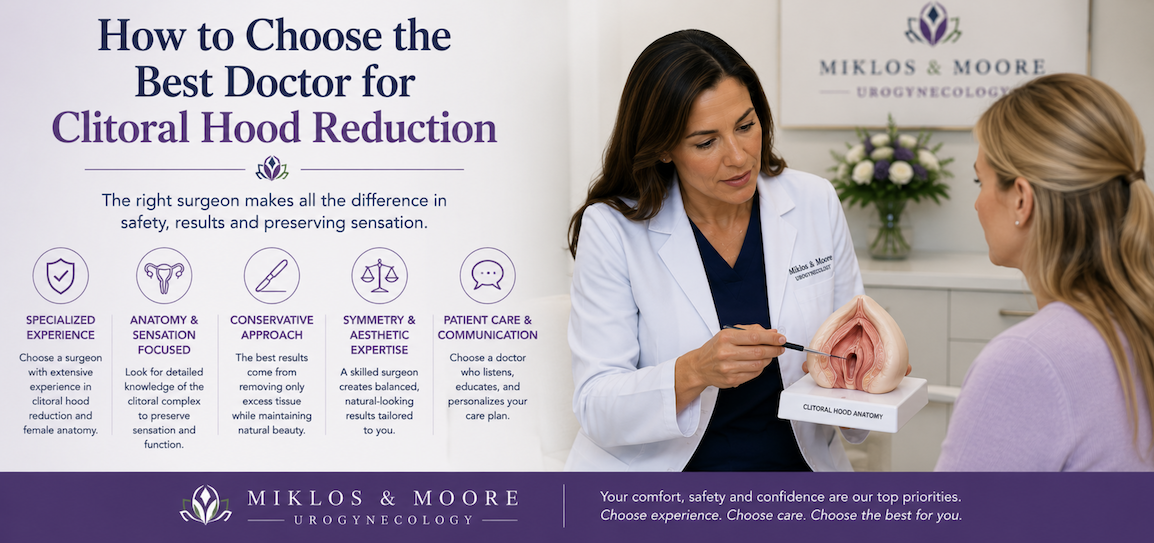
How to Choose the Best Doctor for Clitoral Hood Reduction
What Every Woman Should Know Before Choosing a Specialist
Choosing to have clitoral hood reduction is a personal decision that requires careful consideration and an experienced physician. Many women seek this procedure because they are concerned about excess tissue covering the clitoris, while others choose it to improve symmetry or to complement the results of a labiaplasty.
If you’ve been searching for the best doctor for clitoral hood reduction, it’s important to understand that the procedure requires precision, experience, and a detailed knowledge of female genital anatomy. The clitoral region contains delicate nerves and blood vessels that play an important role in sensation and sexual function. For this reason, selecting the right physician is one of the most important decisions you’ll make.
Clitoral hood reduction is often performed alongside labiaplasty, but it can also be performed as a standalone procedure in carefully selected patients. The goal is not simply to remove tissue—it is to improve balance, proportion, and appearance while preserving normal sensation and function.
This guide explains what clitoral hood reduction is, who performs the procedure, and what qualities to look for when choosing a doctor.
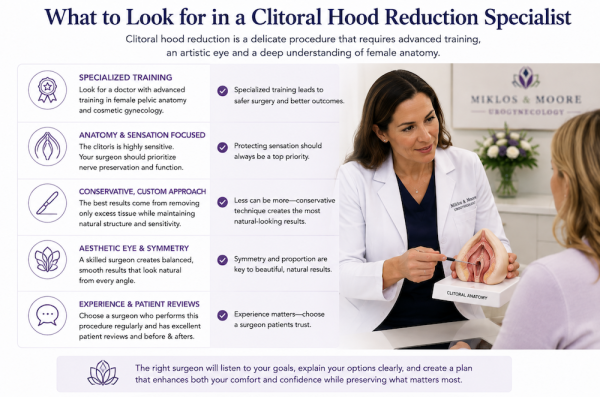
Choosing a clitoral hood reduction specialist involves evaluating experience, knowledge of clitoral anatomy, preservation of sensation, conservative surgical technique and aesthetic expertise.
What Is Clitoral Hood Reduction?
Clitoral hood reduction, sometimes called clitoral hoodoplasty, is a surgical procedure that reduces excess tissue surrounding the clitoral hood.
The procedure may be performed to:
- Improve symmetry
- Reduce excess tissue
- Improve the balance between the clitoral hood and labia minora
- Complement a labiaplasty
- Address cosmetic concerns
The procedure does not involve surgery on the clitoris itself.
Instead, carefully selected tissue surrounding the clitoris is reduced while preserving the structures responsible for sensation.
Why Do Women Choose Clitoral Hood Reduction?
Every woman has unique anatomy.
Some women naturally have excess clitoral hood tissue, while others notice changes following childbirth, aging, or hormonal changes.
Common reasons women consider surgery include:
- Excess tissue covering the clitoris
- Cosmetic concerns
- Asymmetry
- A desire for improved balance following labiaplasty
- Personal confidence
Many women choose the procedure because they feel the clitoral hood appears disproportionately large compared to the surrounding anatomy.
Is Clitoral Hood Reduction Always Performed with Labiaplasty?
No.
Although clitoral hood reduction is frequently combined with labiaplasty, it is not necessary for every patient.
Some women have enlarged labia without excess clitoral hood tissue.
Others have excess clitoral hood tissue but are happy with the appearance of their labia.
A careful examination determines whether one procedure or both would provide the most balanced result.
Who Performs Clitoral Hood Reduction?
Several specialists perform clitoral hood reduction, including:
- Cosmetic gynecologists
- Gynecologists
- Plastic surgeons
- Urogynecologists
Because the procedure involves delicate anatomy responsible for sensation and sexual function, choosing a physician with experience performing female genital surgery is particularly important.
What Should You Look for in a Clitoral Hood Reduction Doctor?
Choosing the right physician involves much more than finding someone who offers the procedure.
Thorough Knowledge of Female Genital Anatomy
The clitoral hood contains delicate tissues located immediately adjacent to the clitoris.
An experienced physician understands how to improve appearance while preserving normal function.
Individualized Treatment
No two women have identical anatomy.
Treatment should be customized based on:
- Tissue thickness
- Symmetry
- Relationship between the hood and labia
- Cosmetic goals
- Functional concerns
Conservative Surgical Technique
The goal is refinement—not excessive tissue removal.
Careful surgical planning helps create natural-looking results while minimizing unnecessary tissue removal.
Comprehensive Consultation
A quality consultation should include:
- Review of your concerns
- Medical history
- Examination
- Discussion of treatment options
- Expected recovery
- Risks
- Realistic expectations
Patient education is an essential part of the decision-making process.
Natural-Looking Results
Successful clitoral hood reduction should enhance overall balance rather than dramatically altering normal anatomy.
The objective is subtle improvement that complements each patient’s individual features.
Is Clitoral Hood Reduction Right for You?
Clitoral hood reduction is not appropriate for every woman seeking cosmetic gynecologic surgery. The procedure is intended for women with excess clitoral hood tissue that causes cosmetic concerns or creates an imbalance between the clitoral hood and surrounding anatomy.
You may be a good candidate if you:
- Feel the clitoral hood appears overly prominent
- Have excess tissue that affects the overall appearance of the vulva
- Desire better balance between the clitoral hood and labia
- Are considering labiaplasty and want a more harmonious result
- Are in good overall health
- Have realistic expectations regarding surgery
The best way to determine whether clitoral hood reduction is appropriate is through a consultation with an experienced physician who routinely performs female genital surgery.
How Is Clitoral Hood Reduction Performed?
Clitoral hood reduction is a delicate surgical procedure that removes carefully selected excess tissue surrounding the clitoral hood.
Importantly, the procedure does not involve surgery on the clitoris itself.
Instead, the surrounding tissue is refined to improve proportion and symmetry while preserving the nerves, blood supply, and structures responsible for sensation.
Every surgical plan is customized according to the patient’s anatomy and cosmetic goals.
The amount of tissue removed varies from patient to patient, with the objective of creating natural-looking results rather than excessive reduction.
Is Clitoral Hood Reduction Usually Combined with Labiaplasty?
Yes.
Many women who seek labiaplasty also have excess clitoral hood tissue.
If only the labia are reduced while the clitoral hood remains unchanged, the proportions of the vulva may appear unbalanced in some patients.
For this reason, clitoral hood reduction is commonly performed together with:
- Labiaplasty
- Labia minora reduction
- Labia majora reduction
- Perineoplasty
- Vaginal rejuvenation
However, not every patient requires combined procedures.
A careful examination determines whether surgery on one area or multiple areas will produce the most balanced result.
What Happens During the Consultation?
A consultation is an opportunity to discuss your concerns, understand your anatomy, and learn about all available treatment options.
Your physician should:
- Listen carefully to your goals
- Review your medical history
- Perform a thorough examination
- Explain your anatomy
- Discuss whether surgery is appropriate
- Review expected results
- Explain recovery
- Discuss risks and benefits
- Answer all of your questions
The consultation should never feel rushed or pressured. Instead, it should help you make an informed decision about whether surgery is right for you.
What Is Recovery Like?
Recovery varies from patient to patient but is generally similar to recovery after labiaplasty.
First Week
During the first several days, you may experience:
- Swelling
- Mild bruising
- Tenderness
- Minor discomfort
- Light spotting
Cold compresses, rest, and following your surgeon’s instructions can help reduce swelling and promote healing.
Two to Four Weeks
Most women notice significant improvement in swelling and discomfort.
Many patients return to work and light daily activities while continuing to avoid strenuous exercise and sexual activity.
Six to Eight Weeks
Most patients are cleared to:
- Resume exercise
- Return to cycling
- Resume sexual intercourse after examination and clearance by their surgeon
- Return to all normal activities
Although most healing occurs during this period, subtle improvements continue over several months as swelling fully resolves.
Will Clitoral Hood Reduction Affect Sensation?
This is one of the most common questions women ask.
Because the procedure is performed around the clitoral hood—not on the clitoris itself—the goal is to preserve normal sensation while improving appearance.
Careful surgical planning and precise technique are essential.
Your surgeon will discuss the potential risks, expected outcomes, and the importance of preserving normal anatomy during your consultation.
What Results Can You Expect?
The goal of clitoral hood reduction is subtle refinement rather than dramatic alteration.
Many women report:
- Improved balance of the vulva
- Better symmetry
- Increased confidence
- Greater satisfaction with appearance
- A more harmonious result when combined with labiaplasty
Every woman’s anatomy is different, so results are individualized rather than standardized.
Are the Results Permanent?
The tissue removed during clitoral hood reduction does not grow back.
Natural aging and hormonal changes may continue over time, but most women enjoy long-lasting improvements in appearance.
What Are the Risks?
Like any surgical procedure, clitoral hood reduction carries potential risks.
These may include:
- Bleeding
- Infection
- Temporary swelling
- Bruising
- Delayed wound healing
- Scarring
- Temporary changes in sensation
- Asymmetry
- Need for revision surgery
Choosing a physician with extensive experience in female genital surgery helps minimize these risks through careful planning and meticulous surgical technique.
Why Choose Miklos & Moore for Clitoral Hood Reduction?
Clitoral hood reduction is one of the most delicate procedures performed in cosmetic gynecology. Achieving beautiful, natural-looking results requires more than surgical precision—it requires a thorough understanding of female genital anatomy, careful surgical planning, and an appreciation for both aesthetics and function. Choosing the right doctor is one of the most important decisions you can make.
Dr. John Miklos and Dr. Robert Moore are board-certified urogynecologists specializing in Female Pelvic Medicine and Reconstructive Surgery (FPMRS). In addition to treating complex pelvic floor disorders, they have extensive experience performing cosmetic gynecologic procedures, including clitoral hood reduction, labiaplasty, vaginoplasty, perineoplasty, and comprehensive vaginal rejuvenation.
At Miklos & Moore, clitoral hood reduction is never viewed as simply removing excess tissue. Every patient has unique anatomy, and the procedure is carefully tailored to create a natural balance between the clitoral hood, labia minora, and surrounding vulvar structures. The objective is to improve proportion and appearance while preserving the delicate nerves and blood supply that are essential for normal sensation and function.
Many women who inquire about clitoral hood reduction are also candidates for other procedures, such as labiaplasty or perineoplasty. During your consultation, Dr. Miklos and Dr. Moore perform a comprehensive examination to determine whether a combination of procedures may provide a more balanced, harmonious result. Rather than recommending surgery based on one area alone, they develop an individualized treatment plan designed specifically for your anatomy and aesthetic goals.
Patient education is a cornerstone of the consultation process. Dr. Miklos and Dr. Moore believe women should fully understand their anatomy, treatment options, expected recovery, and realistic outcomes before making a decision. Every recommendation is based on the patient’s goals and anatomy—not on a standardized surgical approach.
Women from Georgia and throughout the United States choose Miklos & Moore because of their specialized expertise in cosmetic gynecology, individualized surgical planning, and commitment to achieving elegant, natural-looking results while preserving comfort, confidence, and function.
Frequently Asked Questions
What type of doctor performs clitoral hood reduction?
Clitoral hood reduction may be performed by gynecologists, cosmetic gynecologists, plastic surgeons, and urogynecologists. It is important to choose a physician with experience in female genital surgery and a thorough understanding of vulvar anatomy.
What is clitoral hood reduction?
Clitoral hood reduction is a surgical procedure that removes carefully selected excess tissue from the clitoral hood to improve balance and appearance. The procedure does not involve surgery on the clitoris itself.
Is clitoral hood reduction the same as labiaplasty?
No. Labiaplasty reshapes or reduces the labia, while clitoral hood reduction focuses on excess tissue surrounding the clitoris. Although they are different procedures, they are frequently performed together.
Will clitoral hood reduction affect sensation?
The goal of surgery is to preserve normal sensation while improving the appearance of the clitoral hood. Because the procedure is performed on the surrounding tissue rather than the clitoris itself, careful surgical technique is essential.
Who is a good candidate for clitoral hood reduction?
Women with excess clitoral hood tissue, cosmetic concerns, or an imbalance between the clitoral hood and labia may be candidates. A consultation is necessary to determine whether the procedure is appropriate for your anatomy.
Can clitoral hood reduction be performed by itself?
Yes. Although it is commonly combined with labiaplasty, clitoral hood reduction may also be performed as a standalone procedure when appropriate.
How long does surgery take?
The length of surgery depends on whether additional procedures are performed at the same time. Your physician will discuss the expected operative time during your consultation.
Is recovery painful?
Most women experience swelling, tenderness, and mild discomfort during the first several days after surgery. Symptoms gradually improve over the following weeks.
How long is recovery?
Many patients return to light daily activities within several days to one week. Most women resume exercise and sexual activity after approximately six to eight weeks, following clearance from their surgeon.
Are the results permanent?
Yes. The excess tissue removed during surgery does not grow back, although natural aging continues over time.
Can clitoral hood reduction improve appearance?
Many women choose the procedure to create better balance between the clitoral hood and surrounding genital structures. Results are individualized based on each patient’s anatomy and goals.
Can clitoral hood reduction be combined with other procedures?
Yes. It is commonly combined with labiaplasty, perineoplasty, vaginoplasty, vaginal rejuvenation, and other cosmetic gynecologic procedures.
Will I have visible scars?
Incisions are carefully placed within the natural folds of the tissue whenever possible. As healing progresses, scars generally become less noticeable over time.
Does insurance cover clitoral hood reduction?
Because clitoral hood reduction is generally considered an elective cosmetic procedure, it is typically not covered by insurance. Your physician’s office can discuss fees and financing options during your consultation.
Why do women choose Miklos & Moore for clitoral hood reduction?
Women choose Miklos & Moore because Dr. John Miklos and Dr. Robert Moore are board-certified urogynecologists with extensive experience in cosmetic gynecology and female pelvic reconstructive surgery. Their personalized approach emphasizes natural-looking results while preserving normal anatomy, comfort, and function.
Personalized Care for a Delicate Procedure
Clitoral hood reduction is a highly individualized procedure that requires thoughtful planning, surgical precision, and a deep understanding of female genital anatomy. Choosing an experienced physician helps ensure that treatment is based on your unique anatomy, goals, and expectations—not a one-size-fits-all approach.
Dr. John Miklos and Dr. Robert Moore are dedicated to helping women feel comfortable and confident in their decisions by providing comprehensive evaluations, personalized treatment plans, and compassionate care throughout every stage of the surgical journey.
If you’re considering clitoral hood reduction, schedule a consultation with Miklos & Moore to learn more about your options and whether the procedure is right for you.
Questions to Ask During Your Consultation
Before choosing a doctor for clitoral hood reduction, consider asking:
- Am I a good candidate?
- Do I also need labiaplasty?
- How much tissue do you recommend removing?
- Will surgery affect sensation?
- What results can I realistically expect?
- How long is recovery?
- When can I return to exercise?
- When can I resume sexual activity?
- What are the risks?
- Would another procedure improve my overall result?
These questions can help you better understand your options and make an informed decision about your care.