
Second Opinion Before Hysterectomy for Prolapse


Women who have been told they need a hysterectomy for pelvic organ prolapse may benefit from a second opinion before making an irreversible surgical decision. Uterine prolapse does not automatically mean the uterus must be removed, and some women may be candidates for uterus-preserving surgery such as hysteropexy. Dr. John Miklos and Dr. Robert Moore are fellowship-trained urogynecologists and high-volume pelvic reconstructive surgeons near Atlanta, Georgia, with decades of experience and thousands of prolapse procedures performed. They evaluate both hysterectomy and uterus-preserving options while considering the complete pelvic floor anatomy, including bladder, rectal, and vaginal support. Women travel to Miklos & Moore from across the United States and around the world for second opinions before prolapse surgery to better understand their options and determine whether hysterectomy is truly necessary.

Second Opinion Before Hysterectomy for Prolapse: Do You Really Need Your Uterus Removed?

Being told that you need a hysterectomy for pelvic organ prolapse can be overwhelming. For many women, one of the first questions is:

Do I really need to have my uterus removed to repair my prolapse?

The answer is not necessarily the same for every woman.

Hysterectomy can be an appropriate component of prolapse surgery for some patients. However, women with uterine prolapse may also have uterus-preserving surgical options, including hysteropexy, depending on their anatomy, medical history, symptoms, and individual circumstances.

Before undergoing an irreversible operation, obtaining a second opinion before hysterectomy for prolapse can help you understand why hysterectomy was recommended and whether preserving your uterus may be an option.

Dr. John Miklos and Dr. Robert Moore are fellowship-trained urogynecologists and high-volume pelvic reconstructive surgeons near Atlanta, Georgia. With decades of experience treating uterine prolapse and other complex pelvic floor disorders, they provide second opinions for women who have been told they need hysterectomy as part of prolapse surgery.

Women travel to Miklos & Moore from throughout Georgia, across the United States, and internationally seeking another opinion before undergoing pelvic reconstructive surgery.
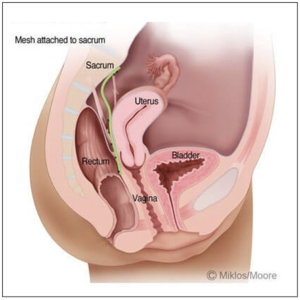
Hysteropexy uterus-preserving prolapse surgery as an alternative to hysterectomy

Medical illustration demonstrating hysteropexy, a uterus-preserving surgical approach that may be considered for appropriately selected women with uterine prolapse.
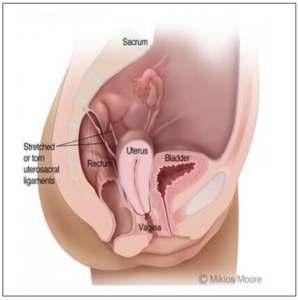
Uterine prolapse caused by weakened uterosacral ligaments before prolapse surgery

Medical illustration showing uterine prolapse associated with weakened or stretched pelvic support ligaments.

Does Uterine Prolapse Always Require a Hysterectomy?

No.

Uterine prolapse occurs when the support structures holding the uterus weaken, allowing the uterus to descend toward or into the vaginal canal.

Historically, hysterectomy has frequently been incorporated into surgical treatment for uterine prolapse.

But removing the uterus and repairing the prolapse are not necessarily the same thing.

The fundamental problem in uterine prolapse is loss of pelvic support.

In appropriately selected women, it may be possible to restore support while preserving the uterus.

This type of procedure is generally referred to as a hysteropexy.

Whether hysterectomy or uterine preservation is more appropriate depends on the individual patient.

Why Get a Second Opinion Before a Hysterectomy for Prolapse?

A hysterectomy is permanent.

Once the uterus has been removed, that decision cannot be reversed.

That alone can make obtaining another opinion worthwhile when a woman has questions about whether hysterectomy is necessary.

A second opinion can help answer:

Why is hysterectomy being recommended?

Is the uterus itself causing a medical problem, or is the primary problem loss of pelvic support?

Could the prolapse be repaired while preserving my uterus?

Would hysteropexy be appropriate for my anatomy?

What are the advantages and disadvantages of each approach?

Are there other areas of prolapse that also need to be repaired?

The purpose of a second opinion is not necessarily to avoid hysterectomy.

It is to make sure the patient understands all reasonable options before deciding.

What Is Hysteropexy?

Hysteropexy is a category of prolapse surgery designed to restore support to a prolapsed uterus without removing it.

Rather than performing a hysterectomy, the surgeon suspends and supports the uterus.

There are different approaches and techniques for uterine-preserving prolapse repair. The appropriate technique depends on the patient’s anatomy, type and severity of prolapse, previous surgery, health history, and surgeon’s assessment.

For women who strongly prefer to retain their uterus, asking about hysteropexy can be an important part of a second-opinion consultation.

Why Was I Told I Need a Hysterectomy?

There can be legitimate reasons why hysterectomy is recommended.

The recommendation may relate to the patient’s prolapse, uterine pathology, abnormal bleeding, other gynecologic conditions, medical history, or the reconstructive approach being considered.

In other cases, hysterectomy may simply be the technique most commonly used by that particular surgeon for uterine prolapse.

This distinction matters.

A woman should understand whether hysterectomy is being recommended because her individual medical situation requires it or because it is part of the surgeon’s preferred prolapse repair.

A second opinion from a surgeon experienced with both hysterectomy-based and uterus-preserving prolapse repairs can provide another perspective.

What If I Want to Keep My Uterus?

Women have many different reasons for wanting to preserve their uterus.

Some simply do not want an organ removed unless medically necessary.

Others may have personal concerns about hysterectomy or prefer a uterus-preserving approach after learning that one may be available.

These preferences deserve to be part of the treatment discussion.

However, wanting to preserve the uterus does not automatically mean hysteropexy is appropriate.

The surgeon must determine whether uterine preservation is medically and surgically reasonable for the individual patient.

This is exactly where an experienced second opinion becomes valuable.

What If I Don’t Care About Keeping My Uterus?

A second opinion may still be worthwhile.

The question is not solely whether the uterus should stay or go.

Women with uterine prolapse frequently have additional support defects involving the bladder, rectum, vaginal walls, or top of the vagina.

A comprehensive prolapse evaluation should identify all areas of pelvic support weakness before surgery.

Even if a woman is completely comfortable undergoing hysterectomy, she should understand how the remaining prolapse will be reconstructed and supported afterward.

Hysterectomy Alone Does Not Necessarily Repair Prolapse

This is an important distinction.

Removing the uterus does not automatically restore all pelvic support.

When hysterectomy is performed as part of prolapse surgery, appropriate support of the vaginal apex and correction of other prolapsed compartments may also be necessary.

A woman may have uterine prolapse along with:

  • Cystocele or bladder prolapse
  • Rectocele
  • Apical support loss
  • Enterocele
  • Urinary incontinence
  • Multi-compartment prolapse

Successful treatment requires understanding the complete pelvic floor problem, not simply removing the uterus.

Second Opinion for Severe Uterine Prolapse

Women with advanced uterine prolapse sometimes assume that severe prolapse automatically eliminates the possibility of uterine preservation.

Severity is certainly an important consideration, but the decision should be individualized.

A high-volume prolapse surgeon can evaluate the extent of the prolapse, remaining pelvic support, other involved compartments, and whether a uterus-preserving reconstruction is technically appropriate.

The important point is not that every severe prolapse can or should be treated without hysterectomy.

It is that women deserve to understand their options.

Second Opinion After Being Told Hysteropexy Isn’t Possible

Some women seek another opinion after being told that uterus-preserving prolapse surgery is not an option.

Sometimes the second surgeon will agree.

Other times, differences in surgical training and experience may lead surgeons to consider different reconstructive approaches.

Pelvic reconstruction is not a single operation performed identically by every urogynecologist.

Surgeons develop experience with different techniques.

This is one reason obtaining an opinion from a high-volume prolapse surgeon experienced in multiple reconstructive approaches may be particularly useful.

Why Surgical Experience Matters

A second opinion is most useful when it comes from a physician with substantial experience treating the condition in question.

Drs. Miklos and Moore have performed thousands of prolapse, incontinence, and pelvic reconstructive procedures throughout their careers.

Their experience includes uterine prolapse, hysteropexy, hysterectomy-based reconstruction, advanced prolapse, multi-compartment prolapse, recurrent prolapse, and revision surgery.

This breadth of experience allows the consultation to focus on an important question:

Which approach is most appropriate for this particular woman—not simply which procedure does the surgeon routinely perform?

Dr. Miklos and Dr. Moore: Uterine Prolapse Second Opinions in Georgia

Dr. John Miklos and Dr. Robert Moore are fellowship-trained urogynecologists specializing in female pelvic reconstructive surgery.

Women seeking a second opinion before hysterectomy for prolapse come to their Atlanta-area practice for an independent evaluation of their diagnosis and surgical options.

The evaluation may include determining:

Whether hysterectomy is necessary.

Whether hysteropexy could be considered.

What type of prolapse is present.

Whether multiple vaginal compartments require treatment.

Whether urinary incontinence also needs to be addressed.

Which reconstructive approach may be most appropriate.

And whether surgery is necessary at all.

Sometimes their recommendation may be similar to the patient’s original surgeon.

The value of the second opinion is knowing that the options have been independently evaluated.

What If I’ve Already Had Prolapse Surgery?

The decision can become more complicated after previous pelvic surgery.

A woman may have recurrent uterine prolapse or another type of pelvic support failure following an earlier repair.

Scar tissue, previous procedures, and altered anatomy can influence what options remain available.

These cases may benefit particularly from evaluation by surgeons experienced in revision pelvic reconstructive surgery.

Previous operative reports can be extremely helpful when seeking another opinion.

Questions to Ask Before Agreeing to Hysterectomy for Prolapse

Before proceeding, consider asking:

Why exactly do I need a hysterectomy?

Is there a medical problem with my uterus itself?

Can my prolapse be repaired while preserving my uterus?

Am I a candidate for hysteropexy?

What are the advantages and disadvantages of hysterectomy versus uterine preservation in my case?

Do I have bladder or rectal prolapse as well?

How will the top of my vagina be supported if my uterus is removed?

What procedure would you recommend if I wanted to preserve my uterus?

How many hysteropexy procedures have you performed?

How much prolapse surgery do you perform overall?

The answers can help a woman make a much more informed decision.

Women Travel to Atlanta for Uterine Prolapse Second Opinions

Women seeking another opinion about hysterectomy do not necessarily have to limit themselves to physicians close to home.

Patients travel to Miklos & Moore from throughout the United States and around the world for complex urogynecologic evaluations and pelvic reconstructive surgery.

For a woman facing an irreversible procedure, traveling for an opinion from surgeons with decades of specialized experience may be worthwhile—even if the ultimate recommendation is to proceed with the surgery originally proposed.

The objective is clarity.

Do I Really Need a Hysterectomy for Prolapse?

There is no universal answer.

Some women with prolapse are appropriately treated with hysterectomy as part of their reconstruction.

Others may have reasonable uterus-preserving options.

The decision should be based on the woman’s anatomy, medical history, type of prolapse, severity, symptoms, personal preferences, and available surgical approaches.

It should not simply be assumed that uterine prolapse automatically means hysterectomy.

Get a Second Opinion Before Hysterectomy for Prolapse

Dr. Miklos and Dr. Moore provide second opinions for women who have been told they need hysterectomy for uterine or pelvic organ prolapse.

As high-volume urogynecologic and pelvic reconstructive surgeons near Atlanta, Georgia, they can evaluate both hysterectomy-based and uterus-preserving treatment options and explain which approaches may be appropriate.

For women facing a major and irreversible surgical decision, another expert opinion can provide something extremely valuable:

Confidence that you understand your options before deciding what happens next.

Frequently Asked Questions

Do I have to have a hysterectomy if I have uterine prolapse?

Not necessarily. Some women may be candidates for uterus-preserving prolapse surgery. The appropriate treatment depends on the patient’s anatomy, health history, type and severity of prolapse, and other individual factors.

What is the alternative to hysterectomy for uterine prolapse?

Hysteropexy is a uterus-preserving prolapse procedure that restores support to the uterus rather than removing it. There are different approaches to hysteropexy, and not every woman is necessarily a candidate.

Should I get a second opinion before a prolapse hysterectomy?

If you have questions about whether hysterectomy is necessary or want to understand uterus-preserving alternatives, a second opinion from an experienced urogynecologist can be valuable before making an irreversible decision.

Can severe uterine prolapse be repaired without hysterectomy?

Some women with significant uterine prolapse may have uterus-preserving options, while others may be better candidates for hysterectomy-based reconstruction. An individualized pelvic examination is necessary.

Who should I see for a second opinion before hysterectomy for prolapse?

Consider a urogynecologist with substantial experience in pelvic reconstructive surgery and, importantly, experience with both hysterectomy and uterus-preserving prolapse procedures.

Do Miklos and Moore perform uterus-preserving prolapse surgery?

Drs. Miklos and Moore have extensive experience in pelvic reconstructive surgery, including evaluation of women interested in uterine preservation and hysteropexy. The appropriate surgical approach is determined individually for each patient.

CONTACT US

For your confidential Consultation