
High-Volume Vaginal Rejuvenation Surgeons
Choosing an experienced surgeon is especially important when considering vaginal rejuvenation. Dr. John Miklos and Dr. Robert Moore are fellowship-trained urogynecologists and high-volume vaginal rejuvenation surgeons near Atlanta, Georgia, with decades of experience in vaginal and pelvic reconstructive surgery. Their extensive surgical experience includes vaginoplasty, perineoplasty, labiaplasty, vaginal tightening, cosmetic gynecology, and complex revision procedures. Women travel to Miklos & Moore from across the United States and around the world seeking their experience in vaginal rejuvenation, particularly for complex procedures, individualized surgical care, and revision surgery after previous procedures performed elsewhere.
High-Volume Vaginal Rejuvenation Surgeons in Atlanta, Georgia: Why Experience Matters
Vaginal rejuvenation surgery requires an intimate understanding of female pelvic anatomy, vaginal support, sexual function and cosmetic appearance. While many physicians now advertise vaginal rejuvenation procedures, there can be a significant difference between a surgeon who performs these operations occasionally and one whose practice has been dedicated to vaginal and pelvic reconstructive surgery for decades.
Dr. John Miklos and Dr. Robert Moore are fellowship-trained urogynecologists and high-volume vaginal rejuvenation surgeons near Atlanta, Georgia, with extensive experience performing vaginal reconstructive, functional and cosmetic gynecologic procedures.
Women travel to Miklos & Moore from throughout Georgia, across the United States and internationally for primary vaginal rejuvenation procedures as well as difficult revision cases after previous surgery.
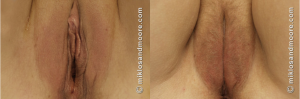
Before and after vaginal rejuvenation surgery demonstrating changes to the external vaginal and vulvar anatomy following treatment by Miklos & Moore.

Before and after results following vaginal rejuvenation surgery. Surgical treatment is individualized according to each patient’s anatomy, concerns and desired outcome.
What Is a High-Volume Vaginal Rejuvenation Surgeon?
A high-volume vaginal rejuvenation surgeon is a physician who routinely performs vaginal reconstructive and cosmetic gynecologic procedures rather than offering them as an occasional addition to a general gynecology or plastic surgery practice.
Vaginal rejuvenation is also not one specific operation.
Depending on a woman’s anatomy, symptoms and goals, treatment may involve:
- Vaginoplasty
- Perineoplasty
- Vaginal tightening
- Labiaplasty
- Labia minora reduction
- Labia majora reduction or augmentation
- Clitoral hood reduction
- Clitoropexy
- Monsplasty
- Revision vaginal surgery
- Revision labiaplasty
- Repair of childbirth-related vaginal and perineal changes
The ability to distinguish between these anatomical problems is important.
A woman who describes her vagina as “loose,” for example, may actually have several different issues involving the vaginal canal, vaginal opening, perineum, pelvic support—or a combination of them.
Why Surgical Volume Matters in Vaginal Rejuvenation
There is no substitute for repeatedly seeing and treating different variations of female pelvic anatomy.
Every woman’s anatomy is different. Childbirth, aging, hormonal changes, previous surgery, weight changes and congenital anatomy can all affect the vagina, labia, perineum and surrounding tissues.
High surgical volume exposes a surgeon to a much broader range of anatomical variations and surgical challenges.
This becomes particularly important when the patient’s problem is not straightforward.
Some women have undergone previous labiaplasty or vaginal rejuvenation surgery and are unhappy with the functional or cosmetic result. Others have scar tissue, asymmetry, excessive tissue removal or persistent vaginal laxity.
Revision cases can require considerably more surgical judgment than first-time procedures.
Dr. Miklos and Dr. Moore: High-Volume Vaginal Rejuvenation Surgeons in Georgia
Dr. John Miklos and Dr. Robert Moore have dedicated decades of their careers to female pelvic reconstructive surgery and cosmetic gynecology.
Unlike physicians who entered vaginal rejuvenation primarily as a cosmetic service, their background originates in urogynecology, female pelvic anatomy and reconstructive pelvic surgery.
Their experience allows them to evaluate both the cosmetic and functional components of a woman’s concerns.
This can be particularly important because vaginal appearance and function are often interconnected.
For example, childbirth may produce vaginal laxity along with separation or weakening of the perineal tissues. Correcting only the vaginal opening without addressing the underlying anatomy may not accomplish the patient’s goals.
Similarly, performing a cosmetic procedure without recognizing an underlying pelvic floor disorder may overlook an important component of the patient’s symptoms.
Experience With Thousands of Vaginal and Pelvic Procedures
When women search for the best vaginal rejuvenation surgeon in Atlanta, top vaginal rejuvenation surgeon in Georgia, or most experienced vaginal rejuvenation doctor, marketing claims alone provide very little useful information.
Actual surgical experience matters more.
Patients should consider:
- Years performing vaginal and pelvic surgery
- Number and variety of procedures performed
- Training in female pelvic anatomy
- Experience with both functional and cosmetic surgery
- Experience with revision procedures
- Before-and-after results
- Published medical research
- Surgical teaching and physician education
- Experience treating complicated cases
Drs. Miklos and Moore have performed thousands of vaginal, pelvic reconstructive, prolapse, incontinence and cosmetic gynecologic procedures during their careers.
Their experience spans both reconstructive urogynecology and cosmetic vaginal surgery—an unusual combination that provides a comprehensive understanding of vaginal anatomy.
Vaginoplasty and Vaginal Tightening Experience
Vaginoplasty is designed to address excessive vaginal laxity by reducing the diameter of the vaginal canal and reconstructing weakened supporting tissues when appropriate.
The operation should not simply consist of removing tissue and making the vagina smaller.
An experienced vaginal surgeon evaluates where laxity exists, whether muscular or fascial support has been compromised, whether the vaginal opening is enlarged and whether the perineum also requires reconstruction.
For some women, vaginoplasty may be appropriate.
For others, perineoplasty alone may better address the primary problem.
Still others may have an underlying pelvic floor condition that requires a completely different treatment.
High-Volume Perineoplasty Experience
Childbirth can significantly alter the perineum—the tissue between the vaginal opening and anus.
Tears, episiotomies and stretching during delivery can leave the vaginal opening enlarged or the perineal body weakened.
Perineoplasty reconstructs these tissues and can restore support to the vaginal opening.
Because the perineum plays both a functional and cosmetic role, surgical technique is important. Excessive tightening can create discomfort, while inadequate reconstruction may fail to correct the original concern.
Experience helps the surgeon determine how much reconstruction is appropriate.
Labiaplasty and Cosmetic Gynecologic Surgery
Miklos & Moore’s vaginal rejuvenation practice also includes extensive experience with labiaplasty and related cosmetic gynecologic procedures.
Labiaplasty may be performed for enlarged, elongated, asymmetric or uncomfortable labia minora.
Women seek surgery for many different reasons, including discomfort during exercise, pulling during intercourse, irritation from clothing or concerns about appearance.
The objective should not be to create one standardized appearance.
A high-volume cosmetic gynecologic surgeon must account for natural differences in anatomy, pigmentation, tissue thickness, symmetry and the relationship between the labia and clitoral hood.
Revision Vaginal Rejuvenation Surgery
Revision surgery is one area where experience can become especially important.
Drs. Miklos and Moore evaluate women who have undergone vaginal rejuvenation or cosmetic gynecologic procedures elsewhere and remain dissatisfied with their results.
Problems following previous surgery can include:
- Persistent vaginal laxity
- Excessive vaginal tightening
- Scar tissue
- Painful intercourse
- Labial asymmetry
- Excessive labial tissue removal
- Residual tissue
- Clitoral hood asymmetry
- Cosmetic concerns
- Functional problems
Revision surgery is fundamentally different from operating on untouched anatomy.
The surgeon may have less tissue available, distorted anatomical landmarks and scar tissue from the original procedure.
For these reasons, women considering corrective surgery should specifically ask about a surgeon’s experience performing revisions, not simply whether the surgeon performs the original procedure.
Urogynecology and Vaginal Rejuvenation
One characteristic that distinguishes Drs. Miklos and Moore is their background as fellowship-trained urogynecologists.
Urogynecology focuses on disorders involving the female pelvic floor, including prolapse, urinary incontinence and pelvic reconstructive surgery.
This background provides extensive training in the anatomy beneath the visible vaginal tissues.
That distinction can matter when a woman presents with symptoms such as vaginal laxity, pressure, a vaginal bulge, urinary leakage or changes following childbirth.
Not every woman seeking “vaginal rejuvenation” actually needs cosmetic surgery.
Sometimes an underlying pelvic floor disorder is contributing to the problem.
An experienced urogynecologist can evaluate both possibilities.
Why Women Travel to Atlanta for Vaginal Rejuvenation Surgery
Women seeking vaginal rejuvenation surgery are not necessarily limited to surgeons in their immediate community.
Patients travel to Miklos & Moore’s Atlanta-area practice from throughout the United States and internationally.
This is particularly common among women seeking specialized procedures or revision surgery.
For these patients, the decision to travel is often based on surgical experience rather than convenience.
A first-time straightforward procedure may be available from many physicians. A woman with complicated anatomy, multiple concerns or a previous unsuccessful surgery may place greater importance on finding a surgeon who has treated similar cases repeatedly.
How to Find an Experienced Vaginal Rejuvenation Surgeon
Women researching vaginal rejuvenation should ask specific questions rather than relying on terms such as “best,” “top” or “expert.”
Ask:
How many vaginal rejuvenation procedures have you performed?
How many years have you performed these operations?
What percentage of your surgical practice involves vaginal and pelvic surgery?
Are you trained in pelvic reconstructive surgery?
Do you perform revision vaginal rejuvenation surgery?
Do you perform multiple vaginal rejuvenation procedures or primarily one operation?
Can you determine whether my concern is cosmetic, functional or related to pelvic floor dysfunction?
These questions provide far more useful information than an advertising claim.
Top Vaginal Rejuvenation Surgeons in Georgia: Experience Over Marketing
There is no official organization that designates one physician as the “best vaginal rejuvenation surgeon” in Georgia or the United States.
However, women can evaluate objective indicators of experience.
Drs. Miklos and Moore bring together decades of specialized female pelvic surgery, fellowship training in urogynecology, thousands of surgical procedures, cosmetic gynecology, pelvic reconstruction, revision surgery, publications and physician education.
That combination has allowed their Atlanta-area practice to develop extensive experience across a wide range of vaginal rejuvenation procedures rather than focusing on a single operation.
Choosing a High-Volume Vaginal Rejuvenation Surgeon Near Atlanta
Vaginal rejuvenation is highly individualized.
Two women describing the same symptom may require completely different treatments.
For this reason, the most important part of the process may occur before surgery: accurately identifying the anatomical problem and determining whether surgery is appropriate at all.
Dr. John Miklos and Dr. Robert Moore are high-volume vaginal rejuvenation surgeons and fellowship-trained urogynecologists near Atlanta, Georgia, treating women seeking primary and revision vaginal reconstructive and cosmetic gynecologic surgery.
Their decades of experience allow them to evaluate the complete vaginal and pelvic anatomy and develop an individualized surgical approach rather than applying the same procedure to every patient.
Frequently Asked Questions
Who is the best vaginal rejuvenation surgeon in Georgia?
There is no official ranking identifying one physician as the best vaginal rejuvenation surgeon. Women can compare surgeons based on training, surgical volume, years of experience, range of procedures, before-and-after results and experience correcting previous surgery. Drs. Miklos and Moore are fellowship-trained urogynecologists near Atlanta with decades of vaginal and pelvic reconstructive surgical experience.
What is considered a high-volume vaginal rejuvenation surgeon?
There is no universally established number that defines a high-volume vaginal rejuvenation surgeon. The term generally refers to a physician who routinely performs these procedures and has substantial experience across many patients and anatomical variations.
Should a urogynecologist perform vaginal rejuvenation surgery?
Not every vaginal rejuvenation procedure requires a urogynecologist. However, urogynecologic training can be particularly valuable when vaginal changes coexist with prolapse, incontinence, pelvic floor damage or previous reconstructive surgery.
Do Miklos and Moore perform revision vaginal rejuvenation surgery?
Yes. Their practice evaluates women who have undergone previous vaginal rejuvenation or cosmetic gynecologic procedures and are seeking correction or improvement of functional or cosmetic concerns.
Do patients travel to Atlanta for vaginal rejuvenation surgery?
Yes. Miklos & Moore treat patients from Georgia as well as women who travel from other states and internationally for vaginal rejuvenation, cosmetic gynecologic and reconstructive pelvic surgery.
What vaginal rejuvenation procedures do Miklos and Moore perform?
Their surgical practice includes vaginoplasty, perineoplasty, labiaplasty and other cosmetic and reconstructive vaginal procedures. The appropriate procedure is determined after evaluating the patient’s anatomy, symptoms and goals.