
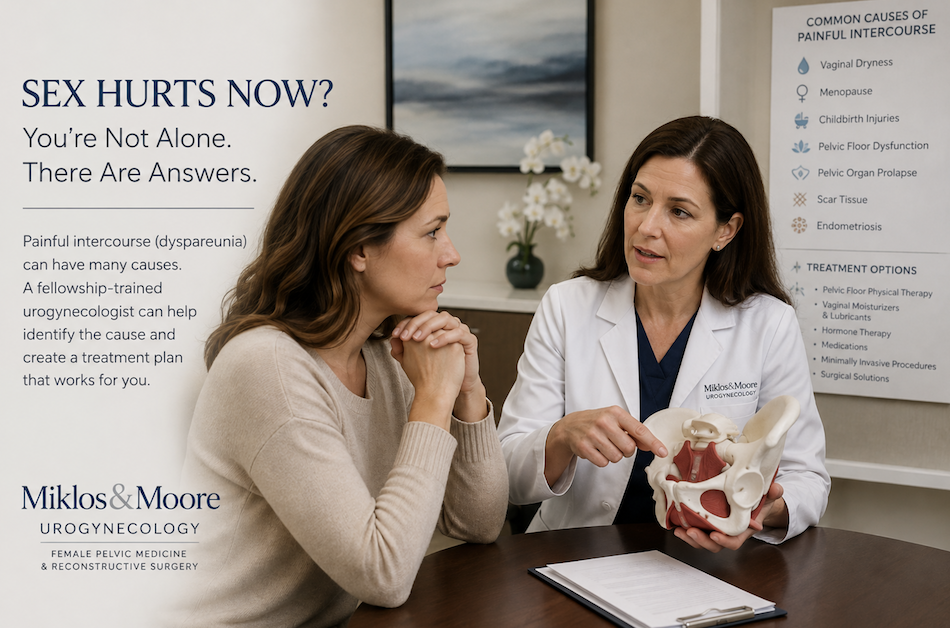
Sex Hurts Now and I’m Worried Something Is Wrong
Pain during sex is one of the most common reasons women seek care from a gynecologist or urogynecologist, yet it is also one of the least discussed.
Many women silently wonder:
“Why does sex suddenly hurt?”
Others ask themselves:
- “Did childbirth cause this?”
- “Is menopause to blame?”
- “Could something be seriously wrong?”
- “Will this ever get better?”
If intercourse has become painful, you’re not alone. Millions of women experience pain during intimacy at some point in their lives.
While occasional discomfort may not be cause for concern, persistent or worsening pain should never be ignored. Pain is your body’s way of telling you that something deserves attention.
The encouraging news is that painful intercourse—known medically as dyspareunia—is often treatable once the underlying cause is identified.
What Is Dyspareunia?
Dyspareunia is the medical term for persistent or recurrent pain during sexual intercourse.
The discomfort may occur:
- Before penetration
- During penetration
- With deeper penetration
- After intercourse
- For hours afterward
The location and timing of the pain often provide important clues about the underlying cause.
Some women describe burning or stinging, while others experience aching, pressure, sharp pain, or a deep sensation inside the pelvis.
No matter how the pain feels, it should not be considered a normal part of intimacy.
Common Causes of Pain During Sex
There is no single cause of painful intercourse.
Instead, several different medical conditions may contribute.
Some of the most common include:
- Vaginal dryness
- Menopause
- Childbirth injuries
- Scar tissue
- Pelvic floor muscle dysfunction
- Vaginal infections
- Endometriosis
- Pelvic organ prolapse
- Ovarian cysts
- Vaginal atrophy
- Skin conditions affecting the vulva
Because treatment depends on the cause, a thorough evaluation is essential.
Vaginal Dryness
One of the most frequent causes of painful intercourse is inadequate lubrication.
This commonly occurs during:
- Menopause
- Breastfeeding
- Certain medications
- Hormonal changes
Without adequate lubrication, friction increases, making penetration uncomfortable or painful.
Many women also notice:
- Burning
- Irritation
- Small tears
- Tenderness afterward
Fortunately, effective treatments are available.
Pelvic Floor Muscle Dysfunction
Pain during intercourse is not always caused by the vagina itself.
Sometimes the pelvic floor muscles become excessively tight or painful.
Instead of relaxing during intercourse, these muscles remain contracted, making penetration uncomfortable.
Women with pelvic floor muscle dysfunction often experience:
- Pain inserting tampons
- Difficulty during pelvic examinations
- Pelvic aching
- Constipation
- Bladder urgency
- Pain after intercourse
Pelvic floor physical therapy is frequently one of the most effective treatments.
Childbirth Can Change Intimacy
Pregnancy and vaginal delivery may stretch muscles, damage connective tissue, or result in scar tissue following tears or episiotomies.
Some women experience:
- Pain at the vaginal opening
- Scar tenderness
- Vaginal laxity
- Reduced sensation
- Deep pelvic discomfort
These symptoms may persist long after childbirth if the underlying cause is not addressed.
Menopause and Painful Intercourse
Declining estrogen during menopause changes the vaginal tissues.
Women often experience:
- Vaginal dryness
- Thinner tissue
- Reduced elasticity
- Increased sensitivity
- Burning
- Bleeding after intercourse
These symptoms are extremely common and often respond well to treatment.
Pelvic Organ Prolapse
Some women develop pain because the bladder, uterus, rectum, or vaginal walls are no longer properly supported.
Pelvic organ prolapse may cause:
- Pelvic pressure
- Vaginal bulging
- Pain during deeper penetration
- Difficulty emptying the bladder
- Constipation
Treating the prolapse often improves intimacy as well.
Could It Be Endometriosis?
Pain with deeper penetration can sometimes result from endometriosis.
This condition occurs when tissue similar to the uterine lining grows outside the uterus.
Women may also experience:
- Severe menstrual cramps
- Chronic pelvic pain
- Infertility
- Painful bowel movements
- Pain with deep intercourse
A comprehensive evaluation helps determine whether endometriosis or another pelvic condition is contributing to your symptoms.
Emotional Stress Can Make Pain Worse
Pain during intercourse affects more than physical health.
Many women begin worrying before intimacy even begins.
This anxiety may cause pelvic muscles to tighten further, creating a cycle in which fear leads to pain and pain increases fear.
Recognizing this cycle is an important part of successful treatment.
How Is Painful Intercourse Diagnosed?
Evaluation begins with a detailed discussion of your symptoms.
Your physician may ask about:
- When the pain occurs
- Childbirth history
- Menopause
- Previous surgeries
- Bladder symptoms
- Bowel habits
- Medical conditions
- Medications
A pelvic examination helps evaluate the vagina, pelvic floor muscles, pelvic organs, and surrounding tissues.
Additional testing may be recommended depending on your symptoms.
Treatment Depends on the Cause
Treatment is highly individualized.
Options may include:
- Vaginal moisturizers and lubricants
- Vaginal estrogen therapy
- Pelvic floor physical therapy
- Medications
- Scar tissue treatment
- Lifestyle modifications
- Treatment for infections
- Hormone therapy when appropriate
- Pelvic reconstructive surgery when necessary
Many women improve without surgery once the correct diagnosis is established.
Why Choose Miklos & Moore Urogynecology
Painful intercourse is never something women should simply accept as part of aging, childbirth, or menopause. Identifying the underlying cause is the key to finding lasting relief.
Dr. John Miklos and Dr. Robert Moore are fellowship-trained urogynecologists specializing in Female Pelvic Medicine and Reconstructive Surgery (FPMRS). Their practice focuses on diagnosing and treating the pelvic floor disorders that commonly contribute to painful intercourse, including vaginal dryness, pelvic organ prolapse, pelvic floor muscle dysfunction, childbirth injuries, vaginal laxity, urinary incontinence, and menopause-related changes.
Every patient receives a comprehensive evaluation designed to identify the specific cause of her symptoms rather than simply treating the pain itself. Treatment plans are individualized and may include conservative therapies, pelvic floor physical therapy, hormone-based treatments when appropriate, or advanced reconstructive surgery for women whose symptoms are caused by structural pelvic floor disorders.
Patients travel from throughout the United States because of Drs. Miklos and Moore’s experience, compassionate care, and commitment to helping women restore comfort, confidence, and quality of life.
Frequently Asked Questions
Is pain during sex ever normal?
Occasional discomfort can happen, but persistent or recurring pain during intercourse is not considered normal and should be evaluated.
Can menopause make sex painful?
Yes. Declining estrogen often causes vaginal dryness, thinning tissues, and decreased elasticity, making intercourse uncomfortable.
Can childbirth cause pain years later?
Yes. Scar tissue, pelvic floor injuries, or changes in vaginal support may not become noticeable until months or even years after delivery.
Can pelvic floor therapy help?
Absolutely. Pelvic floor physical therapy is often one of the most effective treatments for muscle-related pain during intercourse.
Will surgery fix painful intercourse?
Only if surgery addresses the underlying cause. Many women improve with nonsurgical treatment alone.
Can urinary incontinence and painful intercourse be related?
Yes. Some pelvic floor disorders affect both bladder function and sexual function.
Should I stop having sex if it hurts?
Repeated painful intercourse can worsen symptoms. It’s important to discuss persistent pain with your healthcare provider rather than simply trying to tolerate it.
When should I see a urogynecologist?
If painful intercourse is accompanied by bladder problems, pelvic pressure, vaginal bulging, childbirth injuries, menopause symptoms, or persistent pelvic discomfort, a fellowship-trained urogynecologist can provide a comprehensive evaluation.
Will insurance cover evaluation and treatment?
Most medically necessary evaluations for pelvic pain and pelvic floor disorders are covered by insurance, although benefits vary by plan.
The Bottom Line
Pain during sex is common—but it is not something you have to live with.
Whether your symptoms are caused by menopause, childbirth, pelvic floor dysfunction, scar tissue, vaginal dryness, prolapse, or another medical condition, effective treatments are available.
The first step is identifying the underlying cause through a comprehensive evaluation.
With the right diagnosis and personalized treatment plan, many women are able to enjoy comfortable intimacy again, improve their pelvic health, and regain confidence in their relationships and daily lives.