
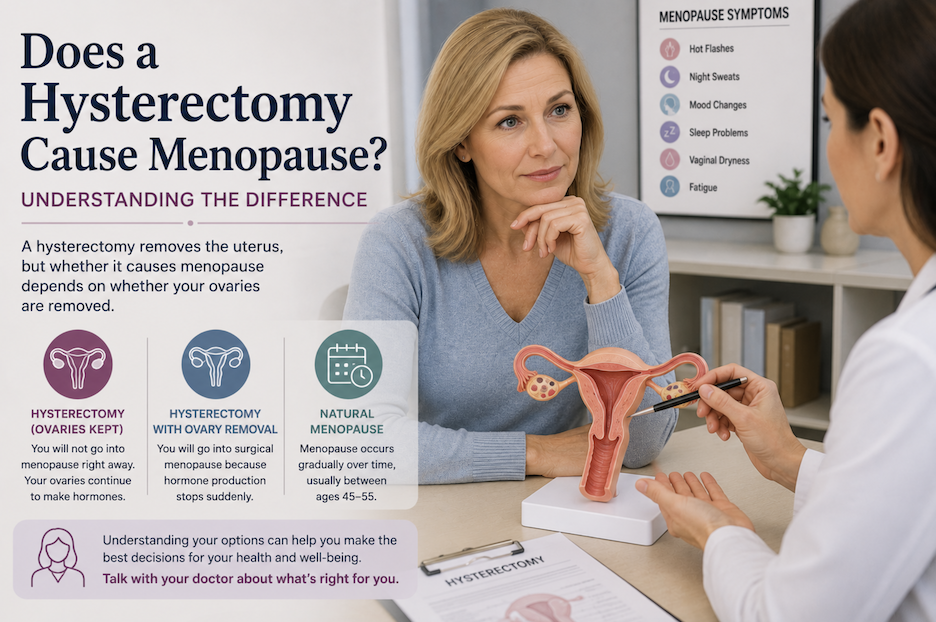
Does a Hysterectomy Cause Menopause? Understanding the Difference
This article lets you rank for:
- does hysterectomy cause menopause
- menopause after hysterectomy
- surgical menopause
- ovaries after hysterectomy
- symptoms after hysterectomy
- early menopause after hysterectomy
Does a Hysterectomy Cause Menopause?
One of the most common questions women ask before or after a hysterectomy is:
- Will I go into menopause after my hysterectomy?
- Can removing my uterus cause menopause?
- What happens if my ovaries are left in place?
- Why am I having hot flashes after surgery?
The answer depends on which organs were removed during your procedure.
Many women are surprised to learn that removing the uterus alone does not automatically cause menopause. However, if the ovaries are removed during surgery, menopause begins immediately because the body’s primary source of estrogen and progesterone is gone.
Understanding the difference can help explain the symptoms you’re experiencing and guide conversations with your healthcare provider.
What Is a Hysterectomy?
A hysterectomy is surgery to remove the uterus.
Depending on the reason for surgery, a hysterectomy may involve removing:
- The uterus only
- The uterus and cervix
- One ovary
- Both ovaries
- The fallopian tubes
Because there are several different types of hysterectomy, the effects on hormones vary from one woman to another.
Does Removing the Uterus Cause Menopause?
Usually, no.
If both ovaries remain healthy and continue functioning, they still produce estrogen, progesterone, and testosterone after the uterus has been removed.
That means many women do not immediately enter menopause after a hysterectomy alone.
However, because menstrual periods stop once the uterus is removed, it may seem as though menopause has occurred even when ovarian hormone production continues.
What Is Surgical Menopause?
Surgical menopause occurs when both ovaries are removed (bilateral oophorectomy).
Unlike natural menopause, which develops gradually over several years, surgical menopause causes hormone levels to fall rapidly.
This sudden hormonal change may lead to symptoms such as:
- Hot flashes
- Night sweats
- Mood changes
- Vaginal dryness
- Pain during intercourse
- Sleep disturbances
- Decreased libido
- Brain fog
- Joint aches
Some women experience these symptoms within days of surgery.
Can You Still Go Through Menopause If Your Ovaries Are Left In?
Yes.
If your ovaries remain, they will usually continue producing hormones until natural menopause occurs.
Some studies suggest that ovarian function may decline slightly earlier in some women after hysterectomy, although many continue to produce hormones for years after surgery.
The timing varies from woman to woman.
Why Am I Having Menopause Symptoms If My Ovaries Were Not Removed?
Several factors may explain new symptoms after surgery.
These include:
- Natural age-related menopause
- Temporary changes in ovarian blood supply after surgery
- Medications
- Stress associated with surgery
- Thyroid disorders
- Other medical conditions
Because several conditions can mimic menopause, an evaluation may be helpful if symptoms are severe or unexpected.
How Menopause Can Affect Pelvic Floor Health
Declining estrogen levels can affect much more than hot flashes.
Many women notice changes involving the pelvic floor, including:
- Vaginal dryness
- Pain during intimacy
- Urinary urgency
- Frequent urinary tract infections
- Stress urinary incontinence
- Pelvic pressure
- Vaginal tissue thinning
These changes may become more noticeable after menopause, particularly in women who already have pelvic floor disorders.
Treatment Options for Menopause Symptoms
Treatment depends on your symptoms, medical history, and personal preferences.
Options may include:
Lifestyle modifications
- Regular exercise
- Maintaining a healthy weight
- Limiting caffeine and alcohol
- Stress reduction
Vaginal estrogen
For women experiencing vaginal dryness or urinary symptoms, low-dose vaginal estrogen may improve tissue health with minimal systemic absorption when appropriate.
Hormone therapy
Some women may benefit from menopausal hormone therapy after discussing the benefits and risks with their physician.
Non-hormonal therapies
Several prescription and non-prescription options may help reduce hot flashes and other symptoms for women who cannot or prefer not to take hormones.
Why a Comprehensive Evaluation Matters
Symptoms such as pelvic pressure, bladder leakage, vaginal discomfort, or painful intercourse are often attributed to menopause alone.
However, these symptoms may also be caused by pelvic organ prolapse, urinary incontinence, vaginal laxity, or other pelvic floor disorders.
Because these conditions frequently overlap, it’s important to identify the underlying cause before beginning treatment.
Menopause and Pelvic Floor Health: A Personalized Approach
Menopause affects every woman differently, and no single treatment works for everyone. Some women experience only mild symptoms, while others develop significant changes that affect bladder function, sexual health, or quality of life.
Drs. John Miklos and Robert Moore regularly evaluate women whose menopausal symptoms overlap with pelvic floor conditions such as prolapse, urinary incontinence, vaginal laxity, and genitourinary syndrome of menopause (GSM). By carefully distinguishing hormonal changes from structural pelvic floor disorders, they develop individualized treatment plans that may include conservative therapies, hormonal treatments when appropriate, or pelvic reconstructive procedures tailored to each woman’s needs and goals.
Don’t Assume Every Symptom Is “Just Menopause”
If you’ve had a hysterectomy or are experiencing menopausal symptoms, understanding what’s happening inside your body is the first step toward finding relief.
Whether your symptoms are related to hormonal changes, pelvic floor disorders, or both, a comprehensive evaluation can help identify the cause and guide you toward the treatment options that best fit your individual needs.
Frequently Asked Questions
Does a hysterectomy automatically cause menopause?
No. If your ovaries remain, they usually continue producing hormones until natural menopause occurs.
What causes surgical menopause?
Surgical menopause occurs when both ovaries are removed, causing a sudden decrease in estrogen and other hormones.
Can I have hot flashes if my ovaries were not removed?
Yes. Hot flashes may be related to natural menopause, temporary changes in ovarian function, medications, or other medical conditions.
Can menopause make pelvic organ prolapse worse?
Declining estrogen can affect the strength and elasticity of pelvic tissues. While menopause itself does not directly cause prolapse, hormonal changes may contribute to symptoms in women who already have weakened pelvic support.
Can menopause cause urinary leakage?
Yes. Hormonal changes can affect the bladder, urethra, and surrounding tissues, contributing to urinary urgency, stress urinary incontinence, or recurrent urinary tract infections.
Why choose Drs. Miklos and Moore?
Many women experiencing menopause also develop pelvic floor symptoms that require more than hormone management alone. Drs. Miklos and Moore specialize in evaluating the full spectrum of pelvic floor disorders, helping women understand whether their symptoms are related to menopause, pelvic organ prolapse, urinary incontinence, vaginal changes, or a combination of factors. Their individualized approach ensures that treatment is based on an accurate diagnosis rather than assumptions.