
Gaping Vagina Surgery: Causes, Treatment Options, Recovery & Results
Understanding Vaginal Gaping and How Surgery Can Restore Function and Confidence
Many women search online for “gaping vagina surgery” because they notice changes in the appearance, tightness, or support of the vaginal opening after childbirth, aging, menopause, significant weight changes, or previous pelvic surgery. Although “gaping vagina” is not an official medical diagnosis, it is a common phrase women use to describe a vaginal opening that feels wider than before, does not close as tightly, or appears more open at rest.
For some women, these changes are primarily cosmetic. For others, they are accompanied by physical symptoms such as decreased sexual sensation, difficulty retaining tampons, vaginal dryness, air trapped in the vagina during exercise or intercourse (“vaginal wind”), irritation, or even symptoms of pelvic organ prolapse.
The good news is that effective treatments are available. Depending on the severity of your symptoms, treatment may range from pelvic floor physical therapy to advanced reconstructive procedures such as perineoplasty, vaginoplasty, or pelvic organ prolapse repair.
At Miklos & Moore, our board-certified urogynecologists specialize in restoring both the appearance and function of the vagina using advanced surgical techniques that prioritize long-term support, comfort, and natural-looking results. Every treatment plan is customized because no two women experience vaginal laxity or introital relaxation in exactly the same way.
What Does “Gaping Vagina” Mean?
The phrase gaping vagina is commonly used to describe an enlarged or widened vaginal opening (called the introitus) that no longer feels or appears as tight as it once did.
From a medical standpoint, this condition may involve:
- Vaginal laxity
- Introital relaxation
- Perineal deficiency
- Perineal descent
- Pelvic floor muscle separation
- Childbirth-related tissue stretching
- Pelvic organ prolapse
Rather than being a disease itself, vaginal gaping is usually a symptom of underlying changes affecting the muscles, connective tissues, fascia, and skin that support the vaginal opening.
These changes often develop gradually over many years.
What Causes a Gaping Vagina?
Several factors can contribute to widening of the vaginal opening.
Childbirth
The most common cause is vaginal delivery.
During childbirth, the vaginal tissues stretch dramatically to allow delivery of the baby. While many women heal well, others experience:
- Perineal tearing
- Episiotomy scars
- Muscle separation
- Connective tissue damage
- Nerve stretching
Large babies, forceps deliveries, vacuum-assisted births, and prolonged pushing increase the likelihood of lasting changes.
Some women notice symptoms immediately after childbirth, while others develop problems years later.
Aging
As women age, collagen and elastin naturally decrease.
These proteins provide strength and elasticity to the vaginal tissues.
Reduced collagen can lead to:
- Loss of firmness
- Thinner tissue
- Less elasticity
- Reduced support
These normal aging changes may become more noticeable after menopause.
Menopause
Lower estrogen levels affect nearly every tissue in the pelvis.
Many women experience:
- Vaginal dryness
- Thinner vaginal tissue
- Loss of elasticity
- Decreased blood flow
- Reduced tissue resilience
Menopause may worsen existing vaginal laxity that began after childbirth.
Significant Weight Changes
Rapid weight gain or weight loss can alter pelvic floor support.
Although weight changes alone usually do not cause vaginal gaping, they may contribute when combined with childbirth and aging.
Previous Pelvic Surgery
Some women develop introital changes after previous:
- Prolapse surgery
- Hysterectomy
- Perineal repair
- Vaginal reconstruction
Scar tissue or recurrent prolapse may alter the appearance or support of the vaginal opening.
Chronic Pressure on the Pelvic Floor
Repeated increases in abdominal pressure may gradually weaken pelvic support structures.
Examples include:
- Chronic constipation
- Heavy lifting
- Chronic coughing
- Obesity
- High-impact exercise
Over time, these forces can stretch the muscles and connective tissues supporting the vagina.
Common Symptoms
Every woman’s symptoms are different.
Some are bothered primarily by appearance.
Others experience functional problems that interfere with daily life.
Common symptoms include:
- A widened vaginal opening
- Feeling “too open”
- Decreased friction during intercourse
- Reduced sexual satisfaction
- Difficulty retaining tampons
- Vaginal air during exercise or intercourse
- Pelvic pressure
- Visible tissue at the vaginal opening
- Mild urinary leakage
- Vaginal irritation
- Difficulty keeping menstrual cups in place
Some women also notice recurrent urinary tract infections or irritation caused by incomplete closure of the vaginal opening.
Is a Gaping Vagina the Same as Pelvic Organ Prolapse?
Not necessarily.
Although the two conditions frequently occur together, they are different.
A woman may have vaginal laxity without prolapse.
Likewise, she may have prolapse without significant widening of the vaginal opening.
Pelvic organ prolapse occurs when organs such as the bladder, uterus, rectum, or vaginal apex descend because the supporting tissues have weakened.
Gaping may simply involve the lower portion of the vagina or perineum without internal organ descent.
An experienced urogynecologist can determine whether one or both conditions are present.
How Is Vaginal Gaping Diagnosed?
Diagnosis begins with a detailed consultation.
Your surgeon will discuss:
- Childbirth history
- Previous surgeries
- Sexual concerns
- Urinary symptoms
- Bowel symptoms
- Goals for treatment
A gentle pelvic examination evaluates:
- Vaginal support
- Pelvic floor muscles
- Perineal body
- Scar tissue
- Tissue elasticity
- Signs of prolapse
- Vaginal width
- Introital relaxation
Additional testing is only recommended if urinary or bowel symptoms suggest more complex pelvic floor disorders.
Can Vaginal Gaping Improve Without Surgery?
Yes—for women with mild symptoms.
Treatment depends on the severity of tissue stretching and muscle damage.
Non-surgical options include:
Pelvic Floor Physical Therapy
Specialized pelvic floor therapists teach exercises designed to strengthen the muscles surrounding the vagina.
Benefits may include:
- Improved muscle tone
- Better bladder control
- Enhanced support
- Increased sexual awareness
Physical therapy is particularly helpful for women with muscle weakness rather than significant tissue separation.
Kegel Exercises
Kegel exercises strengthen the pelvic floor muscles.
While they cannot tighten stretched skin or repair torn connective tissue, they may improve muscle function and reduce mild symptoms.
Many women perform Kegels incorrectly, making professional guidance beneficial.
Vaginal Estrogen
Postmenopausal women with vaginal dryness or thinning often benefit from topical estrogen therapy.
Improved tissue quality may increase comfort but does not reverse significant laxity.
Lifestyle Changes
Maintaining a healthy weight, avoiding chronic constipation, stopping smoking, and minimizing heavy lifting may reduce additional strain on the pelvic floor.
Although these measures cannot reverse existing tissue damage, they help preserve long-term pelvic support.
When Is Surgery the Best Option?
If the vaginal opening has been significantly stretched, if muscles have separated during childbirth, or if prolapse is present, surgery often provides the most effective and lasting improvement.
Unlike exercises or energy-based treatments, surgery directly repairs the damaged muscles and connective tissues responsible for vaginal gaping.
The specific procedure depends on your anatomy, symptoms, and goals.
In the next section, we’ll discuss the surgical options—including perineoplasty, vaginoplasty, and pelvic floor reconstruction—how each procedure is performed, what recovery is like, and which treatment may be right for you.
Surgical Treatment for Gaping Vagina: Which Procedure Is Right for You?
When non-surgical treatments no longer provide adequate improvement—or when the vaginal tissues have been significantly stretched or damaged—surgery is often the most effective solution. Unlike pelvic floor exercises or laser treatments, surgery repairs the underlying muscles and connective tissues responsible for vaginal support.
At Miklos & Moore, every surgical plan is individualized. Rather than offering a one-size-fits-all procedure, Dr. John Miklos and Dr. Robert Moore carefully evaluate each patient’s anatomy, symptoms, childbirth history, and goals before recommending the most appropriate treatment.
For some women, a perineoplasty alone provides excellent results. Others benefit from a vaginoplasty, while women with pelvic organ prolapse may require reconstructive prolapse surgery performed at the same time.
The goal is not simply to make the vagina “tighter.” The objective is to restore normal anatomy, improve function, relieve symptoms, and create natural-looking results that enhance comfort and quality of life.
Surgical Options for Vaginal Gaping
Several procedures may be recommended depending on the cause of vaginal widening.
Perineoplasty
One of the most common procedures for women bothered by a widened vaginal opening is perineoplasty.
The perineum is the area of tissue between the vaginal opening and the anus. During childbirth, this region may stretch significantly or tear, resulting in a weakened or shortened perineal body.
Women with perineal damage often notice:
- A larger vaginal opening
- Difficulty achieving vaginal support
- Reduced sensation during intercourse
- Visible scar tissue
- Discomfort during intimacy
- Cosmetic concerns
During a perineoplasty, the surgeon reconstructs the perineal body by repairing damaged muscles and removing excess scar tissue or stretched skin when appropriate.
The procedure restores support to the entrance of the vagina while maintaining a natural appearance.
Many women experience improved confidence and greater comfort following healing.
Vaginoplasty
A vaginoplasty addresses laxity deeper within the vaginal canal.
Over time, childbirth and aging may stretch the muscles and connective tissues that support the vaginal walls.
During vaginoplasty, the surgeon:
- Repairs separated pelvic floor muscles
- Tightens weakened supportive tissues
- Removes excess vaginal tissue only when appropriate
- Restores normal vaginal caliber
- Preserves healthy tissue and function
The procedure is carefully customized to avoid excessive tightening, which could lead to discomfort or painful intercourse.
Modern vaginoplasty focuses on restoring anatomy rather than simply reducing vaginal size.
The goal is improved support, function, and patient satisfaction.
Perineoplasty vs. Vaginoplasty
Although these procedures are often discussed together, they treat different anatomical problems.
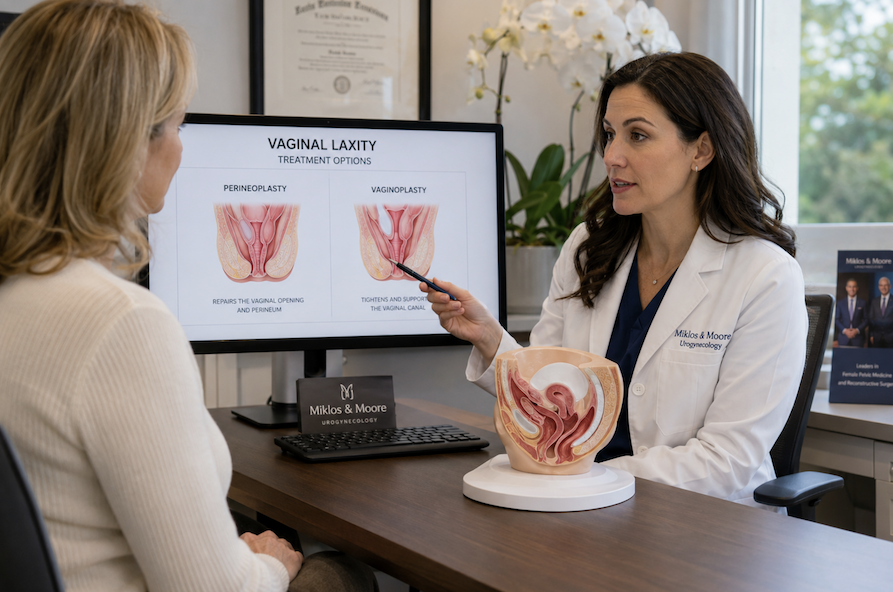
Perineoplasty primarily repairs the vaginal opening and perineum.
Vaginoplasty repairs deeper vaginal support structures.
Some women require only one procedure.
Others benefit from combining both surgeries for more comprehensive restoration.
An experienced urogynecologist can determine which approach best matches your anatomy.
Pelvic Organ Prolapse Repair
Some women who describe a “gaping vagina” actually have pelvic organ prolapse.
Instead of isolated tissue stretching, the bladder, uterus, rectum, or top of the vagina may have descended because the pelvic support structures have weakened.
Depending on the type of prolapse, surgery may include:
Anterior Repair
Repairs a cystocele, where the bladder bulges into the front wall of the vagina.
This procedure restores support to the bladder and may improve urinary symptoms.
Posterior Repair
Repairs a rectocele, where the rectum bulges into the back wall of the vagina.
Posterior repair can improve bowel function, reduce vaginal bulging, and strengthen posterior vaginal support.
Apical Prolapse Repair
If the uterus or vaginal apex has descended, surgery may restore support using advanced reconstructive techniques.
Procedures may include:
- Sacrocolpopexy
- Uterosacral ligament suspension
- Sacrospinous fixation
- Uterine-preserving prolapse surgery (selected patients)
The appropriate procedure depends on the patient’s anatomy and treatment goals.
Can Procedures Be Combined?
Yes.
Many women undergo multiple procedures during a single operation.
Examples include:
- Vaginoplasty + perineoplasty
- Perineoplasty + posterior repair
- Anterior and posterior repair
- Prolapse repair + vaginoplasty
- Hysterectomy + prolapse repair
- Cosmetic labiaplasty combined with vaginal reconstruction
Combining procedures often reduces the need for multiple surgeries and allows patients to recover from all treatments at the same time.
Your surgeon will discuss whether combination surgery is appropriate for your individual situation.
What Happens During Surgery?
Most procedures are performed under general anesthesia or regional anesthesia with sedation.
Depending on the complexity of the repair, surgery may last between one and four hours.
During surgery, your surgeon carefully:
- Evaluates damaged tissue
- Repairs stretched muscles
- Restores connective tissue support
- Removes excess scar tissue if necessary
- Preserves healthy vaginal tissue
- Maintains normal vaginal function
Whenever possible, the body’s own tissues are used for reconstruction.
The surgical approach depends on the specific condition being treated.
Recovery After Gaping Vagina Surgery
Recovery varies depending on the procedure performed and whether prolapse repair is included.
Many patients return home the same day.
Typical recovery milestones include:
First Week
Patients commonly experience:
- Mild to moderate soreness
- Swelling
- Bruising
- Light vaginal spotting
- Fatigue
Walking is encouraged shortly after surgery to promote circulation and reduce the risk of blood clots.
Two to Four Weeks
Most women notice:
- Improved comfort
- Decreased swelling
- Increased energy
- Healing of the incision sites
Light daily activities can usually be resumed, although heavy lifting should still be avoided.
Six to Eight Weeks
By this stage, many patients:
- Return to work if physically appropriate
- Resume exercise gradually
- Resume sexual activity after clearance from their surgeon
- Experience continued improvement in comfort and appearance
Healing continues for several months as tissues remodel and strengthen.
Results: What Can You Expect?
Many women report significant improvement in both physical symptoms and quality of life.
Potential benefits include:
- Improved vaginal support
- Smaller, more natural vaginal opening
- Better pelvic floor function
- Increased confidence
- Improved comfort during intimacy
- Better bladder and bowel support (when prolapse is repaired)
- Less vaginal pressure
- Improved appearance
Results vary depending on the severity of tissue damage, overall health, healing, and adherence to postoperative instructions.
Are the Results Permanent?
Surgical repair is designed to provide long-lasting improvement.
However, no procedure can completely stop the natural aging process.
Future pregnancies, chronic heavy lifting, obesity, chronic coughing, or significant constipation can place additional stress on repaired tissues.
Maintaining a healthy lifestyle and following your surgeon’s recommendations can help maximize the longevity of your results.
Are There Risks?
As with any surgery, vaginal reconstruction carries potential risks.
These may include:
- Bleeding
- Infection
- Delayed wound healing
- Temporary discomfort
- Scarring
- Pain during intercourse
- Urinary retention
- Recurrence of laxity or prolapse
- Need for additional treatment
Choosing an experienced urogynecologic surgeon helps minimize these risks through careful surgical planning and meticulous technique.
Who Is a Good Candidate for Surgery?
You may be a good candidate if you:
- Feel the vaginal opening has become significantly wider after childbirth
- Experience decreased sensation during intercourse
- Notice visible stretching or scar tissue
- Have pelvic organ prolapse
- Experience difficulty retaining tampons or menstrual cups
- Feel vaginal pressure or bulging
- Have completed childbearing
- Are in good overall health
- Have realistic expectations regarding surgery
The best way to determine whether surgery is appropriate is through a comprehensive evaluation by a specialist experienced in female pelvic reconstructive surgery.
Is Laser Vaginal Tightening an Alternative?
Many women ask whether laser or radiofrequency treatments can replace surgery.
These technologies may provide modest improvement for carefully selected women with very mild vaginal laxity, particularly when symptoms are related to tissue quality rather than structural damage.
However, energy-based treatments cannot repair separated muscles, torn fascia, or significant childbirth-related stretching. Women with pronounced vaginal gaping, perineal defects, or pelvic organ prolapse typically achieve more predictable and durable results with surgical reconstruction.
During your consultation, your surgeon will explain whether a non-surgical option is reasonable or whether surgery offers the best chance of restoring normal anatomy and long-term function
Why Choose Miklos & Moore for Gaping Vagina Surgery?
Choosing a surgeon for vaginal reconstruction or pelvic floor surgery is one of the most important decisions you can make. These procedures require far more than cosmetic skill—they demand an in-depth understanding of female pelvic anatomy, pelvic floor function, and reconstructive surgery.
Dr. John Miklos and Dr. Robert Moore have dedicated their careers to treating women with complex pelvic floor disorders, vaginal laxity, childbirth-related injuries, and pelvic organ prolapse. Their practice is focused exclusively on urogynecology and female pelvic reconstructive surgery, allowing them to offer highly specialized care that many general gynecologists and plastic surgeons do not provide.
Unlike practices that perform vaginal tightening as an isolated cosmetic procedure, Miklos & Moore evaluate the entire pelvic floor. This comprehensive approach helps identify underlying conditions—such as pelvic organ prolapse, muscle separation, or perineal defects—that may be contributing to a patient’s symptoms.
A Personalized Treatment Plan
No two women have the same anatomy, symptoms, or goals. During your consultation, Dr. Miklos or Dr. Moore will perform a detailed examination and discuss:
- Your childbirth and medical history
- Your current symptoms
- Your concerns about appearance or function
- Sexual health concerns
- Urinary or bowel symptoms
- Your future family plans
- Your treatment goals
Based on this evaluation, they will recommend the most appropriate treatment, whether that involves pelvic floor therapy, perineoplasty, vaginoplasty, prolapse repair, or a combination of procedures.
Advanced Surgical Expertise
The surgeons at Miklos & Moore perform advanced reconstructive procedures designed to restore normal anatomy while preserving vaginal function. Their surgical philosophy emphasizes:
- Restoring support—not simply tightening tissue
- Preserving healthy anatomy
- Creating natural-looking results
- Minimizing discomfort
- Improving long-term pelvic floor function
- Individualized surgical planning
For women with more complex conditions, multiple procedures can often be performed during the same operation, reducing the need for separate surgeries and recovery periods.
Comprehensive Women’s Pelvic Health Care
Many women seeking treatment for vaginal gaping also have additional pelvic floor concerns. Miklos & Moore provide comprehensive care for conditions including:
- Vaginal laxity
- Pelvic organ prolapse
- Bladder prolapse (cystocele)
- Rectocele
- Uterine prolapse
- Vaginal vault prolapse
- Stress urinary incontinence
- Urgency incontinence
- Childbirth injuries
- Perineal defects
- Painful intercourse
- Vaginal relaxation syndrome
By addressing all contributing conditions—not just one symptom—they strive to achieve the best possible functional and cosmetic outcomes.
A Commitment to Patient Education
An informed patient is an empowered patient. Miklos & Moore believe every woman deserves to understand her diagnosis and treatment options before deciding on surgery.
They take the time to explain:
- Your diagnosis
- Why your symptoms developed
- Available treatment options
- Expected outcomes
- Recovery timeline
- Risks and benefits
- Alternatives to surgery
Their goal is to help every patient make a confident, informed decision.
Frequently Asked Questions
What is gaping vagina surgery?
“Gaping vagina surgery” is a non-medical term commonly used to describe procedures that repair a widened vaginal opening or vaginal laxity. Depending on the cause, surgery may include perineoplasty, vaginoplasty, pelvic organ prolapse repair, or a combination of procedures.
Is vaginal gaping normal after childbirth?
Many women notice temporary stretching after vaginal delivery. While some tissues recover naturally, others may experience lasting changes due to muscle separation, tearing, or weakened connective tissue.
Can Kegel exercises fix a gaping vagina?
Kegel exercises strengthen pelvic floor muscles but cannot repair torn muscles, stretched fascia, or excess tissue. Women with significant vaginal laxity often require surgical treatment for lasting improvement.
What is the difference between perineoplasty and vaginoplasty?
Perineoplasty repairs the vaginal opening and perineum, while vaginoplasty tightens and reconstructs deeper vaginal support structures. Some women benefit from one procedure, while others need both.
Does surgery improve sexual satisfaction?
Many women report improved confidence, comfort, and sexual satisfaction after healing. However, individual experiences vary, and no procedure can guarantee a specific outcome.
Will surgery make my vagina too tight?
A properly performed procedure is designed to restore normal anatomy—not create excessive tightness. Experienced surgeons carefully tailor the repair to your anatomy and goals.
Is gaping vagina surgery painful?
Some discomfort is expected during the first few days after surgery, but pain is typically well controlled with medication and gradually improves as healing progresses.
How long does recovery take?
Most women return to light daily activities within two to four weeks. Full healing generally takes six to eight weeks, although internal tissues continue to strengthen over several months.
When can I have sex after surgery?
Sexual activity is usually postponed for approximately six to eight weeks or until your surgeon confirms that healing is complete.
Will insurance cover surgery?
Coverage depends on the reason for surgery. Procedures performed to treat pelvic organ prolapse or medically necessary pelvic floor disorders may be covered by insurance. Cosmetic procedures are generally not covered. Your insurance provider can explain your specific benefits.
Can I have children after surgery?
Future pregnancy and vaginal delivery may affect surgical results. Women who plan additional pregnancies should discuss timing with their surgeon before undergoing reconstruction.
Can laser vaginal tightening replace surgery?
Laser and radiofrequency treatments may help women with very mild vaginal laxity, but they cannot repair significant muscle separation or pelvic floor defects. Surgery remains the most effective treatment for moderate to severe cases.
What age is best for surgery?
There is no ideal age. Candidates range from women in their 30s after childbirth to postmenopausal women seeking treatment for age-related changes.
Can vaginal gaping cause urinary leakage?
Yes. Some women with weakened pelvic floor support also experience stress urinary incontinence or other bladder symptoms. A thorough evaluation helps determine whether both conditions should be treated.
Is surgery permanent?
Results are designed to be long-lasting, but aging, future childbirth, chronic coughing, obesity, or heavy lifting can affect pelvic floor support over time.
How do I know if I need surgery?
If you experience bothersome vaginal laxity, decreased sexual satisfaction, difficulty retaining tampons, pelvic pressure, or symptoms of prolapse, an evaluation by a urogynecologist can determine whether surgery is appropriate.
What makes Miklos & Moore different?
Miklos & Moore focus exclusively on female pelvic medicine and reconstructive surgery. Their specialized expertise allows them to diagnose and treat both cosmetic and functional pelvic floor conditions using individualized treatment plans and advanced surgical techniques.
Take the First Step Toward Feeling Like Yourself Again
If you’re bothered by a widened vaginal opening, decreased vaginal support, or symptoms that developed after childbirth, aging, or menopause, you don’t have to live with discomfort or uncertainty. Modern treatments can restore both function and confidence.
At Miklos & Moore, every patient receives a comprehensive evaluation and a personalized treatment plan based on her unique anatomy, symptoms, and goals. Whether your condition is best treated with pelvic floor therapy, perineoplasty, vaginoplasty, or pelvic organ prolapse surgery, our team is committed to helping you achieve the best possible outcome.
Schedule a consultation to learn about your options and discover which treatment is right for you.