
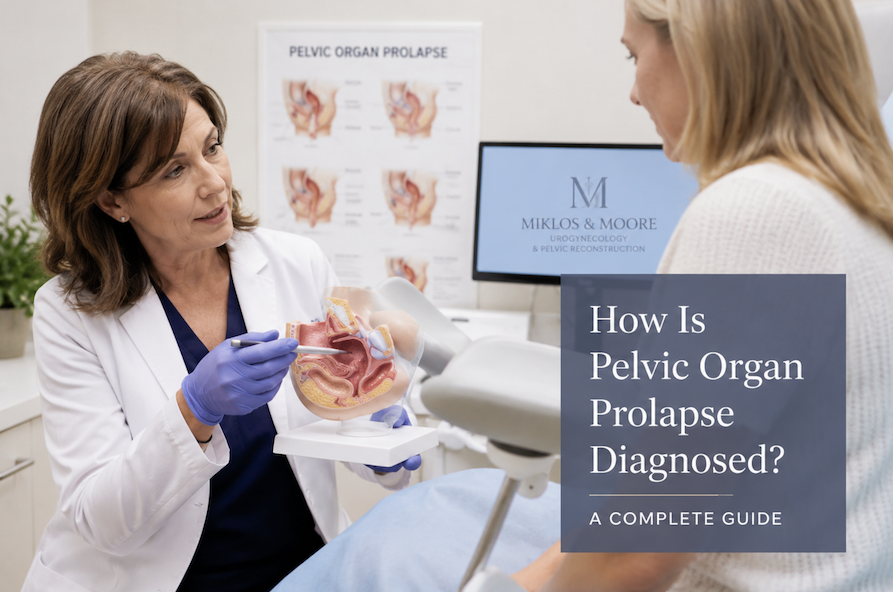
How Is Pelvic Organ Prolapse Diagnosed?
The first step in treating pelvic organ prolapse is determining which pelvic organs are affected and how severe the prolapse is.
Although many women describe similar symptoms—such as pelvic pressure, a vaginal bulge, or the sensation that something is falling out—the underlying cause may be very different from one patient to another.
Some women have bladder prolapse.
Others have uterine prolapse, rectocele, vaginal vault prolapse, or a combination of several conditions.
A comprehensive evaluation allows your physician to identify the exact source of your symptoms and recommend the most appropriate treatment.
During your consultation, your physician may ask:
- When did your symptoms begin?
- Do they worsen after standing or exercising?
- Do you notice a vaginal bulge?
- Are you having difficulty emptying your bladder?
- Do you have constipation or difficulty with bowel movements?
- Have you experienced urinary leakage?
- Have you previously had pelvic surgery or a hysterectomy?
- Have your symptoms changed after childbirth or menopause?
Your evaluation may include:
- A detailed medical history
- A pelvic examination
- Assessment of bladder, bowel, and vaginal support
- Evaluation for stress urinary incontinence
- Assessment of pelvic floor muscle strength
- Additional bladder testing when appropriate
This comprehensive evaluation helps ensure that treatment is based on an accurate diagnosis rather than symptoms alone.
Do All Women With Prolapse Need Surgery?
No.
One of the biggest misconceptions about pelvic organ prolapse is that surgery is always necessary.
Many women with mild prolapse have few or no symptoms and may not require treatment.
Instead, management depends on:
- The severity of the prolapse
- Your symptoms
- Your overall health
- Your lifestyle
- Whether the prolapse affects your quality of life
If prolapse is not causing significant discomfort or interfering with daily activities, observation may be appropriate.
The decision to pursue treatment should always be based on your symptoms and personal goals—not simply on the stage of prolapse.
Can Pelvic Organ Prolapse Be Treated Without Surgery?
Yes.
Many women benefit from conservative treatment before considering surgery.
Depending on your individual circumstances, treatment options may include:
Pelvic Floor Physical Therapy
Pelvic floor physical therapy helps strengthen and improve coordination of the muscles that support the pelvic organs.
Women with mild prolapse often experience improvements in:
- Pelvic support
- Bladder control
- Core strength
- Pelvic floor awareness
- Overall quality of life
Although therapy cannot reverse significant anatomical prolapse, it may reduce symptoms and help slow progression in some patients.
Pessary
A pessary is a removable medical device placed inside the vagina to support the pelvic organs.
Many women choose a pessary because it:
- Provides immediate support
- Does not require surgery
- Can often be fitted during an office visit
- May be an excellent option for women who wish to delay or avoid surgery
Not every woman is a candidate, but for many patients it offers an effective non-surgical treatment.
Lifestyle Modifications
Simple lifestyle changes may also help reduce symptoms.
These may include:
- Maintaining a healthy weight
- Avoiding heavy lifting when possible
- Treating chronic constipation
- Managing chronic coughing
- Performing pelvic floor exercises as recommended
Although these changes do not repair prolapse, they may reduce unnecessary strain on the pelvic floor.
When Is Surgery Recommended?
Surgery may be appropriate when prolapse significantly affects your quality of life.
Women often choose surgery because they experience:
- A vaginal bulge that protrudes beyond the vaginal opening
- Persistent pelvic pressure
- Difficulty emptying the bladder
- Difficulty with bowel movements
- Pain or discomfort during intercourse
- Failure of conservative treatment
- Symptoms that interfere with work, exercise, travel, or daily activities
The decision to proceed with surgery should always be individualized after a thorough evaluation and discussion of the available treatment options.
What Surgical Treatments Are Available?
The most appropriate procedure depends on:
- Which organs have prolapsed
- The severity of the prolapse
- Previous pelvic surgery
- Whether the uterus is present
- Your overall health
- Your personal goals
Treatment may include:
- Native tissue repair
- Robotic pelvic reconstructive surgery
- Vaginal prolapse repair
- Uterine-preserving surgery (when appropriate)
- Hysterectomy combined with prolapse repair (for selected patients)
- Vaginal vault suspension
- Combination procedures when multiple compartments are affected
The objective is to restore normal pelvic anatomy while preserving bladder, bowel, and sexual function whenever possible.
Why Women Choose Dr. John Miklos & Dr. Robert Moore
Pelvic organ prolapse is one of the most complex conditions treated in urogynecology.
Successful treatment requires more than repairing a single organ—it requires understanding how the entire pelvic floor functions together.
Dr. John Miklos and Dr. Robert Moore are fellowship-trained urogynecologists specializing in Female Pelvic Medicine and Reconstructive Surgery (FPMRS). For decades, they have focused their practice on treating women with pelvic organ prolapse, urinary incontinence, childbirth-related pelvic floor injuries, vaginal laxity, and complex reconstructive conditions.
Their expertise includes:
- Bladder prolapse (cystocele)
- Rectocele
- Uterine prolapse
- Vaginal vault prolapse
- Enterocele
- Robotic pelvic reconstructive surgery
- Vaginal reconstructive surgery
- Native tissue prolapse repair
- Complex revision prolapse surgery
- Pelvic floor reconstruction
Every patient receives a comprehensive evaluation of the entire pelvic floor before treatment recommendations are made.
Rather than focusing solely on the prolapsed organ, Dr. Miklos and Dr. Moore evaluate bladder function, bowel function, pelvic support, urinary incontinence, sexual function, previous surgeries, and each woman’s individual goals to create a personalized treatment plan.
Women travel from Atlanta, throughout Georgia, across the United States, and internationally because of their specialized expertise in treating both routine and highly complex pelvic organ prolapse with advanced reconstructive techniques tailored to each patient’s needs.
Why Experience Matters
Pelvic organ prolapse surgery is not simply about returning an organ to its normal position.
Long-term success depends on:
- An accurate diagnosis
- Identifying every compartment involved
- Choosing the most appropriate surgical approach
- Restoring normal pelvic support
- Preserving bladder, bowel, and sexual function
- Developing a personalized treatment plan
Choosing a surgeon with advanced training in Female Pelvic Medicine and Reconstructive Surgery helps ensure that every aspect of the pelvic floor is evaluated before treatment decisions are made.
For many women, that comprehensive approach can make a meaningful difference in both their recovery and their long-term quality of life
Frequently Asked Questions About Pelvic Organ Prolapse Diagnosis
1. How is pelvic organ prolapse diagnosed?
Pelvic organ prolapse is usually diagnosed during a comprehensive pelvic examination performed by a urogynecologist or gynecologist. Your physician will review your symptoms, medical history, childbirth history, and perform a physical examination to determine whether the bladder, uterus, rectum, or vaginal walls have shifted from their normal position. In many cases, a physical examination provides all the information needed to diagnose pelvic organ prolapse and develop an individualized treatment plan.
2. What happens during a pelvic organ prolapse examination?
During the examination, your physician evaluates the support of your pelvic organs while you are lying down and, in some cases, standing. You may be asked to cough or bear down (Valsalva maneuver) so the prolapse can be fully assessed. Your doctor evaluates which organs are affected, the severity of the prolapse, and whether urinary leakage or other pelvic floor disorders are also present.
3. What is the POP-Q staging system?
The Pelvic Organ Prolapse Quantification (POP-Q) system is the internationally accepted method used to measure and stage pelvic organ prolapse. It allows physicians to accurately determine the severity of prolapse and monitor changes over time. Stages range from mild prolapse (Stage I) to more advanced prolapse (Stage IV), helping guide treatment recommendations.
4. Will I need an ultrasound, CT scan, or MRI?
Most women do not need imaging studies to diagnose pelvic organ prolapse. A thorough pelvic examination usually provides sufficient information. However, ultrasound, MRI, or specialized imaging may occasionally be recommended if your physician suspects additional pelvic floor conditions or if previous surgeries or complex anatomy require further evaluation.
5. Can I diagnose pelvic organ prolapse myself?
Many women first notice symptoms such as a vaginal bulge, pelvic pressure, or the sensation that “something is falling out.” While these symptoms may suggest pelvic organ prolapse, only a comprehensive examination by a qualified physician can accurately determine which pelvic organs are involved and the severity of the condition.
6. Should I see my OB/GYN or a urogynecologist?
Many OB/GYNs diagnose pelvic organ prolapse during routine examinations. However, women with moderate to advanced prolapse, recurrent prolapse, previous prolapse surgery, urinary incontinence, or complex pelvic floor disorders often benefit from evaluation by a fellowship-trained urogynecologist, who specializes in Female Pelvic Medicine and Reconstructive Surgery (FPMRS).
7. Can pelvic organ prolapse be mistaken for another condition?
Yes. Symptoms of pelvic organ prolapse may resemble those of urinary incontinence, overactive bladder, vaginal laxity, pelvic floor muscle weakness, pelvic masses, or other gynecologic conditions. A detailed pelvic examination helps distinguish prolapse from these conditions and ensures an accurate diagnosis.
8. Why is an accurate diagnosis so important?
Not all pelvic organ prolapse is the same. Some women have a cystocele (bladder prolapse), while others have a rectocele, uterine prolapse, vaginal vault prolapse, or a combination of several conditions. Identifying exactly which pelvic organs have prolapsed is essential for selecting the most appropriate treatment and achieving the best long-term outcome.
9. Why do women travel to see Dr. John Miklos and Dr. Robert Moore?
Women from throughout Georgia, across the United States, and internationally seek care from Dr. John Miklos and Dr. Robert Moore because they are fellowship-trained urogynecologists specializing in Female Pelvic Medicine and Reconstructive Surgery (FPMRS). Their practice focuses exclusively on pelvic floor disorders, including pelvic organ prolapse, urinary incontinence, and complex reconstructive surgery.
Rather than simply treating symptoms, they perform a comprehensive pelvic floor evaluation to identify the specific cause of each woman’s condition and develop a personalized treatment plan tailored to her anatomy, lifestyle, and goals.
10. Why choose Dr. John Miklos and Dr. Robert Moore for pelvic organ prolapse evaluation?
Choosing the right physician is one of the most important decisions you’ll make.
Dr. John Miklos and Dr. Robert Moore have dedicated their careers to diagnosing and treating pelvic floor disorders. Their fellowship training in Female Pelvic Medicine and Reconstructive Surgery (FPMRS) provides advanced expertise in pelvic anatomy, prolapse evaluation, reconstructive surgery, and minimally invasive treatment options.
Patients choose Miklos & Moore because they offer:
- Fellowship-trained expertise in Female Pelvic Medicine and Reconstructive Surgery (FPMRS)
- Comprehensive pelvic floor evaluations
- Expertise diagnosing all types and stages of pelvic organ prolapse
- Personalized treatment plans based on each patient’s anatomy and symptoms
- Advanced minimally invasive and robotic surgical techniques
- Care for women traveling from throughout the United States and internationally
Their philosophy is simple: every woman deserves an accurate diagnosis, individualized treatment recommendations, and compassionate care focused on restoring comfort, function, and quality of life.