
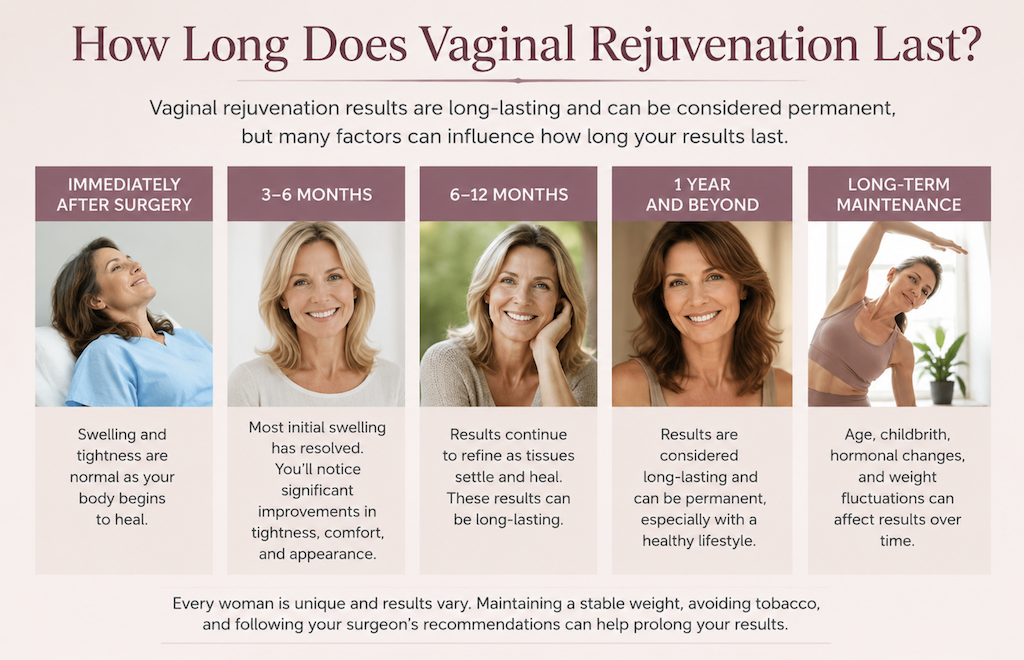
How Long Does Vaginal Rejuvenation Last? Results, Longevity & What to Expect
Is Vaginal Rejuvenation Permanent?
One of the most common questions women ask before considering vaginal rejuvenation is:
“How long will my results last?”
It’s an important question.
Whether you’re considering vaginoplasty, perineoplasty, or another vaginal rejuvenation procedure, you want to know whether the results will be temporary or whether you’re making a long-term investment in your health, confidence, and quality of life.
The answer is encouraging.
For many women, surgical vaginal rejuvenation provides long-lasting results. However, no operation can completely stop the natural effects of aging, future pregnancies, menopause, or significant changes in body weight.
The longevity of your results depends on several factors, including:
- Your anatomy before surgery
- The procedure performed
- Your surgeon’s experience
- Future pregnancies
- Aging and menopause
- Overall pelvic floor health
- Following postoperative instructions
At Miklos & Moore, Dr. John Miklos and Dr. Robert Moore believe that helping women achieve durable, natural-looking results begins long before surgery. As fellowship-trained urogynecologists specializing in Female Pelvic Medicine and Reconstructive Surgery (FPMRS), they carefully evaluate the underlying cause of each woman’s symptoms before recommending treatment. By correcting the anatomical problem—not simply treating the symptom—they help patients achieve results designed to restore both function and confidence for years to come.
What Is Vaginal Rejuvenation?
Vaginal rejuvenation is a broad term used to describe procedures designed to restore the anatomy and function of the vagina following childbirth, aging, menopause, or pelvic floor injury.
Depending on your individual needs, treatment may include:
- Perineoplasty
- Vaginoplasty
- Pelvic floor reconstruction
- Pelvic organ prolapse repair
- Combination procedures
Each procedure addresses a different problem, which is why a comprehensive evaluation is essential before deciding on surgery.
Are the Results Permanent?
For many women, the improvements achieved with surgery are long-lasting.
When stretched muscles, damaged connective tissue, and childbirth-related injuries are surgically repaired, those anatomical corrections generally do not simply “wear off.”
However, the body continues to age.
Collagen naturally changes over time.
Hormone levels fluctuate.
The pelvic floor continues to experience stress throughout life.
Because of these normal biological changes, no surgeon can honestly promise that surgery will permanently prevent all future changes.
Instead, the goal is to restore healthy anatomy and provide durable results that continue to benefit patients for many years.
What Factors Affect How Long Results Last?
Several important factors influence the longevity of vaginal rejuvenation.
- The Type of Procedure Performed
Different procedures address different structures.
For example:
Perineoplasty reconstructs the perineal body and vaginal opening.
Vaginoplasty repairs and restores the deeper vaginal canal.
Women undergoing combined procedures often receive the most comprehensive correction because multiple anatomical problems are addressed during the same operation.
The most durable results are achieved when the procedure matches the patient’s actual diagnosis.
- Proper Diagnosis Before Surgery
One of the biggest reasons women are disappointed with surgery is not because the procedure failed—but because the wrong procedure was performed.
For example:
A woman with bladder prolapse who undergoes vaginal tightening alone may continue to experience pressure or bulging because the prolapse was never corrected.
Likewise, repairing prolapse without addressing significant childbirth-related widening of the vaginal opening may leave another woman dissatisfied with her overall outcome.
This is why accurate diagnosis is just as important as surgical technique.
Why Choosing the Right Surgeon Matters
The longevity of your results depends not only on what procedure is performed, but whether the correct procedure is recommended in the first place.
At Miklos & Moore, every woman undergoes a comprehensive pelvic floor evaluation before surgery is discussed.
Dr. John Miklos and Dr. Robert Moore evaluate:
- The vaginal canal
- The vaginal opening
- The perineal body
- Pelvic floor muscles
- Connective tissues
- Pelvic organ support
- Childbirth-related injuries
- Scar tissue
This detailed examination allows them to identify the true cause of a woman’s symptoms and develop an individualized surgical plan.
Rather than performing the same procedure for every patient, they recommend treatment designed to provide the safest, most functional, and longest-lasting outcome based on each woman’s unique anatomy.
- Future Pregnancy
One of the most important factors affecting long-term results is whether a woman plans to become pregnant again.
Pregnancy and vaginal childbirth place tremendous stress on the pelvic floor.
Even an expertly performed repair may be stretched by a future pregnancy or vaginal delivery.
For this reason, many women choose to postpone vaginal rejuvenation until they have completed their families.
During your consultation, future pregnancy plans should always be discussed as part of the decision-making process.
- Aging and Menopause
Aging continues throughout life, regardless of surgery.
Over time, natural changes may include:
- Reduced collagen production
- Decreased tissue elasticity
- Hormonal changes
- Gradual weakening of pelvic floor muscles
These normal processes do not necessarily mean surgery has “failed.”
Instead, they represent the body’s natural aging process.
Women who maintain a healthy lifestyle and follow their surgeon’s recommendations often continue to enjoy the benefits of surgery for many years despite these changes.
Can the Results Change Over Time?
One of the biggest misconceptions about vaginal rejuvenation is that surgery either lasts forever or completely wears off after a few years.
Neither is entirely accurate.
For most women, the anatomical improvements achieved during surgery are long-lasting. However, your body continues to age, and the pelvic floor continues to experience stress throughout your lifetime.
Changes that occur years later are usually related to normal aging or new life events—not because the surgery “failed.”
Examples include:
- Menopause
- Natural loss of collagen
- Significant weight gain
- Chronic constipation
- Heavy lifting
- Chronic coughing
- New pelvic floor injuries
The goal of surgery is to restore healthy anatomy and function while providing durable, long-term improvement.
Can Childbirth Reverse the Results?
Yes.
Pregnancy and vaginal childbirth place tremendous stress on the muscles, ligaments, and connective tissues of the pelvic floor.
Even an excellent surgical repair may stretch again during a future pregnancy or vaginal delivery.
For this reason, many women choose to postpone vaginal rejuvenation until they are confident they have completed their families.
If future pregnancy is possible, discuss this openly during your consultation so your surgeon can help you make the best decision for your long-term goals.
Does Menopause Affect Surgical Results?
Menopause changes the body in many ways.
As estrogen levels decline, women naturally experience:
- Reduced collagen production
- Thinner vaginal tissues
- Decreased elasticity
- Vaginal dryness
- Changes in pelvic floor muscle strength
These changes occur whether or not a woman has undergone vaginal rejuvenation.
While menopause may alter the feel of the tissues over time, it does not necessarily undo the structural repairs performed during surgery.
Women experiencing menopausal symptoms may benefit from additional therapies that help maintain vaginal tissue health, depending on their individual medical history and treatment goals.
Can Pelvic Organ Prolapse Return?
Pelvic organ prolapse and vaginal laxity are related but separate conditions.
If prolapse is repaired, the long-term success of the operation depends on several factors, including:
- Tissue quality
- Severity of prolapse
- Overall pelvic floor health
- Future pregnancies
- Chronic increases in abdominal pressure
Some women remain symptom-free for many years, while others may experience new pelvic floor changes as they age.
This is another reason why selecting the most appropriate procedure—and an experienced surgeon—is so important.
How Can You Protect Your Results?
Although aging cannot be prevented, there are several steps women can take to support long-term pelvic floor health.
These include:
- Maintaining a healthy weight.
- Avoiding chronic constipation.
- Treating chronic coughing when possible.
- Using proper lifting techniques.
- Following postoperative instructions carefully.
- Completing pelvic floor rehabilitation if recommended.
- Attending scheduled follow-up appointments.
- Seeking evaluation if new symptoms develop.
These healthy habits may help reduce unnecessary stress on the pelvic floor and support long-term function.
Why Women Choose Dr. John Miklos & Dr. Robert Moore
Many women begin researching vaginal rejuvenation by asking, “How long will my results last?”
An equally important question is:
“Am I choosing the right surgeon?”
Long-lasting results begin with an accurate diagnosis.
If the underlying cause of your symptoms is not correctly identified, even technically successful surgery may not fully address your concerns.
At Miklos & Moore, every woman undergoes a comprehensive evaluation before any procedure is recommended.
Dr. John Miklos and Dr. Robert Moore are fellowship-trained urogynecologists specializing in Female Pelvic Medicine and Reconstructive Surgery (FPMRS). Their practice is dedicated to treating vaginal laxity, childbirth-related pelvic floor injuries, pelvic organ prolapse, perineal body injuries, urinary incontinence, and cosmetic vaginal concerns.
Rather than focusing on a single procedure, they evaluate the entire pelvic floor to determine exactly which structures have been affected.
Their expertise includes:
- Vaginoplasty
- Perineoplasty
- Pelvic reconstructive surgery
- Pelvic organ prolapse repair
- Childbirth injury reconstruction
- Cosmetic gynecology
- Revision surgery after previous procedures
This comprehensive approach allows them to recommend individualized treatment plans designed to provide durable, natural, and functional results.
Women travel from Atlanta, throughout Georgia, across the United States, and internationally because of their reputation for treating both routine and highly complex pelvic floor conditions with personalized care and advanced surgical expertise.
Does Surgical Technique Matter?
Absolutely.
The longevity of any surgical procedure depends on more than simply tightening tissue.
Long-term success is influenced by:
- Correct diagnosis
- Appropriate procedure selection
- Careful reconstruction of the underlying anatomy
- Preservation of normal function
- Attention to pelvic floor support
- Individualized surgical planning
The objective is not simply to create a tighter vagina.
The objective is to restore healthy anatomy in a way that supports comfort, function, and long-term quality of life.
When surgery is planned thoughtfully and performed for the right reasons, many women enjoy meaningful improvements that continue for years after their procedure.
What Can You Expect During Recovery?
Every woman’s recovery is unique because every procedure is customized to her anatomy and surgical plan.
Whether you undergo perineoplasty, vaginoplasty, or a combination of procedures, your body needs time to heal properly. Following your surgeon’s instructions is one of the most important factors in achieving the best possible outcome.
Although recovery varies, most women can generally expect:
The First Week
During the first several days, it is normal to experience:
- Mild to moderate swelling
- Bruising
- Tenderness
- A feeling of tightness
- Temporary discomfort while sitting for extended periods
Rest, hydration, and following your postoperative instructions are essential during this early phase of healing.
Weeks Two Through Four
As healing progresses, swelling gradually improves and most women become increasingly comfortable with normal daily activities.
During this stage, it is important to continue avoiding strenuous exercise, heavy lifting, and activities that place excessive pressure on the pelvic floor.
Your surgeon will continue to monitor your healing and provide guidance regarding activity restrictions.
Six Weeks and Beyond
By approximately six weeks, many women have resumed many of their normal daily activities, depending on the procedure performed and their individual healing progress.
Your surgeon will determine when it is appropriate to return to exercise, sexual activity, and other activities based on your examination rather than a predetermined timeline.
Patience during recovery helps protect your surgical repair and contributes to long-term success.
Setting Realistic Expectations
One of the most important parts of a successful surgical experience is having realistic expectations.
Vaginal rejuvenation is not about achieving perfection.
It is about restoring anatomy that has been altered by childbirth, aging, menopause, or pelvic floor injury while improving function, comfort, and confidence.
Many women notice meaningful improvements in:
- Vaginal support
- Comfort during intimacy
- Self-confidence
- Pelvic floor function
- Overall quality of life
However, every woman’s anatomy, healing process, and goals are different.
A thoughtful consultation helps ensure that your expectations align with the treatment being recommended.
Frequently Asked Questions
Is vaginal rejuvenation permanent?
Surgical repairs are designed to provide long-lasting results. However, future pregnancies, natural aging, menopause, and other life events may affect the pelvic floor over time.
Can I have children after vaginal rejuvenation?
Pregnancy is usually still possible after surgery. However, future pregnancy and vaginal delivery may stretch repaired tissues and affect your results. If you plan to have more children, discuss this with your surgeon before deciding on surgery.
Will I need another procedure in the future?
Many women enjoy long-lasting results without additional surgery. Whether future treatment is needed depends on factors such as aging, future pregnancies, pelvic floor health, and individual anatomy.
Does vaginal rejuvenation improve pelvic organ prolapse?
Not necessarily.
Vaginal rejuvenation and pelvic organ prolapse surgery treat different conditions. If prolapse is present, it should be evaluated and addressed as part of your overall treatment plan when appropriate.
Is surgery my only option?
No.
Many women benefit from conservative treatment, including pelvic floor physical therapy and lifestyle modifications. Surgery is generally recommended when structural changes significantly affect quality of life or when non-surgical treatments have not provided sufficient improvement.
Does surgeon experience affect long-term results?
Experience plays an important role in diagnosis, procedure selection, surgical planning, and reconstruction of the pelvic floor.
Selecting the appropriate procedure for the correct diagnosis is one of the most important factors influencing long-term success.
Why Women Trust Dr. John Miklos & Dr. Robert Moore
When considering vaginal rejuvenation, one of the most important decisions is choosing a surgeon with the training and experience to accurately diagnose your condition and recommend the procedure that best fits your needs.
Dr. John Miklos and Dr. Robert Moore have dedicated their careers exclusively to Female Pelvic Medicine and Reconstructive Surgery (FPMRS). Their practice focuses on treating women with vaginal laxity, pelvic organ prolapse, childbirth-related pelvic floor injuries, urinary incontinence, and cosmetic vaginal concerns.
Patients choose Miklos & Moore because of their:
- Fellowship training in Female Pelvic Medicine and Reconstructive Surgery
- Extensive experience treating both cosmetic and functional pelvic floor conditions
- Comprehensive pelvic floor evaluations
- Individualized treatment plans
- Expertise in vaginoplasty, perineoplasty, prolapse repair, and complex revision surgery
- Commitment to restoring both function and appearance
Rather than recommending the same procedure for every patient, they carefully evaluate each woman’s anatomy, symptoms, lifestyle, and goals to develop a personalized treatment plan.
Women travel from Atlanta, throughout Georgia, across the United States, and internationally seeking their expertise because they understand that successful vaginal rejuvenation begins with an accurate diagnosis and an individualized surgical approach.
Take the Next Step Toward Restoring Your Confidence
If you are considering vaginal rejuvenation, one of the most valuable steps you can take is scheduling a comprehensive evaluation with an experienced fellowship-trained urogynecologist.
Understanding the cause of your symptoms—and selecting the treatment that best addresses your anatomy and goals—can make all the difference in your long-term outcome.
Whether your concerns involve vaginal laxity, a widened vaginal opening, childbirth-related injuries, pelvic organ prolapse, or changes associated with aging, the first step is obtaining an accurate diagnosis.
At Miklos & Moore, every consultation is centered on listening to your concerns, performing a thorough pelvic floor evaluation, and creating a personalized treatment plan designed to restore function, confidence, and quality of life.
If you are ready to learn more about your options, schedule a consultation with Dr. John Miklos and Dr. Robert Moore to discuss the treatment approach that is right for you.