
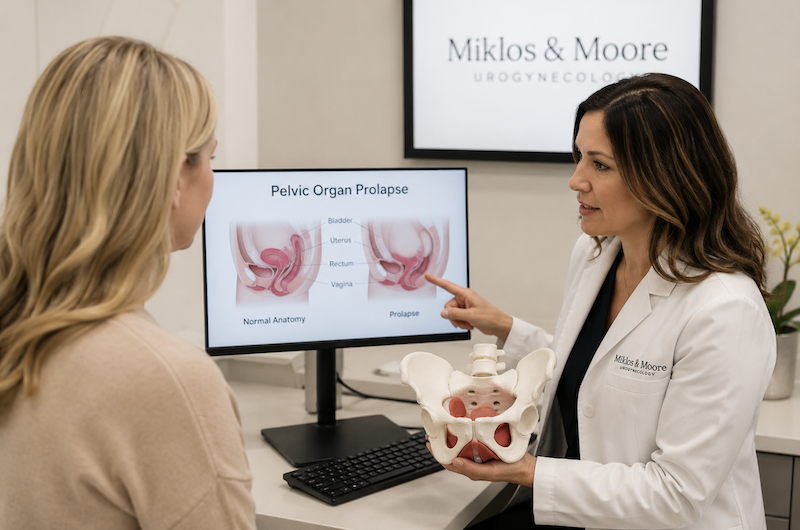
Does Uterine Prolapse Cause Vaginal Laxity?
Expert Insight from Miklos and Moore Urogynecology
Understanding the Connection Between Prolapse and Vaginal Support
Many women who experience uterine prolapse also report a feeling of vaginal looseness or decreased support, often described as vaginal laxity. While these two conditions are closely related, they are not always identical—and understanding the difference is key to choosing the right treatment.
At Miklos and Moore Urogynecology, patients are evaluated comprehensively to determine whether symptoms are due to prolapse, laxity, or a combination of both.
What Happens During Uterine Prolapse?
Uterine prolapse occurs when the pelvic floor muscles and ligaments weaken, allowing the uterus to descend into the vaginal canal. This descent doesn’t happen in isolation—it reflects a broader loss of support throughout the pelvic floor.
As the uterus drops:
- The vaginal walls support system known as fascia can stretch or break and lose structural support
- The vaginal canal may feel more open or less resistant
- There may be associated symptoms like pressure, bulging, or discomfort
This is why many women perceive prolapse as a change in vaginal tightness.
Why Vaginal Laxity Occurs
Vaginal laxity is typically the result of pelvic floor weakening, which can be caused by:
- Vaginal childbirth (especially multiple deliveries)
- Aging and hormonal changes
- Genetic connective tissue differences
- Prior pelvic surgery
- Spinal trauma (car accident, falling off of a chair or ladder, bulging spinal discs etc….)
Because these same factors also contribute to prolapse, it’s common for both conditions to occur together.
Is Vaginal Laxity Always Caused by Prolapse?
No. This is an important distinction.
- Some women have vaginal laxity without any prolapse as the skin is the primary area which can become lax
- Others have prolapse and will at the very least have a rectocele
Both of the above situations usually leads to sexual dysfunction in terms of a lack of friction during intercourse.
This is why a precise diagnosis by a specialist is essential. Treating one issue does not always fully correct the other.
Can Prolapse Repair Improve Vaginal Tightness?
In many cases, yes—repairing uterine prolapse can improve vaginal support and function.
Procedures such as:
- Uterine-sparing repairs (hysteropexy)
- Vaginal or minimally invasive prolapse surgery
can:
- Restore normal anatomy
- Reestablish internal support
- Improve symptoms related to looseness
However, it’s important to understand:
Prolapse repair primarily restores position—not always tightness.
If vaginal laxity is a primary concern, additional procedures may be recommended, such as:
- Posterior repair (rectocele repair)
- Levatorplasty (repositioning of the stretched pelvic floor muscles)
- Perineorrhaphy (reconstruction of the vaginal opening and support tissues)
These are designed specifically to enhance vaginal tightness and structural integrity.
A Customized Approach Matters
At Miklos and Moore Urogynecology, treatment is never one-size-fits-all. Every patient receives a personalized surgical plan based on:
- The severity of prolapse
- Degree of vaginal laxity
- Sexual function concerns
- Overall pelvic floor health
This tailored approach ensures that both function and quality of life are optimized.
When to Seek Evaluation
You may benefit from a consultation if you experience:
- A sensation of vaginal looseness
- Pelvic pressure or bulging
- Decreased sensation during intercourse
- Decreased ability to have a vaginal orgasm
- Difficulty with tampons or pelvic support
These symptoms are common—and often highly treatable with the right expertise.
The Bottom Line
- Uterine prolapse can contribute to vaginal laxity, but they are not the same condition
- Both are typically caused by pelvic floor weakening
- Treating prolapse may improve laxity—but targeted repair is sometimes needed for optimal results
If you’re noticing changes in vaginal support or pelvic function, a specialized evaluation can help determine the most effective path forward.