
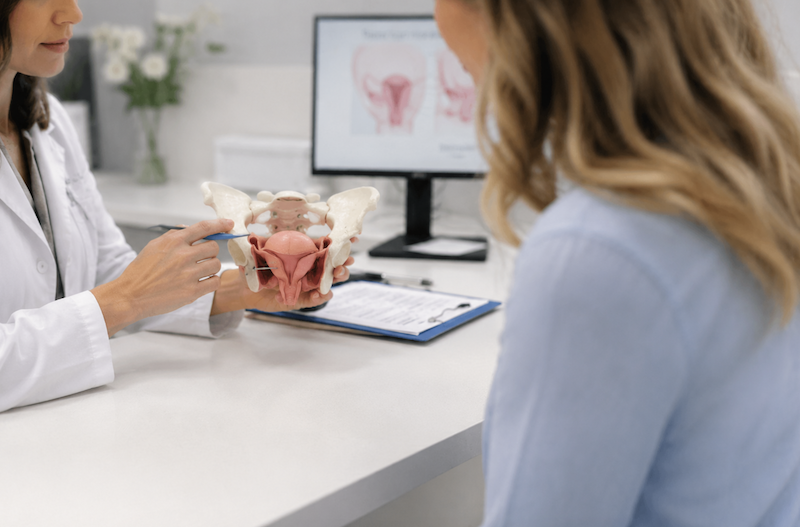
Do I Have Pelvic Organ Prolapse? At-Home Self-Check, Symptoms, and When to See a Specialist
Pelvic organ prolapse is one of the most common yet misunderstood conditions affecting women, especially after childbirth or with age. Many patients don’t search for “prolapse” at first—they search for symptoms:
- “Why does it feel like something is falling out?”
- “I feel a bulge down there—what is it?”
- “Why does sex hurt deep inside?”
- “Why does pressure get worse when I stand?”
If you’ve had any of these thoughts, this guide will help you understand what’s happening, evaluate your symptoms at home, and know when it’s time to see a specialist.
What Is Pelvic Organ Prolapse?
Pelvic organ prolapse occurs when the muscles and connective tissues that support the pelvic organs weaken, allowing one or more organs to shift downward into the vaginal canal. Each type of prolapse mentioned below are basically a form of a hernia. A hernia is a weakness in the supporting tissue resulting in a bulge or displacement of an organ.
Pelvic Organ Prolapse can manifest as:
- Cystocele – the bladder falls through the ceiling of the vagina
- Rectocele – the rectum pushes up through the floor of the vagina
- Urethrocele – the urethra falls through the ceiling of the vagina
- Uterine prolapse – the uterus falls from the deepest point of the vagina towards the vaginal opening
- Vaginal vault prolapse – the deepest portion of the vagina falls towards the vaginal opening (after a hysterectomy)
While it may sound alarming, prolapse is not life threatening and is treatable—and often reversible with the right expertise.
Common Symptoms of Prolapse (What Patients Actually Sees or Feel)s
Patients rarely describe prolapse in medical terms. Instead, they report:
- A feeling of pressure or heaviness in the pelvis
- A sensation that something is “falling out”
- A visible or palpable bulge at the vaginal opening
- Symptoms that worsen when standing and improve when lying down
- Difficulty keeping tampons in place
- Urinary leakage or incomplete emptying
- Constipation or difficulty with bowel movements
- Pain with deep penetration during intercourse (collision dyspareunia)
If this sounds familiar, you’re not alone—and it’s not “just aging.”
At-Home Self-Assessment: Do You Likely Have Prolapse?
This quick checklist can help you determine whether your symptoms are consistent with prolapse:
✔️ Answer Yes or No:
- Do you feel pelvic pressure, especially later in the day?
- Do your symptoms improve when you lie down?
- Do you feel or see a bulge in the vaginal area?
- Do tampons feel like they won’t stay in place?
- Do you experience deep pain during intercourse?
- Do you feel like you’re not fully emptying your bladder or bowels?
- Do you get lower back pain as the day progresses?
Your Score:
- 0–1 Yes: Unlikely prolapse
- 2–3 Yes: Possible early prolapse
- 4+ Yes: Likely prolapse → evaluation recommended
This is not a diagnosis—but it’s a strong indicator.
What Type of Prolapse Might You Have?
Different types of prolapse create different symptoms:
- Cystocele: Urinary leakage, pressure
- Urethrocele; cough urine leakage, pressure
- Rectocele: Difficulty with bowel movements
- Uterine prolapse: Central pressure, bulge sensation, pain with deep thrusting during intercourse, lower back pain
- Vaginal vault prolapse: Often after hysterectomy, lower back pain, pressure
Understanding the type is critical—because treatment is not one-size-fits-all.
Is It Prolapse… or Just Vaginal Laxity?
This is one of the most common and confusing questions.
| Symptom | Prolapse | Vaginal Laxity |
| Bulge | ✅ | ❌ |
| Pelvic pressure | ✅ | ❌ |
| Loose feeling | ⚠️ sometimes | ✅ |
| Pain with deep sex | ✅ | ❌ |
| Symptoms worsen standing | ✅ | ❌ |
Many women are told they just need “tightening,” when the real issue is structural support failure. Just about all women with vaginal laxity have a mild form of prolapse specifically a rectocele. Just about all women with symptomatic prolapse have vaginal laxity and sexual dysfunction.
Collision Dyspareunia: The Overlooked Symptom
One of the most underdiagnosed symptoms of prolapse is collision dyspareunia—pain with deep penetration.
Why it happens:
- The vaginal canal shortens or shifts
- The uterus move into positions where they are impacted during intercourse
- Structural support of the uterus is compromised
This type of pain is often misdiagnosed or dismissed—but it’s a key indicator of underlying prolapse, especially in more advanced cases.
What Many Patients Are Told (and Why It’s Often Incomplete)
Unfortunately, many women hear:
- “It’s normal after having kids”
- “You just need Kegels”
- “You’ll eventually need a hysterectomy”
- A hysterectomy will fix your problem and your symptoms
While these may apply in some cases, they often oversimplify a complex condition.
The reality:
Prolapse treatment depends on precise diagnosis, anatomy, and patient goals—especially when sexual function is a priority.
Treatment Options for Pelvic Organ Prolapse
Non-Surgical Options
- Pelvic floor physical therapy
- Pessary devices
These can help manage symptoms but may not correct structural issues.
Surgical Options (When Needed)
Modern prolapse surgery is far more advanced than many patients realize:
- Native tissue repair
- Selective use of mesh which can be synthetic, pig skin, human cadaveric (in specific cases)
- Hysteropexy (uterus-preserving surgery)
- Reconstructive vaginal surgery
In many cases, hysterectomy is NOT required.
Hysteropexy vs. Hysterectomy: A Critical Decision
Many patients are surprised to learn they can treat prolapse without removing the uterus.
Benefits of hysteropexy may include:
- Preservation of natural anatomy
- Potentially better sexual function outcomes
- Less invasive recovery in selected cases
- Significantly less complications then doing a hysterectomy with a sacralcolpopexy
Choosing the right procedure requires high-level expertise and experience.
When to Seek a Second Opinion
You should strongly consider a second opinion if:
- You’ve been told you need a hysterectomy
- You have pain during intercourse
- You’ve had a failed prior prolapse repair
- You’ve experienced mesh complications
- Your symptoms are dismissed or not clearly explained
The difference between average and expert care can dramatically impact your outcome.
Why Patients Travel to Miklos and Moore Urogynecology
Patients from across the United States—and internationally—seek out Drs. Miklos and Moore for complex pelvic floor conditions.
Their approach focuses on:
- Advanced diagnosis of multi-compartment prolapse
- Expertise in revision and failed prior surgeries
- Specialized treatment of sexual pain conditions like collision dyspareunia
- Uterus-preserving options such as hysteropexy
- Individualized surgical planning—not one-size-fits-all care
- Listening to the patient and understanding her complaints
- Listening and considering the patients desired surgical plan
This level of specialization is especially important in complex or previously treated cases.
Is Prolapse Covered by Insurance?
In many cases, pelvic organ prolapse is considered a medical condition, not cosmetic.
That means:
- Evaluation is typically covered
- Medically necessary surgery is usually covered
- Coverage depends on your plan and diagnosis
It’s important to work with a practice experienced in both clinical care and insurance navigation.
Final Thoughts: Don’t Ignore the Signs
Pelvic organ prolapse is common—but it is not something you have to live with.
If you’re experiencing:
- Pressure
- A bulge
- Pain during intercourse
- Urinary or bowel symptoms
These are real medical issues with real solutions.
Take the Next Step
If your self-assessment suggests possible prolapse—or if something just doesn’t feel right—getting an expert evaluation with Miklos and Moore for clarity and options.
A consultation with a highly experienced specialist can help you:
- Confirm your diagnosis
- Understand all available treatments
- Avoid unnecessary procedures
- Understands the success, failures and complications associated with the surgery
- Restore both function and quality of life