
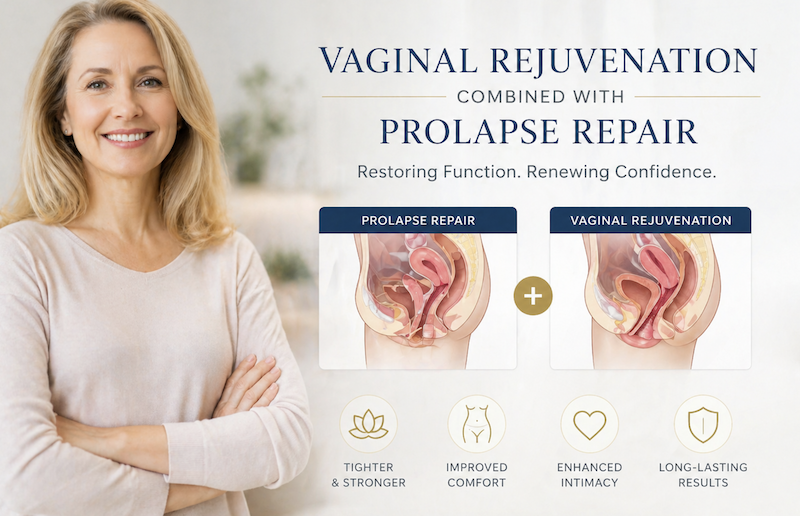
Surgical Vaginal Rejuvenation Combined with Prolapse Repair: Insurance, Expertise, and Why Dr. John Miklos and Dr. Robert Moore Stand Out
For women experiencing pelvic organ prolapse along with vaginal laxity or functional concerns, a combined surgical approach can address both medical necessity and quality-of-life goals. When performed by highly specialized surgeons, this approach restores anatomy, improves function, and can often be partially or fully covered by insurance when deemed medically necessary.
Choosing the right surgical team is critical—especially in complex cases. This is where Dr. John Miklos and Dr. Robert Moore are widely recognized leaders.
Understanding the Combined Procedure
Pelvic organ prolapse occurs when the bladder, uterus, or rectum descends, causing herniation of the vagina or a lack of support of these organs. This most commonly results in vaginal pressure, discomfort, lower back pain and functional issues such as : difficulty emptying the bladder or rectum, and urinary incontinence issues . At the same time, many patients experience vaginal laxity or perineal weakness, often due to childbirth, aging, or prior surgery which results in less friction during intercourse.
A combined surgical plan may include:
- Prolapse repair (restoring anatomical support)
- Vaginal tightening (restoring sexual function)
- Fixing urine incontinence, bladder and rectal emptying (restoring physiologic function)
- Repair of perineal and support structures
- Correction of multi-compartment defects
By addressing these issues together, patients benefit from:
- One comprehensive surgery and recovery
- Improved anatomical, physiological functional outcomes
- A more durable, long-term solution
When Insurance May Cover the Procedure
One of the most important—and often misunderstood—aspects of this type of surgery is insurance coverage.
Medically Necessary vs. Cosmetic
Insurance providers typically cover procedures that are medically necessary, including:
- Pelvic organ prolapse repair
- Reconstruction to restore normal anatomy and physiologic function
- Procedures addressing pain, pressure, or organ dysfunction
In many cases, portions of what patients refer to as “vaginal rejuvenation” are actually reconstructive procedures, not cosmetic. For example:
- Repairing perineal defects after childbirth
- Restoring vaginal support and function
- Narrowing the genital hiatus and vaginal caliber
- Correcting structural issues contributing to symptoms
These are often eligible for insurance coverage when properly documented.
Cosmetic Components
Purely cosmetic enhancements—performed solely for aesthetic reasons—are typically not covered. However, when combined with medically necessary prolapse repair, there may be:
- Partial coverage
- Clear separation between covered and non-covered components
- Pre-authorization options depending on the plan
An experienced surgical team will help patients:
- Navigate insurance approvals and documentation
- Understand out-of-pocket costs upfront
- Maximize eligible coverage
Why Specialized Training Matters
Not all surgeons are trained to safely and effectively combine advanced prolapse repair with functional vaginal reconstruction.
Dr. John Miklos and Dr. Robert Moore are board certified in Obstetrics and Gynecology (ABOG) and fellowship trained in Female Pelvic Medicine and Reconstructive Surgery(FPMRS) as well as Minimally invasive Gynecologic Surgery (MIGS) and Cosmetic Vaginal Surgery , the highest level of specialization in pelvic floor surgery. View before and after photos of vaginal rejuvenation.
Their expertise includes:
- Multi-compartment prolapse repair
- Minimally invasive and laparoscopic reconstruction
- Complex revision surgeries
- Functional and structural vaginal restoration
This level of training is essential when combining procedures that require both medical precision and functional optimization.
A Customized, Patient-Centered Approach
Every patient’s anatomy, symptoms, and goals are unique. A successful outcome requires individualized planning, not a standardized procedure.
These surgeons focus on:
- Restoring normal pelvic support
- Preserving or improving function and comfort
- Avoiding complications such as over-tightening or pain
- Delivering long-term durability
This balance is especially important in combined procedures, where both medical outcomes and quality of life are at stake.
A Destination for Complex Cases
Patients travel from across the U.S. and internationally to seek care from Dr. John Miklos and Dr. Robert Moore.
Many are referred because:
- Their case is considered too complex
- Their physicians lack the clinical and surgical know how to offers a solution
- They’ve had failed prior surgeries
- They want a single-stage, comprehensive solution
- They are seeking a second opinion before surgery
Their practices are known for handling advanced and revision cases, where experience makes a measurable difference.
The Importance of a Second Opinion
Before undergoing any pelvic surgery—especially a combined procedure—getting a second opinion is essential.
Consulting with experts can:
- Confirm whether surgery is truly necessary
- Identify less invasive or more comprehensive options
- Clarify what portion of the procedure is covered by insurance
- Reduce the risk of needing repeat surgeries
- Possibly lessen the number of surgical trips to the operating room
In complex cases, a second opinion often leads to a more accurate diagnosis and a better long-term plan.
Why Experience Impacts Outcomes
Combining vaginal reconstruction with prolapse repair is technically demanding. Outcomes depend on:
- Surgical precision
- Experience with complex anatomy
- The ability to balance structure and function
High-volume specialists like Dr. John Miklos and Dr. Robert Moore consistently deliver:
- Lower complication rates
- More durable repairs
- Improved patient satisfaction
For women dealing with pelvic organ prolapse and vaginal laxity, a combined surgical approach can offer a comprehensive, efficient solution—often with insurance coverage for the medically necessary components.
With advanced fellowship training, decades of experience, and a global reputation for treating complex cases, Dr. John Miklos and Dr. Robert Moore are trusted by patients nationwide and internationally.
If you are considering surgery, understanding your insurance options and seeking a second opinion from leading specialists can help you make the most informed and confident decision for your health. If you are near Alpharetta and Buckhead Georgia, in person consults are easy.